


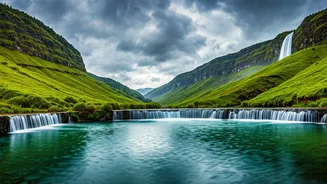


The Symphony of the Monsoon
For much of the year, the rolling hills of Meghalaya are a study in serene, green beauty. But from June through September, the landscape undergoes a dramatic change. This is the season of the monsoon, a weather system so powerful it redefines the region's
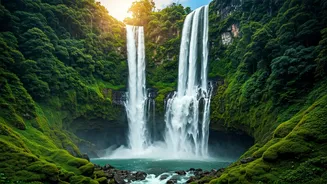
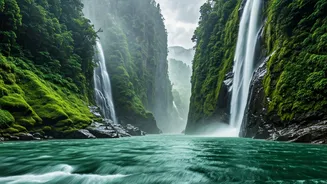
geography and soundscape. The phrase 'at their loudest' isn't hyperbole; it's a literal description of what happens when some of the heaviest rainfall on the planet collides with a plateau of staggering cliffs and deep gorges. The quiet trickles of the dry season swell into thunderous, world-class cataracts, and their combined roar can be heard for miles, a constant, visceral reminder of nature’s immense power.
The World's Wettest Stage
To understand the waterfalls, you must first understand the rain. Meghalaya is home to the towns of Mawsynram and Cherrapunji, two places that constantly vie for the title of 'wettest place on Earth.' While a typical U.S. city like Seattle might receive about 38 inches of rain per year, Mawsynram averages around 467 inches. This staggering amount of precipitation, funneled by the Bay of Bengal and lifted by the Himalayan foothills, has nowhere to go but down. The state’s unique topography of porous limestone and sandstone acts like a giant sponge that can't hold any more water, forcing it to cascade over cliffs in hundreds, if not thousands, of seasonal and permanent waterfalls.
Nohkalikai: A Plunge of Tragic Beauty
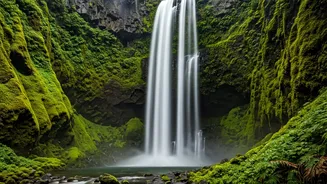
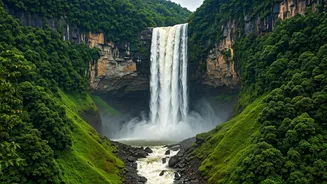
Among the most famous of Meghalaya’s giants is Nohkalikai Falls, India's tallest plunge waterfall. During the monsoon, it’s a single, uninterrupted column of white water dropping over 1,100 feet into a turquoise pool below. The force of the water is so great that it creates a perpetual cloud of mist at its base. But its awe-inspiring beauty is tied to a somber local legend. The name 'Nohkalikai' translates to 'Jump of Ka Likai,' referencing a story about a grieving mother who leaped from the cliff after a horrific tragedy. The waterfall's powerful, year-round flow is said to represent her sorrow, a story that adds a layer of profound cultural weight to its physical magnificence.
The Seven Sisters' Seasonal Spectacle
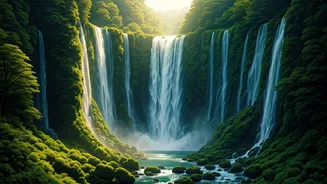
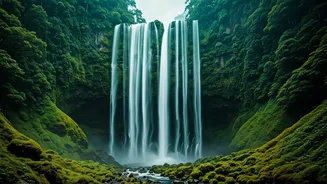
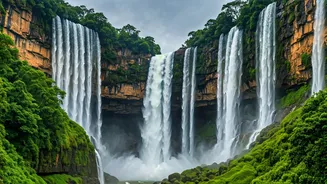
If Nohkalikai is a solo performer, the Nohsngithiang Falls are a full choir. Better known as the Seven Sisters Falls, this formation is a perfect illustration of the monsoon's transformative effect. During the dry season, it can be a disappointing trickle, sometimes with only a few of the 'sisters' present. But when the rains arrive, it becomes a breathtaking spectacle of seven distinct streams of water plunging side-by-side down a 1,000-foot-wide limestone cliff. The sight of the segmented falls, illuminated by the sun setting against the rain-heavy clouds, is one of India's most iconic natural images and a powerful symbol of unity and ephemeral beauty.
More Than Just Waterfalls
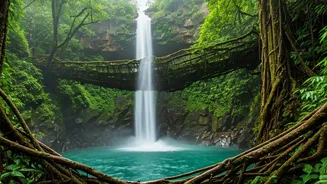
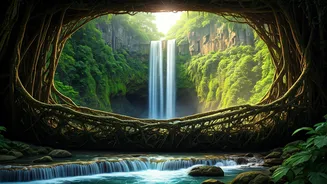
The culture of Meghalaya is intrinsically linked to its wet environment. This is most famously expressed in the state’s 'living root bridges.' For centuries, the indigenous Khasi and Jaintia peoples have guided the thick, pliable roots of rubber fig trees across rivers and ravines, weaving them into elaborate, sturdy bridges that grow stronger over time. Unlike steel or concrete structures that would rust and decay in the constant dampness, these biological marvels thrive in the rain. They are a testament to an ingenious and harmonious adaptation to life in a place defined by water, existing alongside the waterfalls as another of the region's unique wonders.