


Not Your Millennial's Minimalism
Forget the stark, direct-to-consumer minimalism of the 2010s that defined the Millennial aesthetic. That era was about clean lines, sans-serif fonts, and a near-clerical devotion to brands like Everlane and Cuyana. Today’s Gen Z minimalism isn't about starting
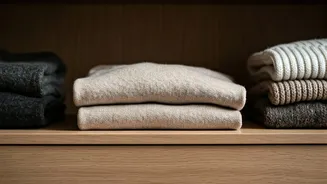
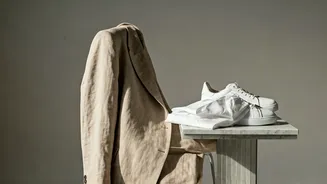
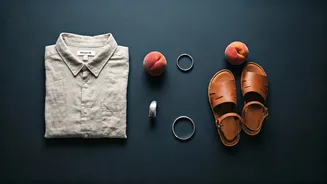
from scratch with a capsule wardrobe of basics. Instead, it’s a more nuanced philosophy often dubbed “quiet luxury” or the “old money aesthetic.” This new wave is less about scarcity and more about perceived quality and timelessness. It favors classic silhouettes, neutral palettes, and fabrics that look expensive, even if they're not. Think less about a plain white t-shirt and more about a perfectly draped cream-colored knit, tailored wide-leg trousers, a structured trench coat, or a simple leather belt that cinches everything together. It’s an aesthetic heavily influenced by brands like The Row, Khaite, and Totême, with their emphasis on silhouette and texture over logos and loud prints. For Gen Z, this look is discovered and curated on TikTok and Pinterest, where aspirational style is dissected and recreated with more accessible pieces from stores like Aritzia, Zara, and Abercrombie & Fitch.
A Reaction to Trend Overload
For a generation that grew up online, the relentless pace of fashion has been both a playground and a prison. The last few years have been a blur of algorithm-fueled “cores”—Barbiecore, cottagecore, gorpcore, coastal grandmother—each demanding a new aesthetic, a new set of clothes, and a new personality to perform. This churn, powered by ultra-fast fashion giants and TikTok’s “Get Ready With Me” videos, is exhilarating but ultimately exhausting.
Minimalism offers a quiet escape hatch. It’s a conscious decision to opt out of the trend cycle. By investing in a wardrobe of versatile, high-quality pieces, Gen Z is rejecting the pressure to constantly reinvent themselves. It’s a form of digital detox for the closet, a way to establish a personal style that feels authentic and enduring rather than fleeting and performative. Choosing a simple, elegant outfit becomes an act of defiance against the expectation to participate in every new fad that flashes across a “For You” page.
The Smart-Money Style
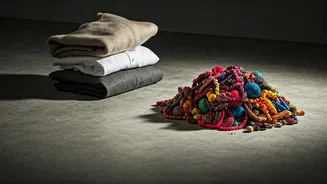
This stylistic shift is also deeply rooted in economic reality. Gen Z has come of age amidst unprecedented economic uncertainty, from pandemic-related disruptions to soaring inflation. The appeal of a massive, cheap clothing haul from Shein or Temu is waning as the consequences—poor quality, dubious ethics, and a closet full of things you wear once—become more apparent. The logic is shifting from quantity to quality, from cost-per-item to cost-per-wear.
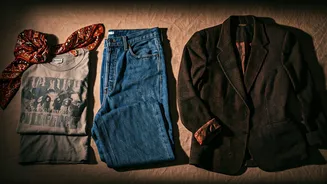
A $150 pair of trousers that can be worn twice a week for three years is increasingly seen as a smarter purchase than five pairs of $30 pants that fall apart after a few washes. This isn’t about suddenly having more money to spend; it's about spending money more strategically. Thrifting also plays a huge role, as savvy shoppers hunt for vintage blazers, classic denim, and high-quality leather goods that align with the minimalist ethos while sidestepping the high cost of new luxury items.
An Undercurrent of Sustainability
While Gen Z is often cited as the most environmentally conscious generation, their shopping habits have sometimes been at odds with their stated values. The allure of fast fashion is powerful. However, the move toward minimalism represents a meaningful alignment of values and behavior. The core principle of buying less but buying better is inherently more sustainable than the disposable model of fast fashion.
This isn't about eco-perfectionism. It’s a pragmatic approach. By choosing pieces that will last for years, Gen Z is reducing their personal contribution to textile waste and pushing back against the culture of disposability. The minimalist wardrobe is, by its nature, a more sustainable one. It encourages mending, mindful purchasing, and a deeper relationship with the clothes we own. It’s a quiet but powerful statement that style and sustainability can, and should, go hand in hand.