






The Great Greige-ification
Remember the 2010s? It was the era of the Millennial aesthetic, a design language fluent in subway tile, fiddle-leaf figs, and a seemingly infinite spectrum of grey and beige. Dubbed 'greige,' this muted palette dominated Instagram feeds and HGTV shows,
promising a sophisticated, clean, and unobjectionable backdrop for life. It was safe, scalable, and easily monetized through brand partnerships. But as with any long-reigning trend, the backlash was inevitable. What once felt chic and minimalist began to feel sterile, impersonal, and even a little sad. The internet coined a term for it: 'sad beige,' a descriptor for a world so devoid of personality it bordered on dystopian. For Gen Z, who came of age scrolling through these perfectly curated but soulless spaces, the appeal of a blank canvas was lost. They weren’t looking for a backdrop; they were looking for a main character, and they decided their home could be it.
Enter Dopamine Decor
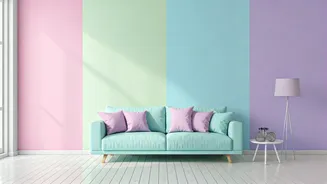
The antidote to sad beige is 'dopamine decor,' a design philosophy that prioritizes colors and shapes that actively make you feel good. Borrowing its name from the 'dopamine dressing' trend in fashion, the concept is simple: surround yourself with visual stimuli that spark joy, energy, and optimism. This isn't about adhering to a specific color wheel or design rulebook. It’s about intuition and emotion. If a squiggly line in hot pink and lavender makes you smile, it belongs on your wall. The movement champions vibrant hues, playful patterns, and unexpected combinations. Think less about resale value and more about personal value. For a generation grappling with economic uncertainty and ecological anxiety, creating a home that serves as a sanctuary of happiness isn't just a frivolous act; it's a form of self-care. The goal is to walk into a room and feel an immediate, positive emotional response.
The Accent Wall as a Canvas
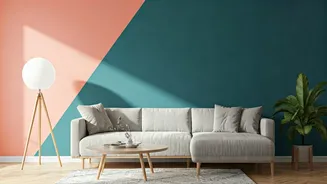
So why is the accent wall the primary medium for this color explosion? It's the perfect intersection of high impact and low commitment. Unlike reupholstering a sofa in a wild print or investing in expensive art, paint is relatively cheap and reversible. This makes it ideal for renters and young homeowners who want to personalize their space without risking a security deposit or committing to a permanent change. The accent wall 2.0 isn't just a single, solid color anymore. Gen Z is treating it like a graphic design project, using painter’s tape to create bold geometric shapes, sweeping arches behind bed frames, and organic, free-flowing murals. These designs do more than just add color; they create architectural interest in otherwise boxy, characterless rooms. An arch can frame a piece of furniture, a diagonal stripe can add dynamic energy, and a set of color-blocked circles can feel like a custom piece of modern art.
An Expression of Anti-Perfection
This trend is also a quiet rebellion against the flawless, mass-produced aesthetic. A hand-painted arch will never be as perfectly symmetrical as a vinyl decal, and that’s the point. In an age of digital filters and AI-generated perfection, the subtle imperfections of a DIY project feel authentic and human. TikTok and Instagram are filled with process videos showing creators sketching out designs, carefully applying tape, and revealing their colorful creations. The tutorials make it accessible, fostering a sense of community around creativity rather than consumption. It's a shift from 'buy this look' to 'make this look.' This hands-on approach imbues a space with personality and a story. The wall is no longer just a wall; it’s a testament to an afternoon spent with a paintbrush and a vision, a unique statement that can’t be bought off a shelf.