


From Rigid Lines to Gentle Slopes
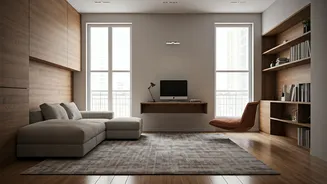
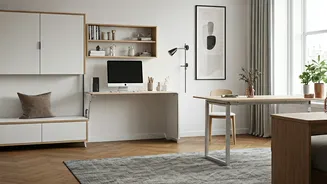
For the better part of two decades, minimalism and mid-century modernism dictated the angles of our homes. Think crisp, 90-degree corners, boxy sofas, and stark, rectangular windows. It was a clean, rational, and efficient look. But design trends, like
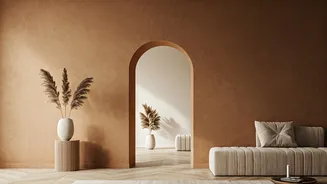
all things, are cyclical. Today, we’re witnessing a major shift away from that rigidity toward something altogether more fluid: the curve. From grand, arched entryways to the soft silhouette of a boucle armchair, rounded forms are softening the hard edges of American homes. This isn’t just a niche fad for high-end architects; it’s a widespread movement reflecting a deeper desire for comfort, nature, and a more human-centric living environment. It’s a gentle rebellion against the grid, suggesting our homes can be as nurturing as they are functional.
The Soothing Psychology of Softness
So, why the sudden embrace of all things round? The answer may be hardwired into our brains. Studies in neuroaesthetics—the science of how art and design affect our minds—suggest that humans have a natural preference for curved shapes over sharp, angular ones. Pointed objects can subconsciously trigger a threat response, a holdover from our evolutionary past where sharp meant danger (think teeth, thorns, and weapons). Curves, on the other hand, are perceived as safe, welcoming, and gentle. They mimic the organic forms found in nature: rolling hills, smooth stones, and the shape of a protective embrace. This connection to the natural world is a core principle of biophilic design, a trend that seeks to incorporate nature into our built environments to improve our well-being. In a post-pandemic world where our homes have become sanctuaries, it’s no surprise we’re drawn to shapes that make us feel secure and calm.
Arches, Walls, and Windows
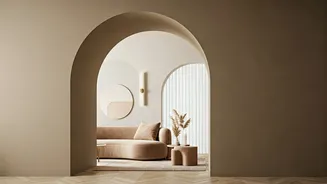
The most dramatic way this trend is materializing is in the very structure of our homes. The humble arch, once relegated to Mediterranean villas or Roman ruins, is making a major comeback. Interior designers are using them to create graceful transitions between rooms, frame kitchen nooks, or add character to a plain hallway. An arched doorway or a series of them can instantly elevate a space, making it feel more custom and thoughtfully designed. Beyond doorways, we’re seeing curved walls that guide you through a space, rounded windows that soften the light, and even sunken conversation pits that encourage intimacy. These architectural elements break up the monotony of the box, creating a sense of flow and discovery that makes a home feel less like a container and more like a sculpture you can live in.
When Furniture Follows Form
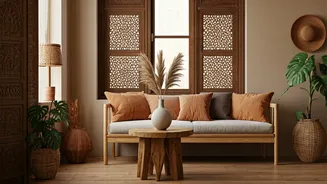
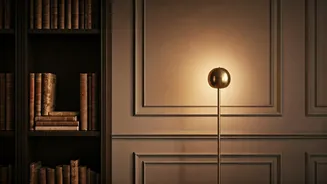
You don’t need to knock down walls to get in on the trend. The easiest and most accessible entry point is through furniture and decor. The furniture world has fully embraced the curve, with serpentine sofas, kidney-shaped desks, and circular coffee tables leading the charge. These pieces do more than just look good; they fundamentally change how a room feels and functions. A curved sofa, for instance, encourages conversation by subtly angling people toward each other, unlike a linear one that can feel more formal. Upholstery in soft, nubby fabrics like boucle and velvet further enhances the cozy, cocooning effect. This move toward softness extends to lighting, with mushroom-shaped lamps casting a gentle glow, and decor, where circular mirrors and abstract, wavy art are replacing their rectangular counterparts. Even area rugs are getting in on the act, with organic, pond-like shapes replacing the standard rectangle.
How to Bring Curves Home
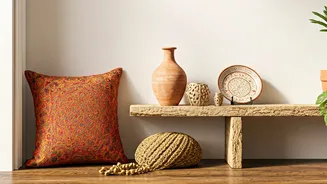
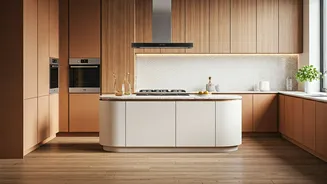
Ready to soften the edges of your own space? The beauty of this trend is its scalability. If you’re planning a major renovation, talk to your architect or contractor about incorporating an archway or a curved kitchen island. These statement features can become the centerpiece of your home. For a less intensive but still impactful change, consider swapping out a major piece of furniture. A round dining table can make a small space feel larger and more sociable, while a plush, C-shaped sectional can transform your living room into the ultimate relaxation zone. And for those on a budget or in a rental, the fix is even simpler. Start small. A large, round mirror can break up a wall of angular art. A set of curvy ceramic vases, a circular ottoman, or a simple floor lamp with a domed shade can all introduce that gentle, organic feeling without a major commitment. The goal isn't to eliminate every straight line, but to create a pleasing balance between the structured and the soft.