



More Than Just a Platter
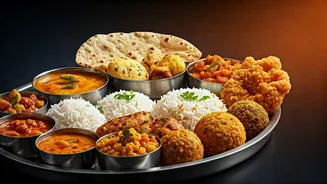
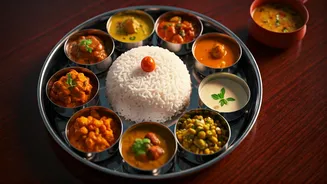
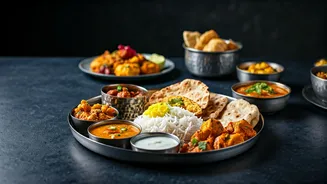
Before we get into the why, let’s cover the what. A thali (Hindi for “plate”) is not a single dish but a complete meal served on one platter. It’s a concept found across the Indian subcontinent, representing a balanced, self-contained feast. The platter,
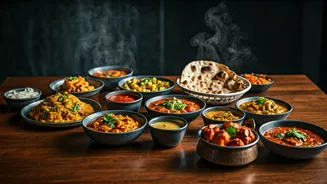
typically round and made of steel, holds a collection of small bowls called katoris, each containing a different preparation. At the center, you’ll often find rice, roti, naan, or another flatbread. The surrounding bowls are a culinary orchestra: a lentil dal, a couple of vegetable or meat curries, a yogurt raita to cool the palate, a pickle for a sour punch, and often a small dessert to finish. The genius of the thali lies in its embrace of the six fundamental tastes of Ayurvedic tradition: sweet, sour, salty, bitter, pungent, and astringent. It’s not just a meal; it’s a holistic, nutritionally balanced, and deeply satisfying experience.
A Feast for the Eyes
In an era where we eat with our eyes first—and our phone cameras second—the thali is a natural star. Its composition is inherently photogenic. The kaleidoscope of colors, from the deep red of a tomato-based curry to the vibrant yellow of a turmeric-spiced dal and the crisp green of fresh herbs, creates a stunning visual that’s practically designed for Instagram grids and TikTok videos. Unlike a single-pot curry, which can look homogenous in a photo, a thali offers texture, variety, and a sense of abundance. For a generation fluent in the language of aesthetics, ordering a thali is as much about capturing the perfect shot as it is about tasting the food. It’s a statement piece, a declaration of culinary curiosity that performs beautifully online.
Beyond Chicken Tikka Masala
The thali’s rising popularity is also tied to a broader, more sophisticated interest in global cuisine. Younger diners are increasingly moving past the Americanized, one-size-fits-all versions of “Indian food” that dominated for decades. They’re seeking authenticity and regional specificity, and the thali is the perfect vehicle for that exploration. Ordering a Gujarati thali offers a taste of Western India, often vegetarian and featuring a delicate balance of sweet and savory flavors. A South Indian thali might feature coconut-based curries, sambar, and rice. A Rajasthani thali could include hearty dishes fit for a desert climate. Each platter is a culinary passport, a guided tour of a specific region’s flavors, ingredients, and traditions. It satisfies a modern foodie’s desire to not just eat, but to learn and connect with a culture.
The Ultimate Tasting Menu
Finally, there’s the simple, brilliant economics of experience. Young diners, often navigating tighter budgets, are still hungry for diverse and high-quality experiences. A formal, multi-course tasting menu at a fine-dining restaurant can be prohibitively expensive. The thali, however, offers a similar experience—a curated journey through multiple flavors and textures—at a fraction of the cost. It solves the classic diner’s dilemma: wanting to try everything on the menu but having to choose just one thing. With a thali, you get to sample it all. This format provides variety, discovery, and a feeling of abundance, delivering high experiential value for the price. It feels like an indulgence, a special treat, but one that is accessible and fundamentally communal, even when enjoyed alone.