

The Psychology of Softness
At its core, our attraction to curves is deeply psychological. Neuroscience and design studies consistently show that humans perceive curved lines and soft edges as safer, friendlier, and more welcoming than sharp angles and straight lines. Sharp corners
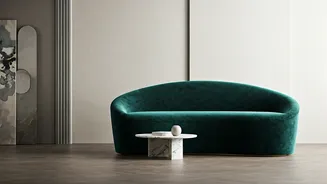
can subconsciously trigger a sense of caution or even danger in our primal brain—think of bumping into a pointed table edge. In contrast, rounded forms are inherently non-threatening. In a world still processing years of uncertainty, our homes have become more than just shelters; they are sanctuaries. The embrace of a curved sofa or a round dining table is not just an aesthetic choice, but a subconscious pull toward environments that feel nurturing, secure, and gentle.
A Return to Nature
The trend also aligns perfectly with the rise of biophilic design—the practice of incorporating nature into our built environments to improve our well-being. Nature rarely operates in straight lines. It’s composed of the rolling arcs of hills, the gentle curve of a riverbed, and the rounded form of a pebble. Curved furniture mimics these organic shapes, creating a subtle but powerful connection to the natural world. A serpentine sofa can evoke a flowing stream, while a set of round nesting tables might call to mind stones on a beach. By bringing these forms indoors, we create a more calming, grounded, and restorative atmosphere that counters the rigidity of urban life and digital screens.
Designing for Connection
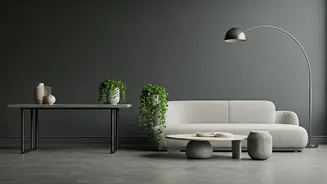
Beyond individual comfort, curved furniture fundamentally changes how we interact with each other. A traditional L-shaped sectional often creates a hard divide, with some guests relegated to a corner. A curved sofa, however, naturally pulls people in. It encourages conversation by subtly angling occupants toward one another, creating a more intimate and communal setting. Designers refer to this as improving 'flow,' both visually and socially. In an open-plan living space, a curved sofa can create a distinct 'zone' for socializing without the need for walls, making it a highly functional and elegant solution for modern hosting. It breaks down formality and invites a more relaxed, collaborative mood.
The Chic Echoes of History
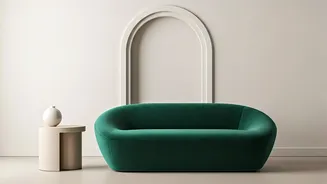
While the current boom feels new, its roots run deep into design history. The trend heavily references the glamorous, rounded forms of 1970s design—think of the iconic work of Vladimir Kagan—and the sophisticated arcs of the Art Deco period. For premium brands, this historical nod adds a layer of timeless elegance and perceived value. It separates the furniture from fast-fashion fads. Consumers aren’t just buying a sofa; they’re buying into a legacy of iconic style. This revival feels fresh to a new generation, yet familiar enough to evoke a sense of nostalgic comfort and enduring chic, making it an easy sell for those investing in 'forever' pieces.
The Instagram-Ready Aesthetic
Finally, it's impossible to ignore the influence of social media. Curved furniture is inherently photogenic. Its sculptural forms create dynamic shadows and highlights, catching the eye and breaking the monotony of the typical rectangular frame of a photo or video. Influencers and designers have embraced these pieces because they make interiors look more interesting and professionally styled. This creates a powerful visual feedback loop: the more we see these beautiful, curved spaces on our feeds, the more we desire them for our own homes. Brands know this, and the distinctive silhouette of a curved piece is a powerful marketing tool in a visually driven market.