





The Age of the 7-Minute Abs
To understand the shift, you have to appreciate the world Gen Z grew up in. Their digital feeds were a firehose of fitness maximalism. It was the era of High-Intensity Interval Training (HIIT) preached as the only path to salvation, 30-day shred challenges
promising a new body by next month, and CrossFit boxes cultivating a near-religious fervor around metabolic conditioning. Fitness wasn't just an activity; it was an identity, a performance. Success was measured in sweat, speed, and shareable before-and-after photos. This culture, supercharged by Instagram and TikTok, created a powerful illusion: that extreme effort, delivered in short, explosive bursts, was the key. The algorithm favored visual drama—the burpees, the box jumps, the breathless, glistening selfies. Anything less felt like you weren't trying hard enough. The problem, as many are now discovering, is that a fitness routine built for the camera often isn't built for a human body.
The Inevitable Burnout
The promised land of quick-fix fitness had a dark side. The relentless pursuit of intensity led to a predictable spike in burnout and injury. When your only gear is “all out,” it’s easy to ignore the body’s signals for rest and recovery. For many, the cycle became demoralizing: go too hard, get hurt or exhausted, stop completely, feel guilty, and then jump back into another unsustainable routine. This all-or-nothing mindset is fundamentally at odds with long-term health. It frames rest as failure and moderation as laziness. Psychologically, it’s a recipe for anxiety, associating exercise with punishment rather than well-being. After years of this cycle, a growing cohort is concluding that a fitness plan that leaves you too sore to walk or too drained to function isn't a plan—it's a problem. They’re asking a simple but profound question: What if the goal wasn’t to conquer your body, but to coexist with it?
Embracing ‘Boring’ Fitness
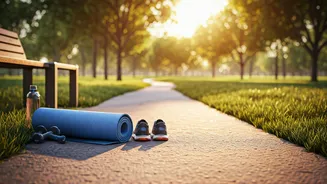
The antidote to this high-intensity hangover is, ironically, boredom. Or, to be more precise, what the hyper-stimulated fitness world might label as boring. This isn't about lazy, ineffective exercise. It's about a return to sustainable, repeatable fundamentals. Think long walks (now rebranded as “hot girl walks” or “soft hiking”), low-intensity steady-state cardio (LISS) on a treadmill (dubbed “cozy cardio”), and simple, progressive strength training. This isn’t new, of course. It’s what exercise physiologists and physical therapists have recommended for decades. The novelty is in its re-adoption by a generation that was sold a completely different bill of goods. They are discovering a truth that doesn’t make for a thrilling TikTok montage: a 30-minute walk done daily is infinitely more effective than a brutal, one-off workout that leaves you sidelined for a week. Consistency, it turns out, is the ultimate hack.
Redefining Success and Sustainability
This movement redefines what success in fitness even looks like. The new metrics aren't aesthetic or performative; they're internal and functional. Success isn't a six-pack in six weeks. It's having more energy, sleeping better, managing stress, and feeling capable in your daily life. It’s the quiet satisfaction of showing up for yourself day after day, even when it’s not exciting. By prioritizing consistency over intensity, this approach lowers the barrier to entry. You don’t need expensive gear, a boutique gym membership, or an hour to destroy yourself. You just need a good pair of shoes and the willingness to do something, anything, regularly. This philosophy frees fitness from the clutches of influencer culture and returns it to the individual. It's a quiet rebellion against the idea that your health journey needs to be a spectacle for public consumption.