

A Sweet Slice of Tradition
If you’ve never had barfi, picture a dense, milk-based fudge that melts in your mouth. It’s a cornerstone of the world of *mithai*, or Indian sweets, which are central to gift-giving and hospitality across South Asia. Barfi is a celebratory staple, appearing
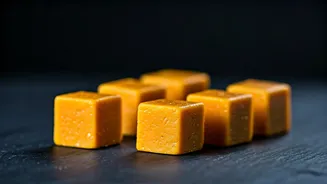
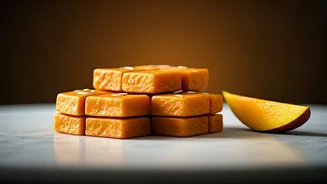
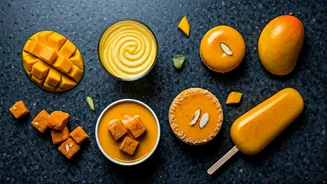
in vibrant, jewel-toned assortments during major festivals like Diwali, Eid, and at weddings. Traditionally made from milk solids (khoya), sugar, and ghee, it’s a canvas for an incredible array of flavors—cardamom, rosewater, pistachio, and coconut are all popular. But when mango joins the party, something truly special happens. The humble, milky square transforms into a bite of pure sunshine, carrying all the weight of tradition but with a bright, modern-feeling twist.
Why Mango Makes It Magical
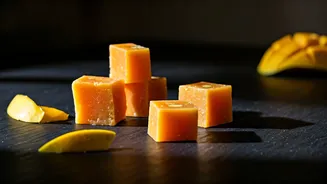
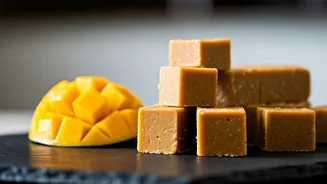
In many parts of the world, mango isn’t just a fruit; it’s an event. The arrival of mango season signifies the peak of summer, warmth, and abundance. Infusing this “king of fruits” into barfi elevates it from a simple sweet to a luxurious treat. The mango’s vibrant, tropical sweetness and slight tartness provide a perfect counterpoint to the rich, creamy, and nutty flavor of the milk base. It cuts through the denseness, making the entire confection feel lighter and more fragrant. Using a high-quality mango pulp—often made from sweet Alphonso or Kesar varieties—is key. It imparts a stunning natural saffron-yellow color and an intense, floral aroma that fills the room as it cooks. It’s a dessert that engages all the senses before you even take the first bite.
Surprisingly Simple to Create
While its place on the festive table might make mango barfi seem intimidating, the process is wonderfully straightforward, especially with modern pantry shortcuts. Many home-cook-friendly versions skip the time-consuming process of making khoya from scratch, instead relying on readily available ingredients like full-fat milk powder, condensed milk, and butter or ghee. The core technique involves cooking down mango pulp to concentrate its flavor and remove excess water. Then, you simply combine it with the milk powder, condensed milk, and fat in a non-stick pan. The mixture is stirred continuously over low-to-medium heat until it thickens and starts to pull away from the sides of the pan, forming a single cohesive mass. This is the most crucial step, requiring a bit of patience and arm strength, but it’s a simple rhythm to fall into.
Bringing the Celebration Home
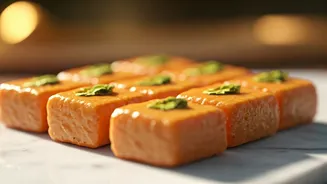
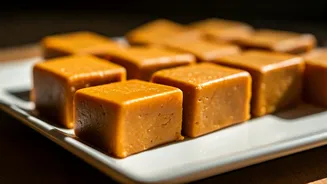
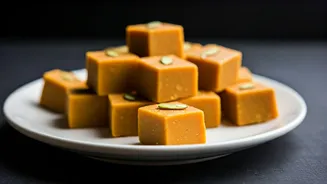
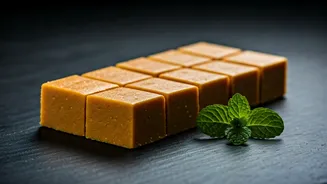
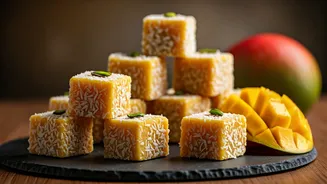
Once the barfi mixture is thick enough, it’s poured into a greased pan, smoothed into an even layer, and left to set at room temperature or in the refrigerator. This is where the artistry comes in. Before it fully sets, you can garnish it to make it look as special as it tastes. A sprinkle of finely chopped pistachios or almonds adds a beautiful color contrast and a satisfying crunch. For an extra touch of elegance, some dust it with fragrant ground cardamom or adorn it with delicate, edible silver leaf (*vark*). Once firm, it’s sliced into clean squares or diamonds. The result is a dessert that looks stunning on a platter, perfect for ending a dinner party, bringing to a potluck, or just enjoying with a cup of chai on a quiet afternoon. It’s proof that you don’t need a major holiday to justify a moment of pure, decadent celebration.