
An Escape from Urban Chaos
Across India’s bustling megacities, from Mumbai to Delhi, a quiet revolution is happening inside the home. Architects and designers are turning away from both imported European trends and the stereotypically ornate “ethnic” look. In its place, they are championing
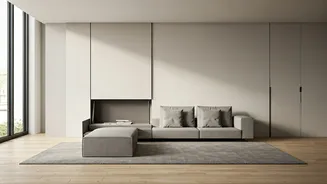
a style that is deeply connected to nature and heritage, but expressed in a clean, contemporary language. This new formula isn't about replicating the past; it's about creating a sanctuary from the frenetic pace of modern urban life. The goal is tranquility, a space that breathes. The palette is stripped back, the materials are honest, and the focus is on texture, light, and a seamless connection to the natural world. It’s a design philosophy born from a desire for authenticity and calm in a world that often feels overwhelmingly loud.
The Core Materials: Earth and Timber
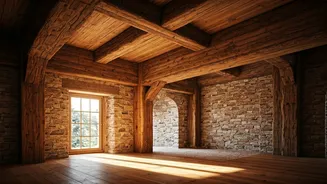
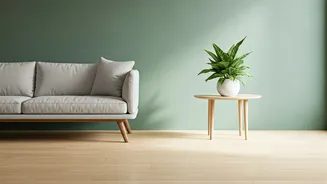
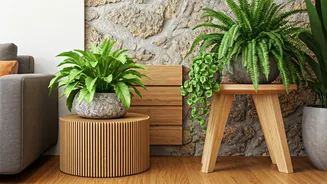
The foundation of this aesthetic rests on a trio of natural elements. Wood is paramount, but not the highly polished, dark wood of colonial furniture. Instead, designers are favoring local timbers like teak and mango wood, often left in a natural, matte finish that highlights the grain and texture. This wood appears in everything from flooring and ceiling beams to minimalist furniture and slatted screens that filter light beautifully. Complementing the wood is stone, a material with deep roots in Indian architecture. Rather than glossy marble, the focus is on rustic, textural stones like slate-like Kadappa, grey Kota stone, or warm Jaisalmer sandstone. Used for floors, accent walls, or even countertops, these stones provide a cool, earthy counterpoint to the warmth of the wood, grounding the space with a sense of permanence and history.
The Essential Greenery
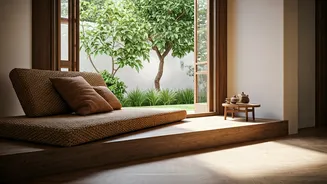
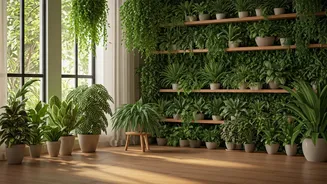
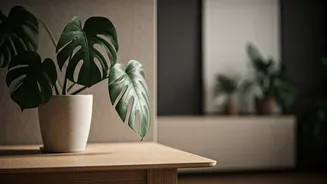
The final, and perhaps most vital, ingredient is greenery. This isn’t about placing a token ficus in the corner. In this new Indian home, plant life is a structural element. We’re seeing the revival of the traditional central courtyard, or *aangan*, now re-imagined as a light-filled atrium with a single, dramatic tree. We see entire walls dedicated to vertical gardens, large indoor planters filled with tropical leaves, and bathrooms that open into private, plant-filled outdoor showers. This integration of flora, a concept known as biophilia, is more than a trend; it’s a wellness strategy. The greenery purifies the air, adds a living, breathing element to the home, and provides a constant, calming visual connection to nature that is often lost in a dense city.
Modern Form, Traditional Soul
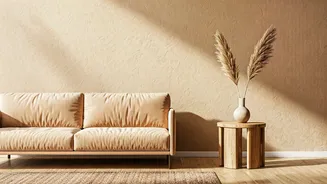
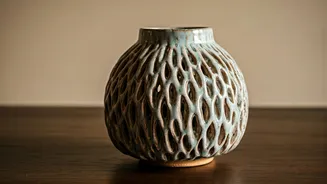
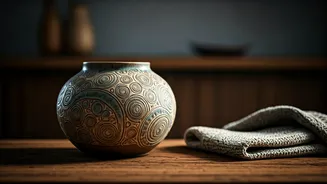
What prevents this style from being a simple copy of Scandinavian or Japanese minimalism is its deep engagement with Indian craft and architectural traditions. While the lines are clean and the clutter is gone, the soul remains distinctly Indian. You might see a wall finished in traditional lime plaster (*arish*), which gives a unique, soft texture. Latticework screens, known as *jalis*, are used to create privacy and dramatic plays of light and shadow, a feature of Mughal architecture now rendered in sleek wood or metal. Furniture is often custom-made by local artisans, combining modern forms with traditional joinery techniques. This approach honors India’s rich history of craftsmanship but frees it from the constraints of purely historical reproduction, resulting in spaces that feel both globally relevant and deeply rooted in place.