






The Furnace Below
Imagine a heat that’s not just uncomfortable, but dangerous. This has been the reality for millions in Rajasthan, India's vast desert state, where recent temperatures have soared past 120°F (49°C). In cities like Jaipur and Jodhpur, the famed “Pink City”
and “Blue City,” the vibrant streets fall silent by midday. Asphalt softens, air conditioners strain and fail, and the very air seems to shimmer with a heat that feels inescapable. For weeks on end, life is dictated by the thermometer. This isn't just a bad summer; it’s a recurring climate crisis that paralyzes one of India’s most historically rich and touristed regions, turning daily existence into a battle for survival against an oppressive, invisible enemy.
An Oasis in the Sky
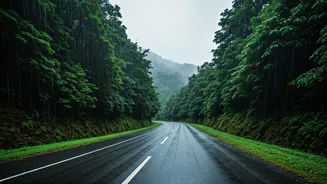
Amidst this arid landscape lies a single point of relief: Mount Abu. Tucked into the Aravalli Range, it’s the only hill station in the entire state of Rajasthan. The term “hill station” is a remnant of British colonial rule, referring to high-altitude towns where officials would escape the brutal summer heat of the plains. Today, that legacy serves a new purpose. As you ascend the winding 17-mile road to its 4,000-foot peak, the landscape transforms. The dusty scrubland gives way to lush forests of pine and eucalyptus. The air, thick and heavy below, becomes crisp and cool. Dotted with temples, a serene lake, and colonial-era bungalows, Mount Abu is a geographical and psychological anomaly—a patch of green coolness in a sea of blistering red and gold.
The Human Deluge
When the plains become a furnace, the escape to this lone oasis becomes a frantic pilgrimage. Recent heatwaves have triggered a mass exodus, with tens of thousands of people from Rajasthan and neighboring Gujarat descending on the small town. The result is chaos. News reports paint a picture of gridlock, with cars backed up for miles on the single road leading into town. Hotels are sold out weeks in advance, with desperate tourists paying exorbitant rates for any available room. The town’s narrow lanes, designed for a much smaller population, are choked with people and vehicles. Local authorities are often forced to implement traffic restrictions, turning away visitors at the base of the mountain simply because there is no more room. The collective desire for a few degrees of relief has turned a tranquil retreat into a scene of gridlocked desperation.
The Price of a Cool Breeze
This annual climate-driven migration comes at a significant cost, especially for the town of Mount Abu itself. As a fragile ecosystem, it’s ill-equipped to handle such massive, sudden influxes. The primary concern is water. A hill station with limited resources, Mount Abu’s water supply is quickly strained by a tourist population that can swell to many times its residential size. Waste management becomes a monumental challenge, threatening the very natural beauty that people come to enjoy. For the local residents, the tourist boom is a double-edged sword. While businesses profit, the overwhelming crowds disrupt daily life, strain public services, and turn their home into an overcrowded parking lot. The town is being loved to death, a victim of its own unique appeal in a warming world.