




The Festival of Chariots
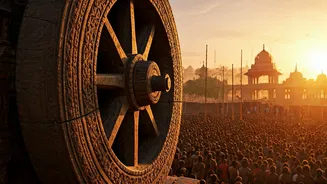
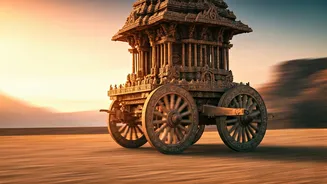
The event is Rath Yatra, or the “Chariot Festival,” one of the most spectacular religious processions on Earth. Held annually in the city of Puri in the eastern Indian state of Odisha, it draws millions of devotees. The festival centers on Lord Jagannath—a
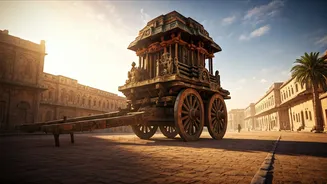
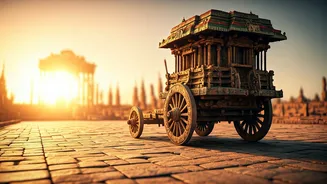
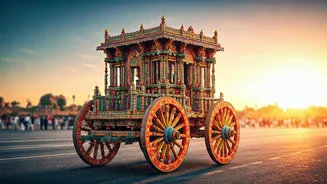
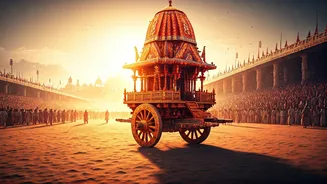
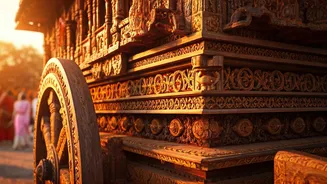
form of the Hindu deity Vishnu—and his siblings, Balabhadra and Subhadra. For this one occasion, the deities leave the sanctum of their revered 12th-century temple to travel to a nearby temple, granting a public audience to all. They are carried not in ordinary vehicles, but in three colossal, brightly decorated wooden chariots, each towering over 40 feet high. These structures are rebuilt anew each year by traditional artisans, making the entire process an act of devotion from start to finish.
An Audience with a Living God
To understand the pulley’s power, you must first understand the unique status of Lord Jagannath. Unlike idols that are seen as mere representations, the deities of the Puri temple are considered living, breathing entities. They are woken, bathed, dressed, and fed daily. The Rath Yatra is their annual vacation, a journey to their “aunt’s house,” the Gundicha Temple. This procession breaks down the formal barriers between the devotee and the divine. For Hindus, the act of seeing a deity, known as *darshan*, is a profound spiritual experience that imparts blessings. During Rath Yatra, Jagannath offers this *darshan* to everyone, including those traditionally barred from entering the temple, making it a radical act of divine accessibility.
The Rope to Liberation
This is where the chariot pulley—the thick coir rope—becomes the focal point. For a devotee, grasping that rope is more than a physical task; it is a direct line to God. A widely held belief, passed down through generations, is that anyone who helps pull the chariot earns immense spiritual merit, or *punya*. More profoundly, some scriptures suggest that simply touching the rope or the chariot can pave the way toward *moksha*, or liberation from the cycle of birth and death. It transforms a simple physical effort into an act with eternal consequences. For spiritual travelers, many of whom are seeking direct, unmediated experiences of faith, this tangible connection is incredibly powerful. It’s not about abstract prayer; it’s about putting your hands on the vehicle of God and participating in its journey.
A Unifying Act of Faith
The ropes of the Puri chariots are famously long, allowing thousands of people to pull at once. This creates an overwhelming sense of unity and shared purpose. In a society historically defined by caste, the Rath Yatra has long been a powerful equalizer. On the grand road of Puri, everyone—regardless of social standing, wealth, or background—is simply a devotee. The combined effort required to move the massive, heavy chariots symbolizes the power of collective faith. No single person can move the chariot, but together, the crowd propels the divine forward. This experience of losing oneself in a larger spiritual current is a major draw for both local pilgrims and international visitors looking to witness faith in its most raw, communal, and dynamic form.