








The Old Model: Peak LeetCode
Remember the tech boom of the 2010s? The path to a six-figure salary seemed paved with whiteboard markers and solved HackerRank problems. Companies, desperate for talent, optimized for a single metric: could you write clean, efficient code under pressure?
This created an entire industry around 'cracking the coding interview,' where memorizing algorithms and data structures became a rite of passage. The ideal candidate was a 'code monkey'—a brilliant but narrowly focused executor who could be handed a well-defined problem and return a perfect block of code. Your business acumen, communication skills, or ability to question the premise of the task were secondary, if they were considered at all. This model worked when the primary challenge was simply building things. But the nature of technology and business has grown far more complex.
The New Demand: Cognitive Partnership
Today, simply executing is not enough. The new gold standard is 'cognitive partnership.' It’s a term that sounds like corporate jargon, but the concept is simple: companies need employees who can think *with* them, not just *for* them. A cognitive partner doesn't just ask 'How do I build this?' They ask, 'Is this the right thing to build? What problem are we actually solving for the customer? How will this impact our long-term strategy?' This requires a blend of technical skill, business intuition, and a high degree of creativity and critical thinking. These are the people who can connect the dots between a line of code and a quarterly earnings report. They challenge assumptions, propose alternative solutions, and collaborate across departments to drive genuine business value, not just ship features. They are less like a hired hand and more like a partner in the truest sense.
The AI Co-Pilot in the Room
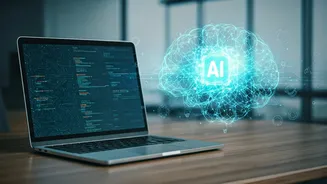
The single biggest catalyst for this shift is the explosive rise of generative AI. Tools like GitHub Copilot are rapidly commoditizing the act of writing basic-to-intermediate code. Why spend weeks searching for a developer who is merely good at boilerplate code when an AI can generate it in seconds? This technological leap has fundamentally altered the value equation. The repetitive, predictable parts of software development are being automated, freeing up—and forcing—human developers to focus on higher-level tasks. An AI can’t (yet) understand market dynamics, empathize with a frustrated user, or devise a novel product strategy. The tasks that remain are inherently human: judgment, strategic foresight, stakeholder management, and creative problem-framing. The AI serves as a powerful co-pilot, but it needs a human pilot who knows where the business needs to go.
How to Hire and Get Hired Now
This evolution demands a complete overhaul of the hiring process. For companies, it means moving beyond abstract coding challenges. Instead, interviews should focus on case studies that reflect real-world business problems. Ask candidates to critique a past project. Give them an ambiguous goal and see how they structure their thinking. The best questions are no longer 'Can you reverse this linked list?' but 'Our user engagement is down 10%; what questions would you ask first?' For job seekers, it's time to shift your focus. Your GitHub profile shouldn't just be a collection of code; it should tell a story. Add README files that explain the 'why' behind your projects. What business problem did you solve? What was the outcome? On your resume and in interviews, highlight experiences where you influenced strategy, collaborated with non-technical teams, and drove measurable results. Technical proficiency is still the ticket to the game, but it's your cognitive partnership skills that will let you win it.