
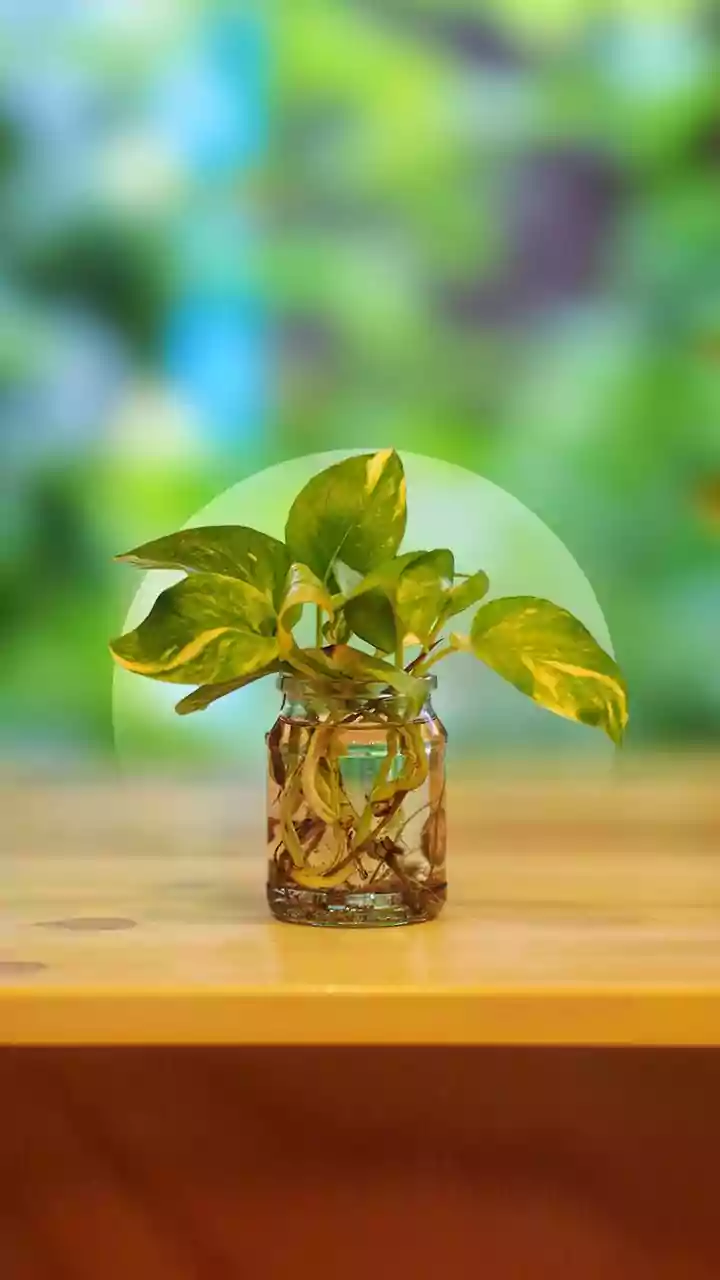






Golden Pothos: The Unkillable Classic
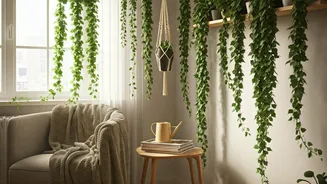
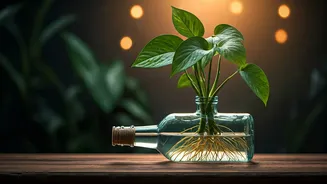
Often called Devil's Ivy, the Golden Pothos is the undisputed champion for beginner plant parents. Its heart-shaped, variegated leaves in shades of green and yellow grow on long, flexible vines that can drape beautifully from a high shelf, a hanging basket,
or even the top of a bookshelf. This plant is famously forgiving and will tolerate a wide range of conditions. It's so resilient that it practically tells you what it needs; if the leaves start to wilt, it's begging for water. Pothos is also a powerful air purifier, adept at removing common household toxins. For the most dramatic trailing effect, let the vines hang freely. You can also train them to climb up a small trellis or across a wall using small, clear hooks for a 'living wallpaper' look.
English Ivy: Timeless and Elegant
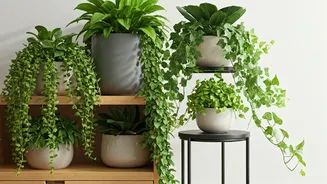
When you picture a classic trailing plant, English Ivy (Hedera helix) is likely what comes to mind. With its delicate, lobed leaves and dense growth, it brings a touch of old-world charm and sophistication to any room. It thrives in cooler temperatures and prefers bright, indirect light, making it perfect for a spot near a window that doesn't get harsh, direct sun. English Ivy looks stunning cascading from a mantelpiece or spilling out of a decorative urn on a plant stand. One thing to note is that it can be a bit more particular about watering than a Pothos—it prefers consistently moist soil but not soggy feet. Also, keep it out of reach of pets and small children, as its leaves are toxic if ingested.
Heartleaf Philodendron: The Sweetheart Vine
A close cousin of the Pothos, the Heartleaf Philodendron (Philodendron hederaceum) is another incredibly easy and rewarding trailing plant. As its name suggests, its defining feature is its lush, perfectly heart-shaped leaves that are typically a deep, velvety green. The vines are graceful and quick to grow, allowing you to achieve a full, cascading look in relatively little time. It's adaptable to lower light conditions, though it will grow more vigorously in medium to bright indirect light. This plant is perfect for softening the hard edges of furniture or adding a touch of romance to a room. Like Pothos, it's a great communicator; its leaves will droop when thirsty and recover quickly after a good drink.
String of Pearls: A Unique Statement
For a completely different texture and look, consider the String of Pearls (Senecio rowleyanus). This fascinating succulent features long, thread-like stems adorned with small, pea-shaped leaves, creating a beaded curtain effect. It’s a true showstopper when placed in a hanging planter where its 'pearls' can spill over the sides. As a succulent, its care is a bit different. It requires plenty of bright, indirect sunlight and very little water. The biggest mistake owners make is overwatering, which can lead to root rot. Let the soil dry out completely between waterings. Its unique appearance makes it a focal point, adding a touch of modern, bohemian style to your decor.
Spider Plant: The Prolific Fountain
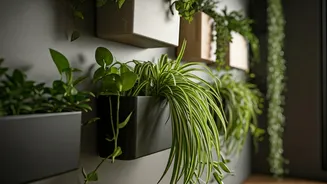
While not a traditional vine, the Spider Plant (Chlorophytum comosum) creates a beautiful trailing effect with its arching, fountain-like leaves. The real magic happens when it starts producing 'spiderettes'—tiny baby plants that dangle from long stems, looking like little spiders. These can be left on the parent plant to enhance the cascading look or snipped off and easily propagated into new plants. Spider Plants are incredibly resilient, tolerate a variety of light conditions, and are known for being excellent air purifiers. Their striped, grassy foliage adds brightness and a sense of movement, making them a fantastic, easy-care choice for hanging baskets or tall plant stands.