





The Unseen Damage of Wash Day
We think of shampooing as a reset—a way to get rid of oil, product buildup, and daily grime. While essential for scalp health, the process can be surprisingly harsh on your hair strands, particularly the lengths and ends which are the oldest and most
fragile parts of your hair. When hair gets wet, the cuticle (its outer protective layer) swells and lifts. This process, known as hygral fatigue, weakens the hair shaft over time. Furthermore, the surfactants in many shampoos, designed to cleanse effectively, can strip away not just the bad stuff but also the natural, protective oils that keep your hair flexible and resilient. This combination of swelling and stripping can leave your hair vulnerable, brittle, and prone to snapping under the slightest pressure from washing, towel-drying, or brushing.
The Protective Trick: Pre-Shampoo Treatment
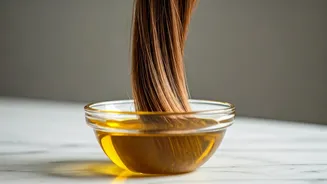
The secret to mitigating this damage doesn't lie in a fancy new shampoo or a pricey mask you use at the end. Instead, the most effective trick is a pre-emptive strike: the pre-shampoo treatment, often called a "pre-poo." It’s exactly what it sounds like—treating your hair *before* you introduce water and shampoo. By applying an oil or a creamy conditioner to your dry hair before stepping into the shower, you create a protective shield around the hair shaft. This barrier does two critical things. First, it prevents the hair strand from absorbing too much water, minimizing that damaging swelling and stretching. Second, it acts as a buffer against your shampoo, allowing the cleanser to do its job on your scalp without aggressively stripping the natural moisture from your lengths and ends. It’s a simple shift in timing that fundamentally changes the impact of your wash routine.
Your Step-by-Step Pre-Poo Guide
Incorporating this into your routine is surprisingly simple. Here’s how to do it: 1. **Choose Your Shield:** You don't need a product labeled "pre-shampoo." A simple, natural oil works wonders. Coconut oil is a fantastic choice because its molecular structure is small enough to penetrate the hair shaft, providing internal protection. Argan, olive, or jojoba oils are also great options that coat and seal the cuticle. Alternatively, you can use a basic, silicone-free conditioner. 2. **Apply to Dry Hair:** Work your chosen oil or conditioner through your dry hair, concentrating on the mid-lengths to the ends. These areas are the most susceptible to damage and dryness. You don’t need to saturate your roots or scalp, especially if you have fine or oily hair. 3. **Let It Penetrate:** This is the most crucial step. Allow the treatment to sit for at least 20-30 minutes. This gives the oil time to penetrate or the conditioner time to form a film. For an intensive treatment, you can apply it, put your hair up in a bun or a shower cap, and leave it on for several hours or even overnight. 4. **Wash As Usual:** Without rinsing out the treatment, step into the shower and shampoo as you normally would. You may find you only need to shampoo once. The shampoo will wash away the excess oil and dirt, leaving behind soft, protected hair. Follow with your regular conditioner if you feel you need it.
Who Benefits Most From This Trick?
While nearly anyone can benefit from the added protection, this trick is a true game-changer for certain hair types. If your hair is dry, color-treated, bleached, or high-porosity, it is especially vulnerable to hygral fatigue and moisture loss, making a pre-poo essential for maintaining health and length. Those with curly, coily, or textured hair, which is naturally drier and more fragile, will find that this method dramatically improves moisture retention, defines curl patterns, and reduces tangles. Even if you have relatively healthy hair, incorporating a pre-shampoo treatment once a week or before a clarifying wash can help preserve its strength and shine for the long term. For those with very fine hair, simply opt for a lighter oil (like grapeseed) and use it sparingly on the very ends to avoid weighing hair down.