
Turn Peels and Rinds into Treasure
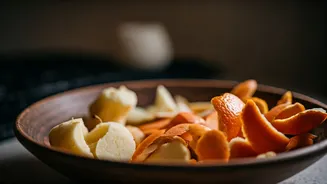
Some of the most flavorful parts of a fruit are in the skin you typically toss. Citrus peels, for instance, are packed with aromatic oils. Instead of binning them, use a vegetable peeler to remove the colorful zest (avoiding the bitter white pith) and
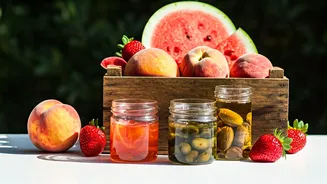
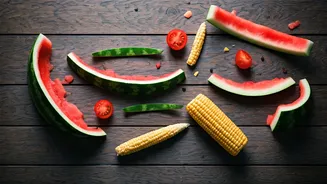
let it dry on a counter for a few days. Once crisp, you can blitz it into a powder to add to baked goods, salts, or sugar. For a quicker treat, simmer strips of orange or grapefruit peel in sugar syrup to create candied peels—a classic confection. Don't stop at citrus. Watermelon rinds, once the tough green outer layer is removed, can be pickled into a crisp, tangy condiment that's a revelation on a summer cheese board. Apple and pear peels can be simmered with cinnamon sticks to create a fragrant tea or the base for a simple syrup.
Unlock the Power of Cores and Pits
The core of an apple or pear, often discarded without a second thought, is full of pectin, flavor, and seeds. Collect them in a bag in your freezer. Once you have a good amount, you can simmer them in water to create a flavorful, pectin-rich liquid. This 'scrap stock' is the perfect base for making homemade apple jelly or can be used as the liquid for poaching other fruits, adding a subtle depth of flavor. Stone fruit pits from peaches, plums, and cherries hold a secret, too. While the inner kernel can be toxic if consumed raw in large quantities, gently cracking open a few pits to toast the kernel (noyaux) releases a powerful almond-like aroma. Steep the toasted noyaux in cream for a sophisticated panna cotta or ice cream. For a simpler approach, infuse a handful of clean cherry pits in a bottle of vodka or brandy for a few months to create a homemade liqueur reminiscent of amaretto.
Master the All-Purpose Scrap Syrup
If you want one technique that works for almost any fruit scrap, it’s the simple syrup. This is the perfect use for strawberry tops, crushed berry bits, pineapple cores, and bruised pieces of stone fruit. Simply combine your collection of scraps in a saucepan with an equal amount of sugar and water (e.g., one cup of scraps, one cup of sugar, one cup of water). Bring the mixture to a simmer, stirring until the sugar dissolves. Let it gently bubble for about 15-20 minutes, using a potato masher to occasionally press the fruit and release its juices. Once the liquid is brightly colored and fragrant, strain it through a fine-mesh sieve, pressing on the solids to extract every last drop. Cool and store the syrup in the fridge for up to two weeks. It's perfect for sweetening iced tea, making homemade sodas, drizzling over pancakes, or shaking into cocktails.
Brew Your Own Scrap Vinegar
Making homemade vinegar is one of the oldest forms of food preservation, and it’s surprisingly easy. It’s an ideal fate for apple cores and peels that might otherwise go to waste. In a large, wide-mouthed glass jar, combine your apple scraps with a solution of sugar water (about a quarter-cup of sugar per quart of water). Make sure the scraps are completely submerged—you can use a fermentation weight or a small plate to keep them down. Cover the jar with a coffee filter or cheesecloth secured with a rubber band to keep pests out while allowing air to circulate. Now, just let it sit in a dark, room-temperature spot. Within a week or two, it will start to ferment and smell boozy. After a few more weeks, acetic acid bacteria will convert the alcohol into vinegar. You’ll know it’s ready when it has that distinct, sharp vinegar tang. Strain out the scraps and bottle your very own apple scrap vinegar for use in salad dressings and marinades.