


Leaving the World Behind
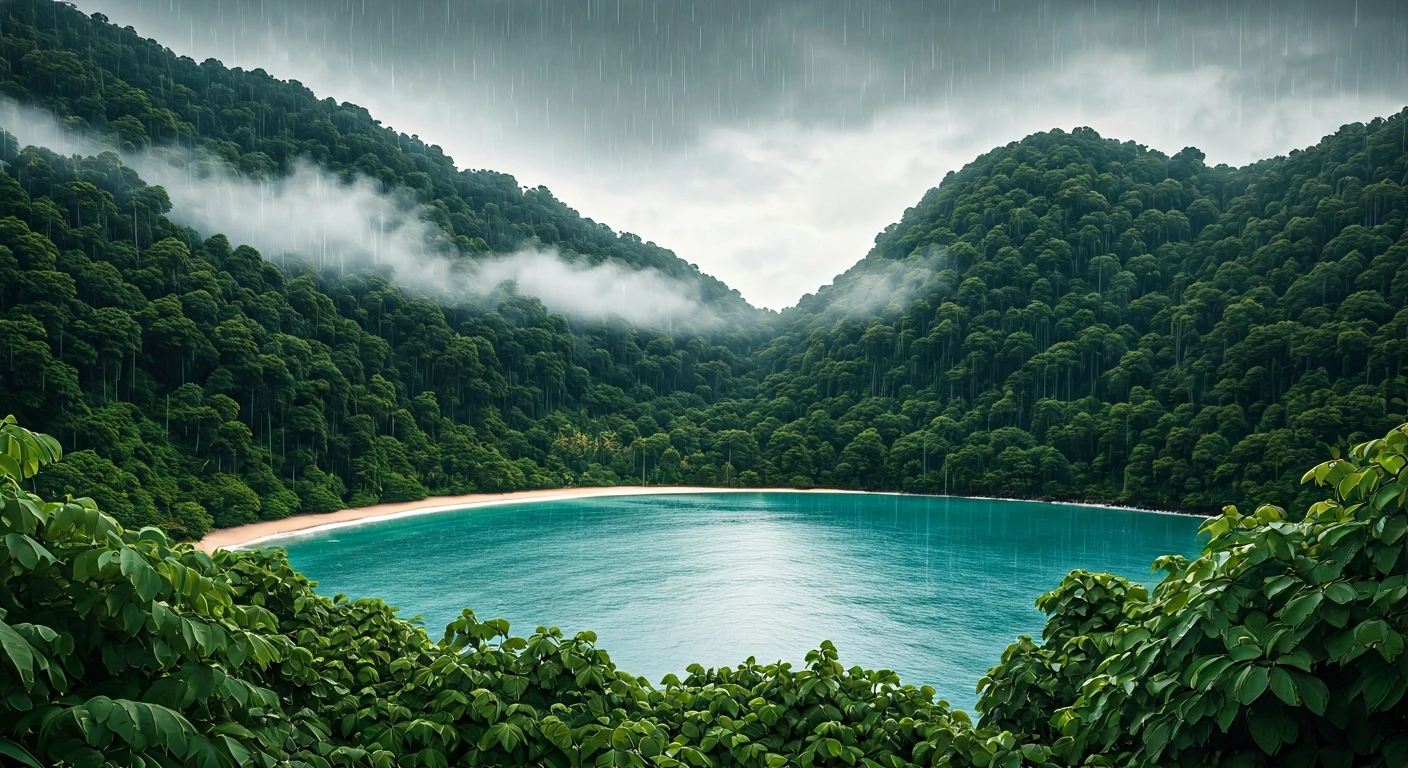
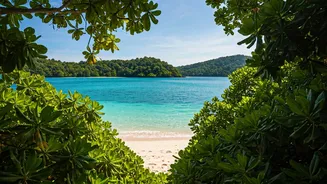
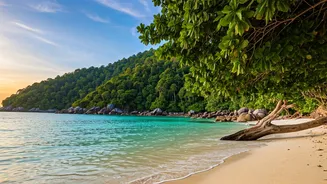
The journey begins as dusk settles over Havelock Island, now officially known as Swaraj Dweep. It’s one of the most visited jewels in India’s Andaman archipelago, a scattering of emerald isles in the Bay of Bengal. But this adventure isn’t about sun-drenched
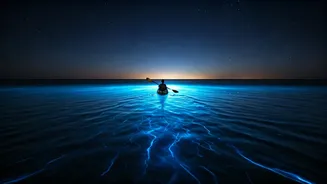
beaches or scuba diving through coral reefs. This one belongs to the night. As your kayak pushes off from the shore, the familiar sounds of civilization—the faint music from a beachside café, the chatter of fellow tourists—begin to fade. Your guide navigates you away from the coastline, past the dark silhouettes of mangrove forests, and into the vast, silent darkness of the open water. There’s a palpable sense of anticipation. The only light comes from the distant stars above, and on a new moon night, even they seem to hold their breath, leaving the world cloaked in an almost absolute black.
The Science of Living Light
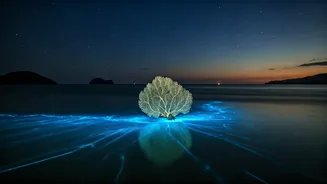
What you’re waiting for is not magic, but a beautiful biological phenomenon. The water here is rich with dinoflagellates, a type of microscopic phytoplankton. These single-celled organisms are the unsung artists of the ocean. During the day, they photosynthesize like plants. But at night, they possess a defense mechanism that turns them into tiny, living lanterns. When disturbed—by the movement of a paddle, the wake of a kayak, or the splash of a hand—they emit a flash of blue-green light. This chemical reaction, called bioluminescence, is their way of startling predators. But for the human observer, it’s a spectacle that transforms the sea into an interactive canvas. The darkness is not an absence of light, but a prerequisite for revealing a different kind of illumination, one that’s alive and responsive.
A Galaxy in Your Hands
The first time you see it, it’s a shock to the system. You dip your paddle into the inky water, and with that simple motion, a shimmering vortex of light erupts, trailing your stroke like a comet's tail. A gasp is the most common reaction. You do it again, faster this time, and the water explodes with more intensity. Soon, you’re tracing glowing patterns on the surface. You trail your fingers in the water, and they become wands, painting with light. The most profound moment comes when you stop paddling and simply cup the water in your hands. There, in your palms, are hundreds of tiny, glittering specks, like a captured piece of the Milky Way. They sparkle for a moment before fading back into the darkness. In that instant, you are holding starlight. Fish darting beneath the kayak become fleeting streaks of neon, and for a while, you forget everything but the quiet, rhythmic dance of light and water.
Why This Memory Endures
In an age of hyper-documented travel, the bioluminescence of the Andamans remains stubbornly, beautifully ephemeral. It defies photography; a smartphone camera can’t capture the subtle, dynamic glow. You can’t bottle it, post it, or properly convey its impact with a filter. It exists only in the moment, as a personal, sensory experience. And that is precisely why the memory is so indelible. It forces you to be present. You’re not trying to get the perfect shot; you’re simply witnessing a miracle. It’s a primal connection to the natural world, a reminder that there are still pockets of genuine magic left, far from the glow of our screens and cities. The experience feels less like an attraction and more like a secret shared between you and the ocean.