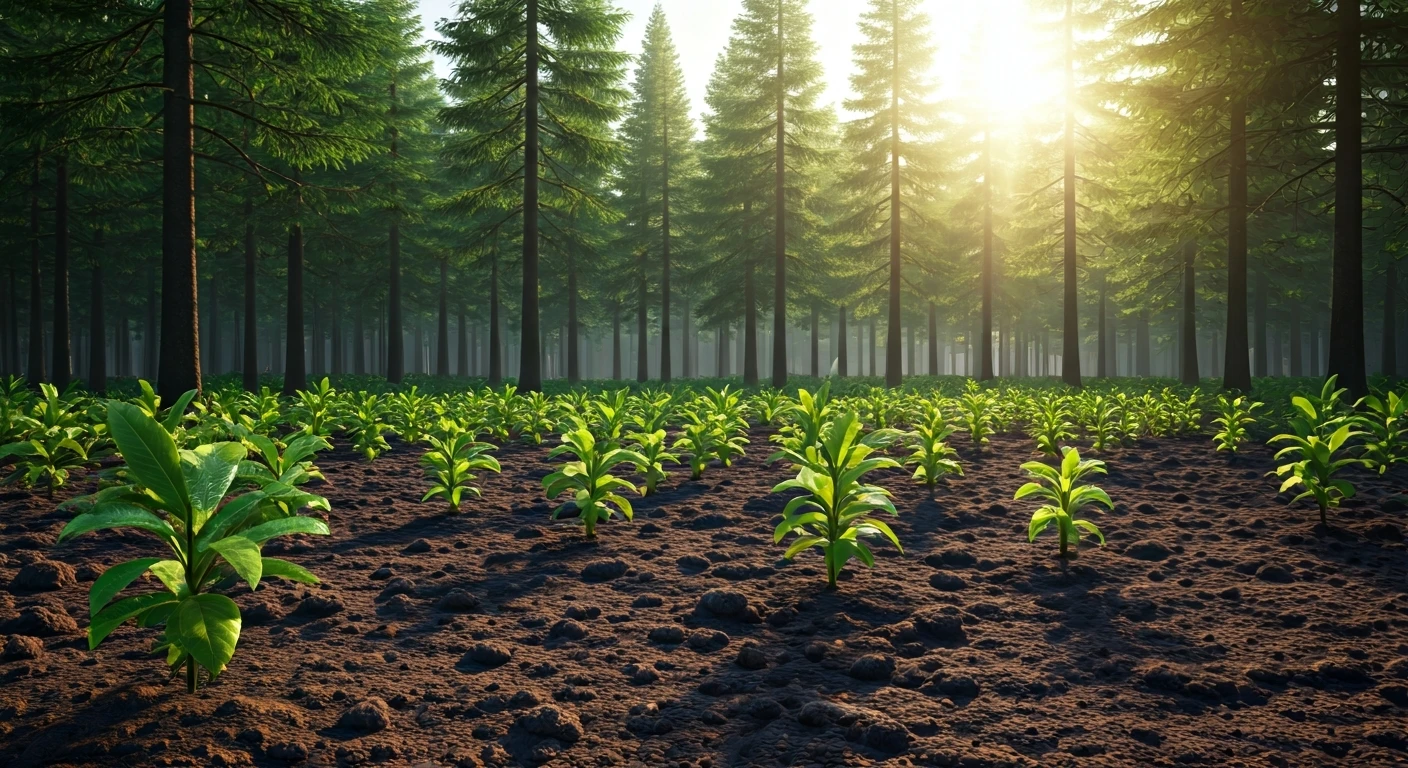









What Is the 'Green Moment'?
India’s “biggest June moment” isn’t a single holiday or festival, but the unofficial kickoff of its massive annual tree-planting season. Timed to coincide with World Environment Day on June 5th and the arrival of the life-giving monsoon rains, this period
sees state governments, NGOs, and millions of citizens mobilize to plant billions of saplings. It’s an effort born of necessity, a nationwide strategy to combat desertification, secure water resources, and fulfill ambitious climate promises. The monsoon is critical; the sustained rainfall from June to September gives the newly planted saplings their best chance of survival in the crucial early months.
Ambition on a Billion-Tree Scale
The numbers involved are difficult to comprehend. In recent years, states like Uttar Pradesh, India's most populous, have orchestrated single-day drives aiming to plant over 300 million trees—roughly equivalent to one sapling for every person in the United States. These aren't just symbolic gestures. They are meticulously planned logistical operations involving government nurseries that cultivate saplings for months, a massive distribution network, and designated planting sites ranging from degraded forests and roadsides to farmlands and schoolyards. These campaigns, often branded with names like "Van Mahotsav" (Forest Festival), are designed to be high-profile public events, encouraging widespread participation and generating a sense of collective environmental purpose.
More Than Just Planting Trees
For India, this is about more than just greening the landscape. The country is on the front lines of climate change, facing intensifying heatwaves, erratic rainfall, and rapid land degradation. Large-scale afforestation is seen as a key tool to mitigate these effects. Trees act as a powerful carbon sink, absorbing CO2 from the atmosphere. Their roots help prevent soil erosion and improve groundwater recharge, a critical benefit in a country where water scarcity is a growing concern for hundreds of millions. Furthermore, these programs are tied to India’s international commitments under the Paris Agreement, which include creating an additional carbon sink of 2.5 to 3 billion tonnes of CO2 equivalent through additional forest and tree cover by 2030. Achieving that goal requires planting trees at an unprecedented rate.
The Reality Check: Does It Work?
While the ambition is laudable, the reality on the ground is complex. Critics point to the crucial difference between planting a tree and growing a forest. The headline-grabbing numbers of single-day planting drives often mask a more sobering statistic: low survival rates. A government audit in one state found that over 60% of saplings in some non-forest areas didn't survive. The reasons are varied: poor site selection, lack of after-care, and damage from grazing animals. There's also the ecological concern of monocultures. To meet targets, officials sometimes favor fast-growing but non-native species like eucalyptus, which can deplete groundwater and offer little value to local biodiversity compared to a mixed, native forest. Environmentalists argue that the focus should shift from the number of trees planted to the number of trees that actually survive and thrive long-term, and on restoring ecosystems rather than just planting rows of saplings.