





1. Texas Sage (Leucophyllum frutescens)
Often called the “barometer bush,” Texas Sage is famous for bursting into a profusion of purple, pink, or white flowers in response to the high humidity that precedes a rainstorm. It’s a magical, almost psychic, garden addition. This tough-as-nails shrub
is native to the Chihuahuan Desert, making it perfectly adapted to blistering sun and poor, rocky soils. It asks for almost nothing from you—no fertilizer, minimal pruning, and once established, it lives happily on natural rainfall. During the monsoon, it soaks up the moisture and puts on a spectacular show, rewarding your patience through the dry months.
2. Red Yucca (Hesperaloe parviflora)
Don’t let the name fool you; this isn’t a true yucca. It’s a more delicate, user-friendly plant with soft, grass-like leaves that form an attractive clump. Its real claim to fame is the tall, slender spikes of coral-pink, bell-shaped flowers that appear in late spring and can last all summer long. Red Yucca is a favorite of hummingbirds and gardeners alike for its resilience. It scoffs at heat and drought, but its deep root system is brilliant at capturing and utilizing the sudden deluges of monsoon season. It’s the perfect plant for adding vertical interest and a splash of color to a low-water landscape.
3. Creosote Bush (Larrea tridentata)
If you want a plant that truly captures the scent of the desert after a storm, look no further than the Creosote Bush. Its resinous leaves release a distinctive, earthy aroma—the smell of petrichor personified—when wet. While it may look unassuming for much of the year, this iconic desert native is a master of survival. It can handle the driest conditions by going semi-dormant, only to spring to life with small, waxy yellow flowers and fluffy white seed heads after a good monsoon soak. It’s the ultimate low-maintenance choice, requiring literally zero supplemental care once established in the right environment.
4. Desert Marigold (Baileya multiradiata)
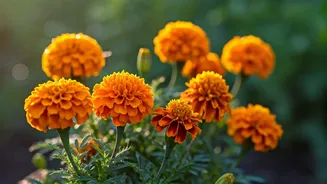
For a cheerful, non-stop splash of sunshine in your garden, the Desert Marigold is unbeatable. These hardy perennials produce bright yellow, daisy-like flowers on silvery-green foliage, often blooming from spring through fall. They are champions of self-sufficiency, thriving in sandy, well-drained soil and full sun. During the monsoon, they soak up the rain and often respond with an even more impressive flush of blooms. They are short-lived perennials but readily reseed, ensuring you’ll have a happy patch of yellow year after year with no effort. They’re perfect for filling in borders or creating a meadow-like effect.
5. Firecracker Penstemon (Penstemon eatonii)
Another top choice for attracting hummingbirds, the Firecracker Penstemon sends up brilliant stalks of bright red, tubular flowers in the spring. While its main show is in the cooler months, it’s a savvy monsoon gardener. The plant often goes dormant during the worst of the early summer heat, conserving its energy. When the rains arrive, it quickly revives, greening up its basal foliage and sometimes even sending up a second, smaller round of blooms. It’s a wonderful example of a plant that works with the seasons, not against them. Plant it in a spot with great drainage to keep it happy during heavy downpours.
6. Parry’s Agave (Agave parryi)
For architectural drama and year-round structure, an agave is a must. Parry’s Agave is a particularly handsome choice, forming a tight, symmetrical rosette of broad, blue-gray leaves with distinctive dark tips. It’s a sculptural masterpiece that looks good every single day of the year. Agaves are the epitome of low-maintenance; their entire system is designed to store water and survive drought. When the monsoons come, their shallow, widespread root systems are incredibly efficient at capturing every drop of the precious rainfall, storing it for the dry months ahead. Just give it plenty of sun and space to grow, and it will be the focal point of your desert garden for years to come.