





Why It's Your Garden's Best Policy
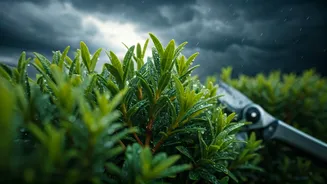
Calling pruning “insurance” isn’t just a catchy phrase; it’s an accurate description of risk management for your landscape. A dense, overgrown tree or shrub acts like a sail in the powerful downdrafts and microbursts common in monsoon storms. The wind
catches the thick canopy, putting immense stress on branches and the trunk. The result is often snapped limbs, uprooted trees, and potential damage to your home or property. Proper pruning reduces this risk significantly by thinning the canopy. Instead of a solid wall of leaves, your plant becomes a more open structure that allows wind to pass through with less resistance. This selective trimming also improves air circulation within the plant, which is crucial when the humidity spikes after a storm. Better airflow helps prevent the fungal diseases and pests that thrive in damp, stagnant conditions. In short, you’re not just cutting branches; you’re investing in your garden's resilience and long-term health.
Identifying Your High-Risk Assets
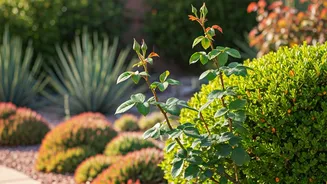
Not every plant needs the same pre-monsoon haircut. The key is to focus on the ones most vulnerable to wind damage. Your primary targets should be native and desert-adapted trees with large canopies, like mesquites, palo verdes, and desert willows. These trees are naturally adapted to the climate but can become overly dense, especially with supplemental irrigation. Large, fast-growing shrubs are also high on the list. Plants like Texas sage (Leucophyllum), creosote, and oleander can become top-heavy and unruly, making them prime candidates for breakage. Finally, don't forget your succulents. While they don't have leafy canopies, overgrown agave or yucca flower stalks can topple in high winds, and dense patches of prickly pear can trap moisture and debris, leading to rot. A strategic clean-up helps them weather the storms.
The Art of the 'Thinning' Cut
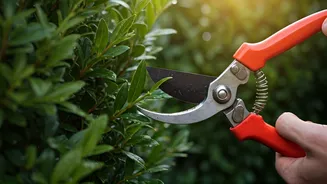
The goal of pre-monsoon pruning is not to give your plants a severe buzzcut. In fact, aggressive shearing or “topping” is one of the worst things you can do. This encourages a dense shell of weak, new growth that is even more susceptible to wind damage later. Instead, the proper technique is “thinning.” Using clean, sharp loppers or a pruning saw, selectively remove entire branches back to their point of origin—either at the trunk, a main stem, or another branch. Focus on removing branches that are dead, damaged, or rubbing against each other. Identify branches that cross through the center of the plant, blocking light and air. The aim is to open up the structure while maintaining the plant’s natural shape and form. A good rule of thumb is to never remove more than 25-30% of a tree's or shrub's canopy in a single season. Step back frequently to assess your work and ensure you’re creating a balanced, stable structure.
Timing and Common Mistakes to Avoid
Timing is everything. The ideal window for this task is in late spring or early summer—typically May and June—after the harshest of the spring winds have passed but before the monsoon season officially kicks off in July. Pruning too early can expose sensitive new growth to late frosts, while pruning too late means you’ve missed your window of protection. Beyond bad timing, the most common mistake is over-pruning. Resist the urge to dramatically reshape your plants. Excessive trimming stresses the plant and can lead to sunburn on newly exposed bark. Another pitfall is pruning the wrong plants. Avoid pruning citrus trees heavily during this period, as they are sensitive to sun exposure. Likewise, leave spring-flowering shrubs alone; if you prune them now, you’ll be cutting off the growth that will produce next year’s flowers. When in doubt, a light touch is always better than an aggressive one.