





Multnomah Falls, Oregon
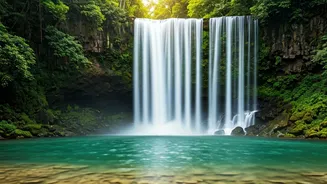
Plunging 620 feet in two tiers, Multnomah Falls is the iconic postcard of the Pacific Northwest for a reason. Located in the Columbia River Gorge, it’s astonishingly accessible; you can see its full grandeur a short walk from the historic lodge. The real
magic happens on the Benson Bridge, which spans the gap between the two drops. Standing there, you’re enveloped in a fine, chilly mist that feels like nature’s air conditioning. The roar is constant and consuming, washing away the drone of traffic from the nearby highway. It’s a powerful reminder that the best way to cool down is often the most dramatic, a sensory overload that leaves you feeling refreshed and utterly insignificant in the face of nature's power.
Ruby Falls, Tennessee
Not all cooling escapes are found under the open sun. Deep inside Tennessee’s Lookout Mountain, a guided tour takes you 1,120 feet underground to a truly unique spectacle: Ruby Falls. This 145-foot subterranean waterfall is the tallest of its kind in the United States accessible to the public. The cave maintains a cool 60°F year-round, offering an immediate and welcome respite from the humid Southern heat. The waterfall itself is dramatically lit, its stream appearing from a dark ceiling and crashing into a pool below. While more of a curated experience than a wild hike, the sheer novelty and the profound, earthy coolness make it an unforgettable way to beat the heat.
Kaaterskill Falls, New York
For East Coasters seeking a classic mountain escape, Kaaterskill Falls in the Catskills is a legendary destination. This two-tiered waterfall, totaling 260 feet, has inspired artists and writers for centuries. A moderate hike through a lush, shaded forest leads you to its base, where the temperature noticeably drops. The air grows heavy with moisture, and the sound of the falling water echoes off the walls of the natural amphitheater. The pool at the bottom, though swimming is now restricted for safety, creates a microclimate of cool. It’s the perfect reward for a summer hike—a place to simply sit on a rock, feel the spray on your face, and let the sounds of the forest and the falls provide the only soundtrack you need.
Cumberland Falls, Kentucky
Often called the “Niagara of the South,” Cumberland Falls is a massive curtain of water, 125 feet wide and dropping 68 feet into a boulder-strewn gorge. The sheer volume of water creates a constant, powerful mist that can be felt from multiple viewing platforms, offering an instant cooldown on a hot Kentucky day. But what makes Cumberland truly special is the “moonbow,” a rare lunar rainbow that appears in its mist on clear nights during a full moon. Visiting during the day provides a visceral, cooling experience, but seeing this phenomenon at night elevates it into something mystical. It proves that a waterfall isn't just a daytime attraction; its ability to awe and refresh extends long after the sun goes down.
Shoshone Falls, Idaho
Sometimes, you just need to witness raw power. Known as the “Niagara of the West,” Shoshone Falls on the Snake River is actually taller than its more famous eastern counterpart, dropping 212 feet. The best time to visit is in the spring or early summer when snowmelt feeds the river, creating a torrent so wide and forceful it seems to consume the entire canyon. While it can be viewed from a distance in a well-maintained park, the sheer scale of the falls generates its own weather system. The wind and mist it kicks up can be felt from hundreds of yards away, providing a welcome break from the dry Idaho heat. It’s less of an intimate misting and more of a humbling, awe-inspiring drenching in nature’s unbridled energy.