






The Mechanic Shop in the Sky
The sector everyone is buzzing about is called In-Space Servicing, Assembly, and Manufacturing, or ISAM. It’s less about heroic exploration and more about practical, orbital logistics. Think of it as the AAA, the construction crew, and the factory floor
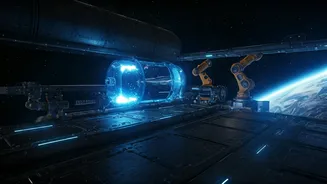
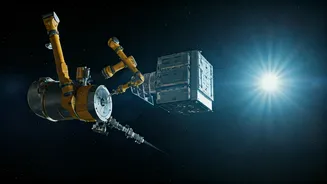
of space, all rolled into one. ISAM encompasses a range of activities: refueling satellites that are low on gas, repairing or upgrading aging hardware, tugging space junk out of orbit, and eventually, building massive structures directly in space that would be too large or delicate to survive a rocket launch. For decades, satellites were like disposable lighters: once their fuel ran out or a single component failed, the multimillion-dollar asset was just a piece of high-speed junk. ISAM changes that entire model. It aims to turn satellites into serviceable, upgradable platforms, fundamentally altering the economics of space.
Why the Sudden Buzz?
Two major forces are driving the ISAM boom. First, there’s a massive traffic jam overhead. We have thousands of active satellites in orbit, with tens of thousands more planned in mega-constellations like Starlink. This orbital real estate is becoming crowded and cluttered with both active and defunct hardware. The risk of collision is rising, and the demand for ways to manage this orbital fleet is skyrocketing. Extending the life of a satellite that costs hundreds of millions of dollars is a powerful business case. Second, the technology has finally caught up to the ambition. Advances in robotics, autonomous systems, and artificial intelligence now make it possible for one spacecraft to rendezvous with, dock to, and perform complex tasks on another without human intervention. Government agencies like NASA and the U.S. Space Force are pouring money into demonstration missions, proving the tech is viable and creating confidence for private investors to jump in. It’s a perfect storm of urgent need and newfound capability.
The Key Players in the Orbital Economy
This isn’t just a game for startups. The field is a fascinating mix of established aerospace giants and nimble newcomers. Northrop Grumman is a major player with its Mission Extension Vehicle (MEV), a satellite that has already successfully docked with and extended the life of commercial communications satellites. Think of it as a jetpack that clamps onto an older satellite to give it a new lease on life. On the startup side, companies like Astroscale are developing “space tow trucks” to capture and de-orbit space debris, acting as celestial sanitation workers. Others, like Momentus, are building orbital transfer vehicles—space tugs that can move satellites from one orbit to another after the main rocket drops them off. Venture capital is flowing into these companies because investors see a future where servicing satellites is as routine as servicing a corporate jet fleet.
From Simple Repairs to Building in Space
The long-term vision for ISAM is where things get truly exciting. Simple servicing is just the beginning. The “Assembly and Manufacturing” part of the acronym points to a future where we build things in orbit that we could never launch from Earth. Imagine assembling a telescope with a mirror the size of a football field, unconstrained by the payload fairing of a rocket. Or printing 3D components for a Mars habitat using materials mined from asteroids. This capability is foundational for the next era of human activity in space. It could enable the construction of massive solar power stations that beam clean energy back to Earth, large-scale orbital habitats, or interplanetary ships assembled piece-by-piece in zero gravity. ISAM is the critical infrastructure that transforms space from a destination into a dynamic worksite.