





More Than Just Hitting Your Steps
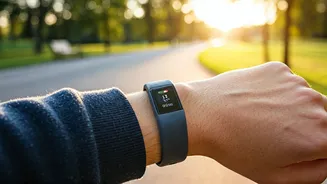
For years, the conversation around walking was dominated by fitness trackers and the pursuit of 10,000 steps. It was a private, data-driven goal. Today, that's changing. The new wave of walking is social, intentional, and culturally resonant. It’s less
about calories burned and more about connection, both with others and with oneself. The most visible example is the “Hot Girl Walk,” a TikTok trend that exploded into a real-world practice. Coined by creator Mia Lind, the concept isn't about appearance but about mindset. It’s a dedicated walk where you think about three things: what you're grateful for, your goals, and how hot you are. It reframed a solo activity as an act of self-care and mental empowerment, creating a shared ritual for millions.
The Post-Pandemic Push for Community
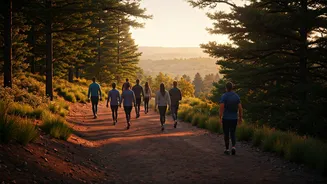
The seeds of this movement were planted during the COVID-19 pandemic. As gyms closed and indoor gatherings became impossible, Americans took to the sidewalks. Walking was one of the few safe, accessible ways to escape the confines of home, get fresh air, and see other human faces, even from a distance. This mass migration outdoors reacquainted people with their own neighborhoods. We discovered local parks, noticed architectural details on our streets, and developed a new appreciation for public space. As restrictions lifted, the habit stuck, but its purpose evolved. Having spent months in relative isolation, people were craving low-stakes, casual community. Walking clubs, both formal and informal, began popping up in cities and suburbs, offering an easy way to meet people without the pressure of a bar or a structured event. It filled a social void the pandemic had carved out.
Digital Fuel for an Analog Activity
It’s one of the great ironies of this trend: our most hyper-digital platforms are fueling a profoundly analog activity. Social media, particularly TikTok and Instagram, has been instrumental in giving these walks a name, a format, and a sense of collective identity. Hashtags like #hotgirlwalk, #silentwalking, and #walkclub have billions of views, creating a virtual community board where people share routes, motivations, and moments of clarity. Influencers and everyday users alike post videos from their walks, turning a solitary stroll into a shared experience. This digital layer doesn't detract from the activity; it validates it. Seeing countless others embrace the same simple ritual provides encouragement and transforms a personal habit into a legitimate cultural current. It gives people permission to slow down and find meaning in putting one foot in front of the other.
A Quiet Form of Rebellion
Beyond self-care and community, this new focus on walking contains a subtle act of rebellion. The rise of “silent walking”—strolling without podcasts, music, or any audio distraction—is a direct rejection of our hyper-stimulated, always-on culture. It’s a reclamation of mental space, an opportunity for boredom and contemplation in a world that constantly demands our attention. Proponents describe it as a form of moving meditation, a way to process thoughts and simply be present. In a broader sense, the sheer act of walking in car-centric American cities can be a political statement. It asserts a right to public space, challenging the dominance of automobiles and highlighting the need for more pedestrian-friendly infrastructure. While not an organized protest, it represents a grassroots desire for cities and towns designed for people, not just for traffic.