





The Sun Becomes the Schedule
Imagine a city where the workday doesn’t follow a strict 9-to-5, but instead bends to the will of the sun. This isn't a sci-fi concept; it's the lived reality for millions in India during increasingly brutal heatwaves. The 'hack' isn't a gadget or an
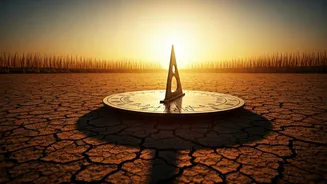
app, but a collective, informal agreement to restructure daily life. The core principle is simple: avoid being active outdoors when the sun is at its most punishing, typically from 11 a.m. to 4 p.m. This goes far beyond a simple siesta. It’s a temporal shift, a society-wide rescheduling of work, commerce, and social life to operate in the cooler margins of the day—early mornings and late evenings.
A Day Redesigned by Heat
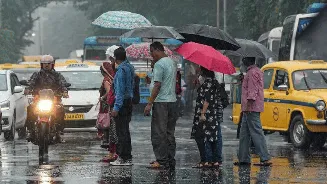
So what does this look like in practice? In cities like New Delhi or states like Odisha, it's a symphony of adaptation. Street markets, which would typically bustle mid-day, spring to life at dawn and then again after sunset, with vendors and shoppers conducting business under cooler, darker skies. Construction workers, delivery drivers, and agricultural laborers—those most exposed to the elements—often adopt a 'split shift,' working from sunrise until late morning and then resuming their duties in the early evening, well after the peak heat has subsided. Schools have adjusted their hours, starting and ending earlier to ensure children aren't commuting during the most dangerous part of the day. Playgrounds, once deserted in the afternoon glare, are now filled with the sounds of children playing late into the evening. It’s a fundamental re-engineering of public rhythm, driven not by a government mandate, but by common-sense survival.
When Heat Becomes a Health Crisis
This societal shift is a direct response to a lethal threat. In many parts of India, heatwaves now bring temperatures that, when combined with high humidity, reach a dangerous 'wet-bulb' reading. This is the point at which the air is so hot and moist that human sweat can no longer evaporate to cool the body. At this threshold, even healthy people sitting in the shade can experience fatal hyperthermia in a matter of hours. The Indian government has issued public health warnings advising citizens to stay indoors and hydrated during peak hours. But the 'outdoor timing' strategy is a grassroots, bottom-up solution that acknowledges a critical fact: for many, staying inside all day isn't an option. For those whose livelihoods depend on being outdoors, rearranging the 'when' is the only viable way to manage the 'what.'
A Lesson for America's Sun Belt
While this may seem like a distant reality, it's a preview of a future that’s already arriving in the United States. Cities like Phoenix, Houston, and Miami are grappling with their own record-breaking heatwaves and rising humidity. The rigid American 9-to-5, five-day work week, a relic of a bygone industrial era with a cooler climate, is poorly suited for this new reality. While air conditioning provides a crucial buffer, it’s an energy-intensive and expensive one, and it does little for those who work outdoors. India’s informal, society-wide adaptation offers a powerful lesson: our most effective climate tool may not be purely technological. It might be cultural. Adopting more flexible, heat-aware schedules—earlier start times for schools and outdoor jobs, a mid-day break for rest, and a more vibrant evening economy—could be a low-cost, high-impact way to build resilience. It requires a mental shift, a willingness to let our environment, not just tradition, dictate our daily rhythms.