


Meet Experimental Eye Art
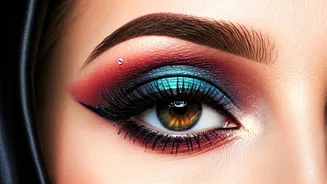
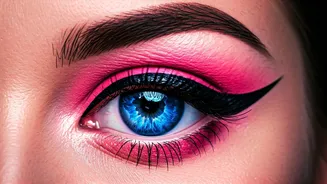
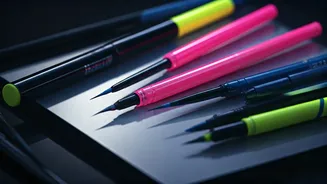
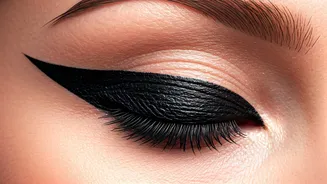
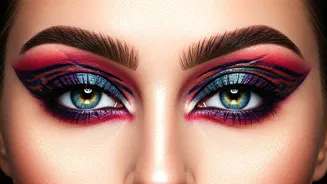
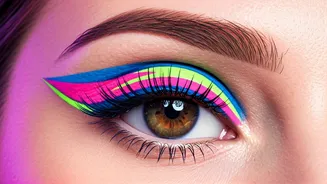
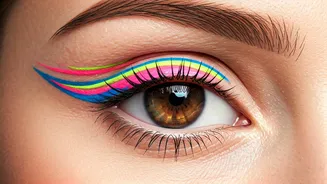
Forget the subtle, blended-to-perfection eyeshadow of the Millennial era. The aesthetic that defines Gen Z is all about the eyes, but in a way that’s intentionally deconstructed and unapologetically bold. We’re talking about graphic liner—sharp, colorful
lines that float above the crease, create geometric shapes, or trace the inner corner of the eye. It’s about asymmetry, with one eye decorated differently from the other. It’s also about adornment: tiny pearls, rhinestones, and star-shaped stickers placed around the eye not to create a cohesive “look,” but to express a fleeting mood. Think of it less as makeup and more as face-painting for adults. Instead of a single, defined technique, it's an ethos of experimentation where the goal isn't to look conventionally 'pretty' but to look interesting, creative, and, most importantly, like yourself.
A Breakup with Millennial Perfection
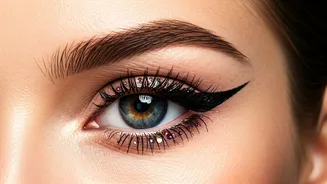
To understand this trend, it helps to know what it’s reacting against. For years, the dominant beauty standard, popularized on YouTube and early Instagram, was about flawless execution. It was the era of the sharp 'Instagram brow,' the meticulously carved 'cut-crease' eyeshadow, heavy contouring, and matte liquid lipstick. The goal was transformation through technique—a high-glam, polished finish that often looked similar from one influencer to the next. Gen Z's approach is the polar opposite. It embraces messiness, playfulness, and imperfection. The liner doesn't have to be perfectly symmetrical. The colors can clash. The placement can be unconventional. This isn't about hiding flaws; it's about using your face as a canvas for self-expression, and the process is just as important as the final result.
The 'Euphoria' Effect
You can't talk about this trend without mentioning the HBO series *Euphoria*. The show’s head makeup artist, Donni Davy, created looks that became a cultural phenomenon in their own right. Each character’s makeup was an extension of their emotional state—glitter tears for sadness, sharp lines for anger, dreamy pastels for vulnerability. Suddenly, makeup wasn’t just for a party; it was for processing your feelings. *Euphoria* gave millions of young people permission to be emotionally and artistically expressive with their makeup. It detached eye makeup from the goal of seduction or beautification and re-centered it as a tool for storytelling. The looks were intricate but felt achievable, inspiring a wave of re-creations and interpretations across social media.
Fueled by TikTok and Authenticity
While *Euphoria* provided the inspiration, TikTok provided the engine. Unlike the curated perfection of the Instagram grid, TikTok's algorithm favors authenticity, creativity, and speed. Short-form videos are the perfect medium for showcasing a quick, cool makeup look. A 15-second clip can show a user drawing a funky line with a neon liner, and the trend can spread globally in a matter of days. This digital ecosystem rewards individuality. There’s no single “right” way to do it. Users are encouraged to put their own spin on a trend, whether it's “crying makeup” (using glitter to simulate tears) or “underpainting” (applying contour and blush before foundation for a more natural flush). It’s a collaborative, ever-evolving creative space where weirdness is a virtue.