







What Exactly is an AI Sandbox?
Forget a child’s playset. In the world of high-tech engineering, an “AI sandbox” is a sophisticated virtual environment designed for experimentation. Think of it as a hyper-realistic, physics-based video game for industrial designers. At its core, this
technology is built on the concept of the “digital twin”—an exact, living 3D replica of a physical object, machine, or even an entire factory. You can have a digital twin of a single robotic arm, a jet engine, or a sprawling warehouse. The “sandbox” is the interactive, simulated world where this twin lives. The “AI” is the magic ingredient. Instead of just being a static 3D model, artificial intelligence infuses the simulation with the ability to learn, predict, and run millions of scenarios in a fraction of the time it would take in the real world. You can ask it to test a component for ten years of simulated wear and tear in just a few hours, all without a single physical part being manufactured.
From Blueprint to Interactive Reality
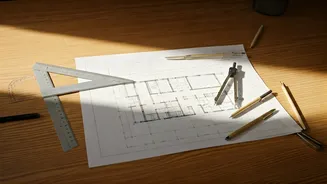
The process begins with something familiar: a Computer-Aided Design (CAD) model, the standard digital blueprint for virtually every modern product. This 3D model is imported into the AI sandbox environment. But this is where it diverges from simple visualization. Developers then layer on real-world physics. Gravity, friction, material strength, thermodynamics, and fluid dynamics are all calculated in real time. A model of a new vehicle’s chassis is no longer just a shape; it can be subjected to simulated crash tests, with the AI analyzing stress points and potential failures. A proposed factory layout can be populated with virtual workers and robots to identify bottlenecks and safety hazards before construction even begins. The AI doesn’t just run a pre-programmed test; it can explore the consequences of different inputs, learning how the system behaves under a near-infinite variety of conditions, including those the designers never thought to test.
Putting Virtual Prototypes to Work
This isn't science fiction; it's already transforming major American industries. In the automotive sector, companies like BMW and Ford are using platforms such as NVIDIA’s Omniverse to create digital twins of their entire production facilities. They can simulate a new assembly line, optimize the movements of robotic welders, and train employees in a virtual space, dramatically reducing the costly downtime and errors associated with retooling a physical factory. In aerospace, engineers can simulate the complex airflow over a new aircraft wing design under thousands of different atmospheric conditions, accelerating development and reducing reliance on expensive wind tunnels. The energy sector is using these sandboxes to model power grids, allowing them to predict the impact of a storm or equipment failure and reroute power proactively to prevent widespread blackouts. These tools move design from a static, reactive process to a dynamic, predictive one.
The Edge Over Old-School Simulation
Computer simulation isn't new, but traditional methods have limitations. They were often slow, computationally expensive, and relied on simplified mathematical models that couldn’t capture the full complexity of real-world systems. An old simulation might be able to model one part of a machine well, but it would struggle to model how that part interacts with a thousand other moving pieces in a chaotic environment. AI-powered sandboxes represent a quantum leap. By using AI and the massive parallel processing power of modern GPUs, they can handle immense complexity and fidelity. More importantly, they can learn from data. The AI can analyze the results of millions of simulated tests to identify non-obvious design flaws or even suggest novel improvements that a human engineer might miss. This accelerates the innovation cycle, reduces the risk of costly late-stage discoveries, and ultimately lowers the barrier to creating more sophisticated and efficient products.



![OTT releases of the week [June 17- June 21]: New movies and shows set to stream on Netflix, Prime Video and more](https://g-mob.glance-cdn.com/public/fc/image/iZ2zlHxbK4d0.webp)