



The Necessary Inefficiency
Modern life is a cult of efficiency. We have apps for the fastest route, the cheapest gas, the quickest meal. The American interstate system is the physical embodiment of this mindset: a 48,000-mile network designed to move people and goods from Point
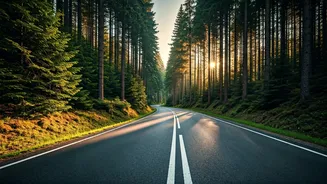
A to Point B with ruthless speed and minimal fuss. It’s a marvel of engineering, but it’s a terrible way to see the country. Interstates are designed to bypass nature, to flatten hills, and to keep you moving at a steady, soul-numbing 70 miles per hour. A mountain road is the antidote. It is, by its very nature, inefficient. It cannot conquer the landscape; it must follow it. The road bends with the contours of the earth, dips into valleys, and clings to cliff faces. It forces you to slow down, to pay attention, to become an active participant in the act of driving. This isn't about getting somewhere quickly. It’s about being somewhere completely.
A Dialogue with the Landscape
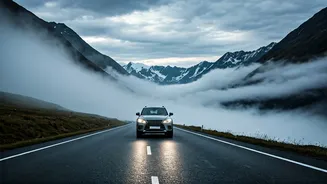
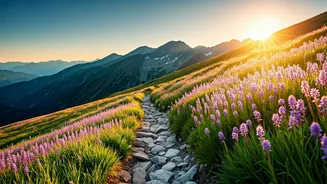
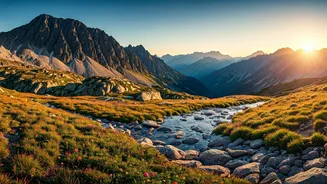
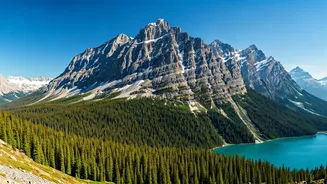
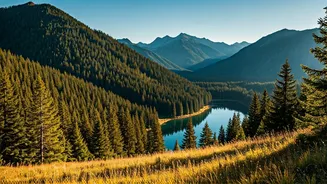
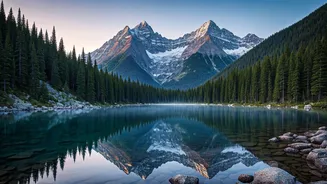
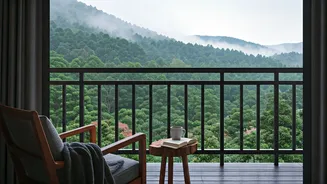
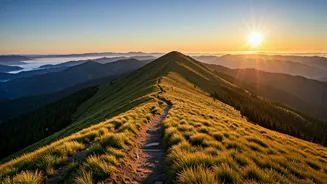
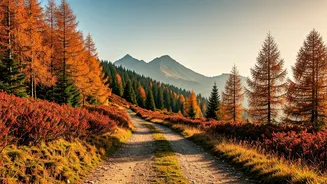
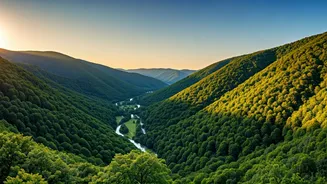
On the interstate, the world blurs into a green and brown smear punctuated by billboards and service stations. A mountain road, however, engages you in a conversation with your surroundings. Every hairpin turn reveals a new vista—a sprawling valley, a snow-capped peak, a sliver of a distant river. You’re not just passing through the scenery; you’re immersed in it. The slower pace allows you to notice the details: the way the light filters through the aspens in Colorado, the dense, fragrant fog rolling over the Blue Ridge Mountains in Virginia, or the stark, powerful geology of Montana’s Rockies. You’re more likely to pull over at an unmarked scenic overlook, to stop and listen to the wind, or to watch a hawk circle on a thermal updraft. This type of travel replaces passive consumption with active observation, creating memories that are richer and more deeply etched than any highway milestone.
The Satisfying Challenge
Let’s be honest: there’s a quiet thrill to navigating a mountain pass. It requires a level of focus that a straight, flat highway simply doesn’t demand. You’re managing your speed into a switchback, downshifting for a steep ascent, and keeping a keen eye on the narrow shoulder. It’s a low-stakes challenge that rewards you with a tangible sense of accomplishment. This isn’t about reckless driving; it’s about skillful control. In an era of semi-autonomous cars that practically drive themselves, taking the wheel on a demanding road reconnects you to the machine and the task at hand. The hum of the engine changes as you climb, the steering feels more responsive, and a successful traverse from one valley to the next feels like a small victory. This is the “adventure energy” the headline promises—a feeling of capability and self-reliance earned one curve at a time.
America’s Greatest Classrooms
These roads are more than just pavement; they are historic and cultural corridors. Think of Montana’s Going-to-the-Sun Road, a Depression-era marvel of engineering that unlocks the glacial heart of a national park. Driving it is a journey through geology and human ambition. Or consider the Blue Ridge Parkway, winding for 469 miles through the Appalachian Highlands, connecting two national parks and offering a rolling tapestry of American folklore, music, and nature. In Colorado, the Million Dollar Highway offers dizzying views and a visceral connection to the state’s 19th-century mining boom. Each road tells a story, and driving it is the best way to read its chapters.