



An Arrival Over Emerald and Blue
The journey to the Andaman and Nicobar Islands is a commitment, and that’s the first filter. For most American travelers, it involves a long-haul flight to a major Indian hub like Chennai or Kolkata, followed by another two-hour flight over an endless
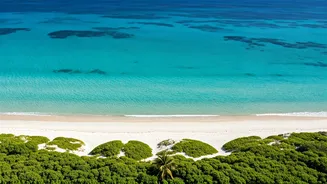
expanse of deep blue sea. As the plane descends, that blue is suddenly interrupted by the sight of emerald-green islands fringed with what looks like powdered sugar. This is the first hint that you’ve left the familiar world behind. Stepping out of the small airport in Port Blair, the capital, the air is thick, humid, and scented with salt and tropical foliage. You haven't just crossed time zones; you’ve crossed a threshold into a place that operates on its own languid rhythm.
The Grandeur of Radhanagar Beach
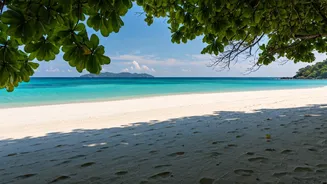
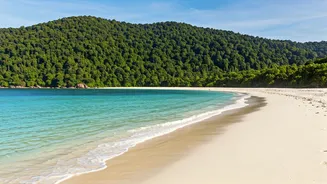
Havelock Island (now officially Swaraj Dweep) is the most developed of the islands open to tourists, and home to Radhanagar Beach, once famously dubbed “Asia’s Best Beach” by Time Magazine. A title like that usually spells doom, a death knell for tranquility. And yes, near the main entrance, you’ll find families splashing and vendors selling fresh coconut water. But walk for just ten minutes in either direction, and the crowds melt away. The beach is a vast, sweeping crescent of the softest, whitest sand imaginable, backed by a wall of dense, towering mahua trees. The waves are gentle, the turquoise water impossibly clear. Here, 'empty' doesn’t mean desolate; it means having the space to feel small against the grandeur of nature, to watch the sun dip below the horizon in a blaze of orange and pink with nothing but the sound of the surf for company.
Finding Solitude on Two Wheels
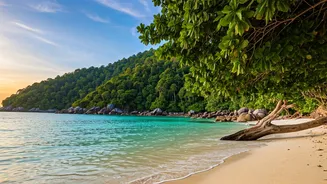
The real magic of the Andamans reveals itself when you venture beyond the famous spots. Renting a scooter is the key to unlocking the islands. On Havelock or its sleepier sister, Neil Island (Shaheed Dweep), a ten-minute ride down a bumpy, tree-lined road can lead you to a completely deserted cove you have all to yourself. These are the places that don’t have names on Google Maps. You might find a beach where the only other inhabitants are tiny, skittering crabs and the jungle symphony is the only soundtrack. This is where the headline becomes a tangible reality. It's a feeling of pure discovery, a throwback to an era of travel before Instagram geotags and drone-shot perfection stripped the mystery from the world’s beautiful corners.
A Deeper, More Complex Beauty
The pristine beauty of the Andamans is layered over a complex and often dark history. Port Blair was the site of the infamous Cellular Jail, a brutal colonial prison used by the British to exile Indian independence activists. The islands are also home to some of the world's last uncontacted and protected indigenous tribes, a living link to a prehistoric past. This context adds a profound depth to the experience. You’re not just lounging in a generic tropical paradise; you’re in a place with a soul, a place that holds stories of resilience, isolation, and survival. This awareness prevents the scenery from feeling like a mere postcard, grounding the beauty in a powerful sense of place.
The World Beneath the Waves
The sense of rarity extends below the water’s surface. The Andaman Sea hosts some of the most vibrant and untouched coral reefs in the region. For snorkelers and divers, it’s a revelation. Just wading in from the shore at a spot like Elephant Beach, you’re suddenly surrounded by thriving ecosystems of brightly colored parrotfish, clownfish nestled in anemones, and even the occasional sea turtle gliding gracefully by. The limited development and distance from industrial mainland pollution have kept these underwater gardens remarkably healthy. It’s another dimension of the islands' wildness—a silent, kaleidoscopic world that feels just as undiscovered as the empty beaches above.