



The Divine Road Trip
At its heart, Rath Yatra—which translates to “Chariot Journey”—is a massive annual Hindu festival celebrating Lord Jagannath, a form of the deity Vishnu. The most famous celebration takes place in the coastal city of Puri in Odisha, India. The premise
is simple and profoundly symbolic: Lord Jagannath, along with his elder brother Balabhadra and sister Subhadra, leaves his home at the main Jagannath Temple for a nine-day vacation. Their destination is the Gundicha Temple, considered their aunt’s home, located about two miles away. This public procession isn’t just a parade; it’s a theological event where the gods venture out from the sanctum to grant their presence to everyone, regardless of caste or creed, making it a powerful symbol of unity and accessibility.
Engineering Marvels of Devotion
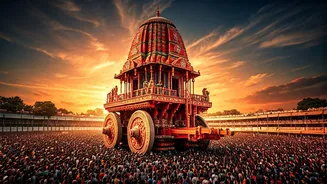
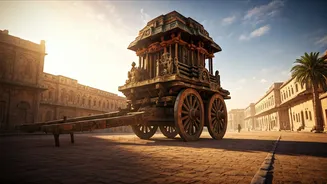
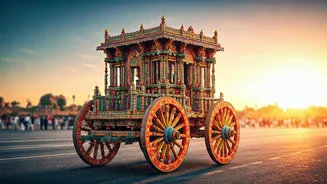
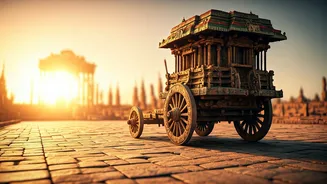
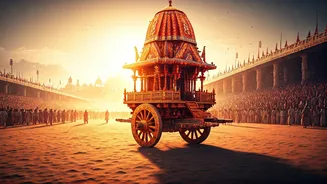
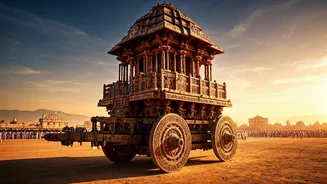
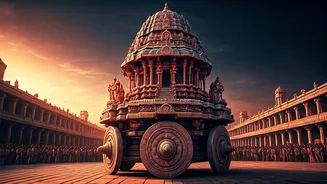
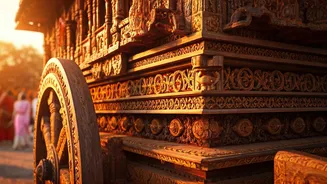
The stars of the show are the three gigantic chariots, which are essentially mobile temples. These are not permanent structures; they are built anew every single year by a dedicated team of carpenters using traditional techniques passed down through generations. Made of specific woods and constructed without a single metal nail, the chariots are marvels of sacred engineering. Lord Jagannath’s chariot, Nandighosha, stands roughly 45 feet tall and runs on 16 wheels, each seven feet in diameter. The other two chariots are slightly smaller. Each is draped in vibrant fabrics—red and yellow for Jagannath, red and green for Balabhadra, and red and black for Subhadra—and adorned with intricate carvings and paintings, transforming them into magnificent works of art.
A Spectacle on a Staggering Scale
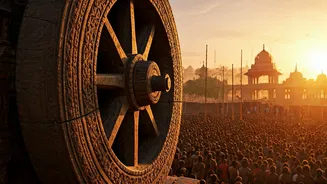
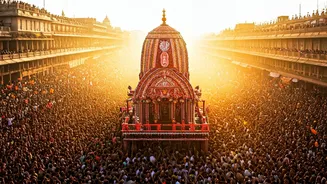
The phrase “festival scale” barely does it justice. The main procession in Puri attracts over a million devotees who pack the city’s Grand Road. To put that into perspective, it's like the entire population of Austin, Texas, gathering in one place for a single event. The air thrums with the sound of gongs, cymbals, and chants of “Jai Jagannath!” (Victory to Jagannath). The sheer human force required to move these multi-ton chariots is a sight to behold. Thick ropes are attached to the front, and thousands of people pull them in unison. The slow, momentous journey from one temple to the other can take hours, inching forward through a sea of humanity.
The Power of Participation
Unlike a concert where you are a spectator, Rath Yatra is defined by participation. For a devotee, getting a chance to touch and pull the ropes of the chariot is considered an act of immense piety, believed to cleanse sins and pave the way for spiritual liberation. It’s a physical manifestation of helping the divine on its journey. This collective effort creates an electrifying atmosphere of shared purpose. People travel from all over India and the world to take part. The festival breaks down social barriers, as everyone, from priests to pilgrims, joins in the singular act of pulling the chariots. It’s not about who you are, but about being part of something much larger than yourself.