







The Health Equation: Oil Without the Toil
Let’s start with the most obvious difference: oil. A deep fryer works by completely submerging food in gallons of hot fat. This process is what creates that unmistakable, decadent crust, but it also means the food absorbs a significant amount of oil. An
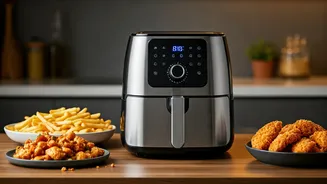
air fryer, on the other hand, is essentially a small, high-powered convection oven. It uses a fan to circulate superheated air at high speed, cooking the food and producing a crisp exterior with minimal oil—often just a light spritz or a single teaspoon is all that’s needed. Studies and health experts generally agree that this method can cut fat and calorie content by up to 75-80% compared to traditional deep frying. For anyone looking to enjoy classic comfort foods like french fries or chicken wings more regularly without the nutritional guilt, the air fryer presents a clear and compelling advantage.
The Crunch Test: Chasing a Perfect Texture
This is where deep frying purists make their stand. There’s no denying that submerging food in 350°F oil creates a uniquely crispy, uniform, and moisture-sealed result that is hard to replicate. Deep frying is a gold standard for a reason. However, to say an air fryer can't compete is to ignore how far the technology has come. By rapidly circulating hot air, an air fryer triggers the Maillard reaction—the chemical process that gives browned food its distinctive flavor and color. The result is a texture that is impressively close to deep-fried, especially for pre-cooked frozen foods or items with a starchy surface like potatoes. While a delicate, wet-battered fish might fare better in a deep fryer, an air fryer excels at creating a satisfyingly crisp finish on everything from Brussels sprouts and chicken thighs to tofu and even day-old pizza, reviving it to a state of crispy, non-soggy perfection that a microwave can only dream of.
The Convenience Factor: Time and Cleanup
This is where the air fryer delivers a knockout blow. Deep frying is a production. It involves heating a large volume of oil to a precise temperature, carefully lowering food in batches to avoid dangerous splatters, and monitoring it closely. Then comes the cleanup: waiting for quarts of oil to cool before figuring out how to filter, store, or safely dispose of it, all while scrubbing a greasy, cumbersome machine. In contrast, using an air fryer is almost laughably simple. You place your food in the basket, set the time and temperature, and walk away. There’s no preheating oil, no splatter guard, and no risk of an oil fire. Cleanup typically involves washing a non-stick basket and drawer, most of which are dishwasher-safe. For a quick weeknight meal, there is simply no contest. The air fryer wins on speed, safety, and simplicity every single time.
Beyond the Fry: A Versatile Kitchen Workhorse
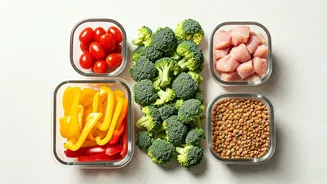
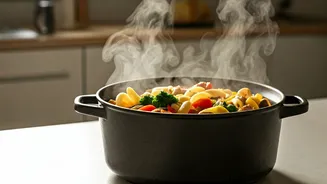
A deep fryer does one thing, and one thing only: it deep-fries. It’s a specialist, and often a bulky one that spends most of its life gathering dust in a cabinet. The air fryer, however, is a jack-of-all-trades. Think of it less as a “fryer” and more as a countertop convection oven that's perfect for small-batch cooking. It’s fantastic for roasting vegetables, achieving a beautiful char and tenderness in a fraction of the time it takes a conventional oven. It can bake cookies, cook a salmon fillet with a crispy skin, grill a sandwich, or perfectly reheat leftovers without turning them into a rubbery mess. This versatility transforms it from a novelty gadget into a daily driver. While the deep fryer is a single-use tool for special occasions, the air fryer earns its counter space by being useful for breakfast, lunch, dinner, and snacks.