






1. Replace Your Wiper Blades
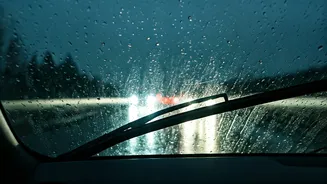
This is the single most effective thing any driver can do for rain safety, yet it’s often overlooked until it’s too late. Wiper blades are made of rubber, which degrades over time from sun exposure and use. Worn blades don't just streak; they can smear
dirt and water across the glass, making visibility worse than doing nothing at all. Don’t wait for the screeching sound or the telltale streaks to appear. Inspect your blades every six months. Look for cracking, stiffness, or rounded edges. A good test is to run your finger along the blade's edge (when clean and dry); if it doesn’t feel soft and flexible, it’s time for a new pair. Replacing them is a tool-free, five-minute job on most modern cars. You can find the right size in the lookup guide at any auto parts store, and a new set often costs less than a single tank of gas. It's the cheapest, easiest safety feature you can buy.
2. Check Your Tire Tread and Pressure
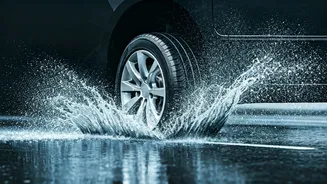
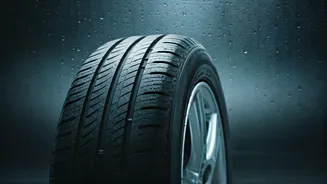
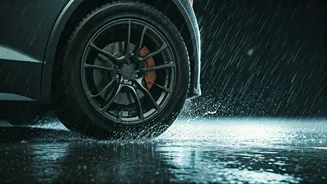
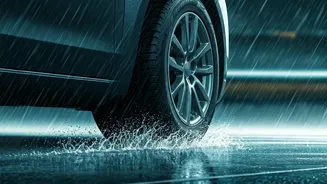
Your tires are your car's only connection to the road, and in the rain, that connection is fragile. Hydroplaning—when a layer of water builds between your tires and the road surface, causing a loss of traction—is a terrifying experience. Your tire’s tread is designed to channel water away, but it can't do its job if it's worn down. You don't need a special gauge to check it; just use a penny. Insert it into the tread groove with Lincoln's head upside down. If you can see the top of his head, your tread is likely below the legal minimum (2/32 of an inch), and it's time for new tires. Equally important is tire pressure. Underinflated tires can't maintain their optimal shape, making them more susceptible to hydroplaning. Check your pressure monthly using a simple gauge. The correct PSI is listed on a sticker inside your driver's side door jamb, not on the tire itself. Properly inflated tires with good tread are your best defense against losing control on a wet road.
3. Apply a Windshield Treatment
Here's a pro-tip that feels like a magic trick. Applying a hydrophobic glass treatment, like Rain-X or a similar ceramic product, can revolutionize your visibility in the rain. These easy-to-apply liquids create an invisible coating on your windshield that causes water to bead up and roll right off. At highway speeds, you may not even need to use your wipers at all. The effect is dramatic, especially during light to moderate rain, as the wind simply pushes the water droplets away. Application is simple: clean your windshield thoroughly, apply the solution with a cloth as directed, let it haze over, and then buff it off. One application can last for several months. It not only keeps your view clearer but also reduces the wear and tear on your wiper blades and motor. For less than $10 and 15 minutes of work, it’s one of the best-kept secrets for confident driving in bad weather.
4. Do a Quick Lights Check
When it's raining, your headlights aren't just for you to see—they're for others to see you. A gray car on a gray day under a gray, rainy sky can become nearly invisible. That’s why many states have laws requiring your headlights to be on whenever your windshield wipers are in use. Before the rainy season starts, do a simple walk-around. With your car on, check that your low beams, high beams, taillights, and brake lights are all functioning. Have a friend or family member stand behind the car while you press the brake pedal. A burned-out bulb is a cheap and easy fix, but getting a ticket or, worse, getting rear-ended because someone couldn't see you braking is a major headache. Also, take a moment to wipe down the plastic headlight and taillight covers. Years of road grime and oxidation can dim their output significantly.
5. Test Your Defroster and A/C
Visibility issues in the rain aren't just about what's happening outside your car; they're also about the inside. As rain cools the outside of your windshield, the warm, moist air inside your car condenses on the glass, causing it to fog up instantly. Your defroster is the cure, but many people don't realize that the air conditioning system is its most important partner. Turning on your A/C—even with the heat turned up—activates a dehumidifier that pulls moisture from the cabin air, clearing the fog much faster than heat alone. Before you're caught in a storm, test your system. Turn on the front defroster and make sure a strong stream of air is coming out of the vents at the base of the windshield. Then, press the A/C button and listen for the quiet click of the compressor engaging. If your defogger is weak or your A/C isn't working, you're setting yourself up for a dangerous, blind drive.