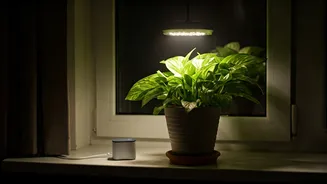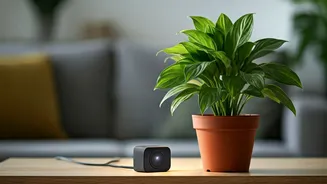








What Makes a 'Smart' Timer?
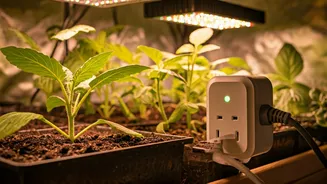
At its core, a smart plug is a small adapter that fits between your wall outlet and the plug of an electronic device—in this case, your grow light. Unlike the old-school timers that rely on physical pins or dials that you manually set for a single on/off
schedule, a smart plug connects to your home’s Wi-Fi network. This simple connection is a gateway to a world of control. All the scheduling, settings, and operation are handled through a dedicated app on your smartphone. Instead of crouching behind a shelf to adjust a dial, you can manage your lighting schedule from the comfort of your couch, or even when you're away from home. This shift from physical hardware to software-based control is the key difference, transforming a simple on/off switch into a precise horticultural tool.
Precision Control Right from Your Phone
The biggest advantage of a smart plug timer is the granular control it offers. Traditional timers are often limited to one or two 24-hour cycles. For serious indoor gardeners, this is rarely enough. Plants have different lighting needs during their vegetative and flowering stages. An indoor tomato plant might thrive under 18 hours of light a day, but to encourage fruiting, it needs a strict 12-hour-on, 12-hour-off cycle. With a smart plug app, you can create and save multiple complex schedules. Want the lights to turn on at 6:02 AM and off at 10:02 PM? No problem. Need to change that schedule for a week while you're on vacation? You can do it in seconds from your phone. This level of precision, once the domain of expensive commercial setups, is now accessible to any home grower.
Mimicking Nature's Rhythms
Beyond simple on/off commands, some advanced smart plugs offer features that help mimic natural light cycles more effectively. For example, a “random” or “vacation” mode can slightly vary the on/off times each day, which is useful for home security but can also prevent the absolute rigidity that sometimes stresses plants. More importantly, many apps allow you to group multiple plugs together. If you have several lights in your setup, you can ensure they all switch on and off in perfect sync. For high-tech growers, some smart plugs even integrate with other sensors, allowing for routines like, “If the temperature sensor drops below 65 degrees, turn on the heat mat.” This creates a more responsive and automated environment, leading to healthier plants and better yields.
Joining Your Smart Home Ecosystem
Part of the reason for the rapid trend is that these devices don't exist in a vacuum. Most smart plugs are designed to integrate seamlessly with popular smart home ecosystems like Amazon Alexa, Google Assistant, and Apple HomeKit. This means you can control your grow lights with your voice. A simple command like, “Hey Google, turn on the grow lights,” can be a magical convenience, especially when your hands are full of soil and watering cans. This synergy also allows for the creation of “routines.” For example, you could set up a “Good Morning” routine that not only starts your coffee maker and turns on the news but also switches on the lights for your plants, automating another small piece of your day.
More Than Just a Timer: Energy Monitoring
High-intensity grow lights can be significant energy hogs. Running powerful LEDs or HPS bulbs for 12 to 18 hours a day adds up on an electric bill. Many mid-range to high-end smart plugs come with a built-in energy monitoring feature. The companion app will show you exactly how much electricity your grow light is consuming in real-time, as well as historical data by day, week, or month. This is invaluable information. It helps you calculate the true cost of your hobby, compare the efficiency of different bulbs, and identify any unusual power draws that might indicate a problem with your equipment. It transforms the plug from a simple convenience into a powerful diagnostic and cost-management tool.