


First, What Is an 'Alignment'?
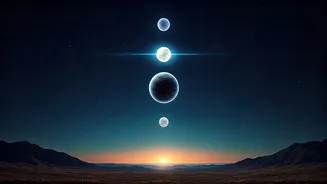
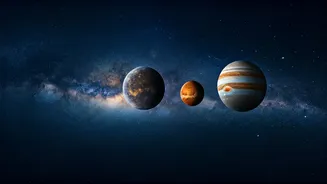
Let’s get one thing straight: the planets don’t actually form a perfectly straight line in space. If you were looking down on the solar system from above, you’d see that Earth and the other planets are scattered in their orbits. The term “planetary alignment”
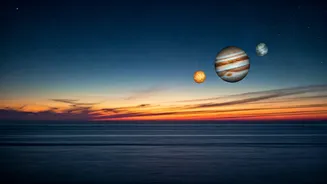
is a bit of a misnomer. What we’re really seeing is a visual trick of perspective. From our vantage point on Earth, several planets appear to be clustered together in the same small patch of sky. Think of it less like beads on a string and more like friends gathering for a photo—they’re close, but not standing in a rigid, perfect row. This is why the headline’s “crooked” description is so apt. It’s a beautiful, messy, and natural arrangement of celestial bodies that happen to share the same celestial neighborhood for a short while.
Meet the Stars of the Show
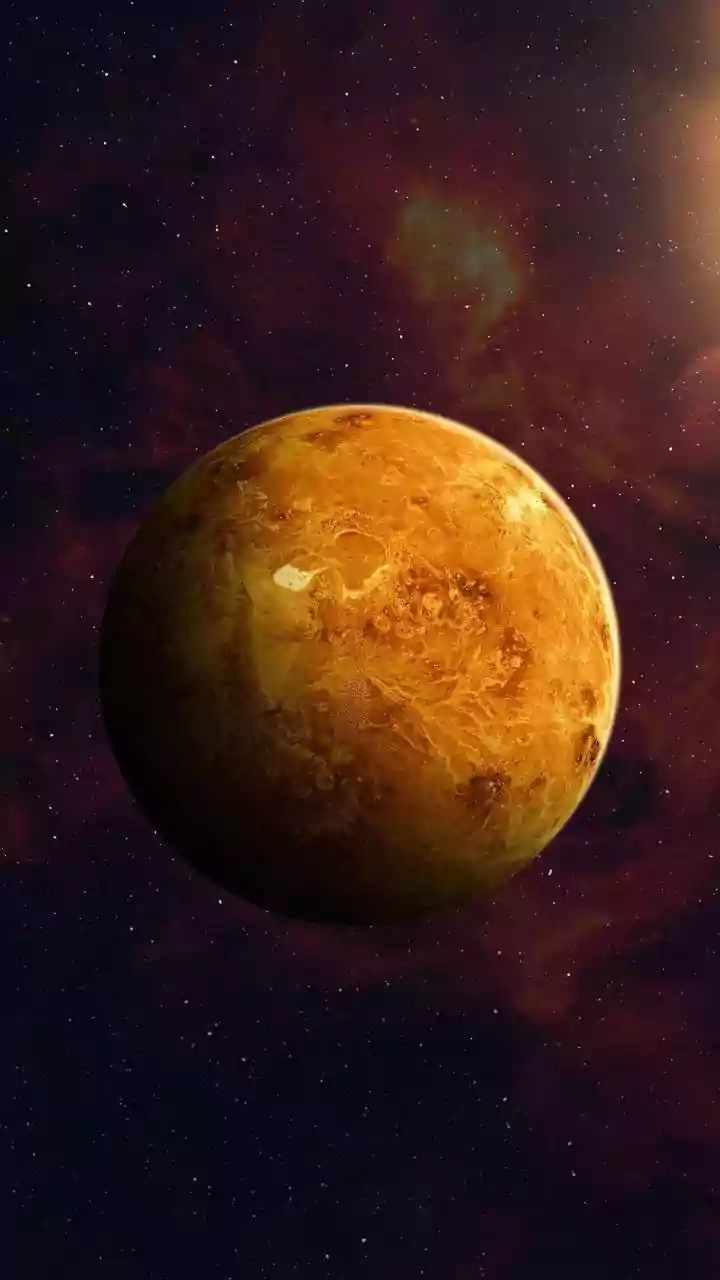
This particular sky party features three distinct personalities. Venus is the undisputed queen of the planetary ball. As the second-brightest object in the night sky after the Moon, you can’t miss its brilliant, steady glare. It’s often mistaken for a plane or a UFO by casual observers. Jupiter, the largest planet in our solar system, is the second-brightest of the trio. It shines with a powerful, unwavering light, a stately king holding court. The real prize, however, is elusive Mercury. As the closest planet to the Sun, it rarely strays far from the solar glare, making it a challenge to spot. It’s usually only visible for a short window just after sunset or before sunrise, hugging the horizon. Seeing it alongside two much brighter companions makes it far easier to locate.
Your Viewing Guide: How and When to Look
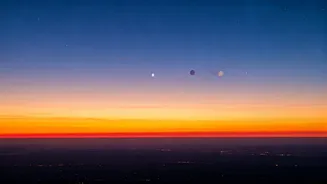
The best part about this celestial event is its accessibility. You don’t need a PhD in astrophysics, just a good sense of timing and direction. These types of alignments involving Mercury are almost always best viewed during twilight. Check your local forecast for sunset or sunrise times. About 30 to 45 minutes after the sun dips below the horizon (or before it rises), find a spot with an unobstructed view of the western (for evening) or eastern (for morning) sky. Venus and Jupiter will be impossible to miss. Look for the two brightest “stars” that don’t twinkle. Mercury will be the faintest of the three and closest to the horizon. Using the bright beacons of Venus and Jupiter as your guideposts is the key to spotting their dimmer, shyer companion. Let your eyes adjust to the fading light, and the trio should resolve itself against the deepening blue.
Do You Need a Telescope? (Spoiler: No)
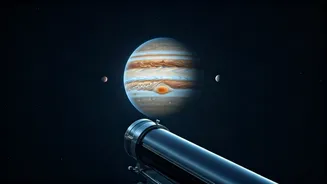
While a powerful telescope can reveal incredible details like the moons of Jupiter or the phases of Venus, you absolutely do not need one to enjoy this alignment. In fact, a wide-field view is often better for appreciating the entire pattern. The planets are bright enough to be easily seen with the naked eye from most suburban areas, provided you don’t have a skyscraper or a dense forest blocking the horizon. If you have a pair of binoculars, bring them! They are the perfect tool for this kind of stargazing. They’ll make Mercury pop more clearly and might even give you a glimpse of Jupiter’s four largest moons, the Galilean moons, which look like tiny pinpricks of light flanking the giant planet. But if all you have is your own two eyes, that’s more than enough to witness the spectacle.
A Reminder of Cosmic Clockwork
Planetary alignments aren’t a once-in-a-lifetime occurrence, but they are special. They are a beautiful, visible reminder of the vast, dynamic solar system we are a part of. The planets are constantly in motion, tracing their orbital paths at different speeds. For a brief period, our own motion on Earth syncs up with theirs to create this stunning visual effect. It’s a cosmic coincidence of clockwork precision and a perfect excuse to step outside, disconnect from your screens, and connect with the universe. These events remind us that there’s a grand, silent dance happening above our heads every single night.