


Why Rainwater Is Liquid Gold
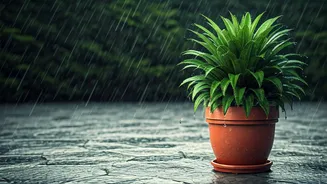
That urge to give your indoor plants a natural shower isn’t just a quirky habit; it’s rooted in plant science. Tap water keeps our plants alive, but rainwater helps them thrive. Unlike municipal water, which is often treated with chlorine and fluoride
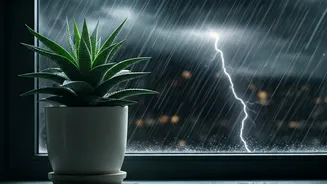
and can be slightly alkaline, rainwater is naturally soft, slightly acidic, and free of these additives. This gentle acidity helps plants absorb nutrients from the soil more efficiently. More importantly, rainwater contains nitrates—a form of nitrogen that plants can readily use. During a thunderstorm, lightning literally fixes atmospheric nitrogen, dissolving it into raindrops and delivering a free, mild dose of fertilizer directly to your plants’ roots and leaves. It’s a gentle, all-natural nutrient boost that you just can’t get from the kitchen sink.
A Shower That Does More Than Hydrate
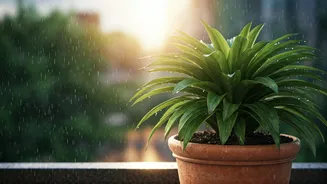
The benefits of a summer downpour go beyond its chemical composition. A steady, gentle rain provides a thorough and even soaking that’s difficult to replicate with a watering can. It helps flush out excess salts and mineral buildup from fertilizers that can accumulate in the soil and on the terracotta rims of pots. These buildups can eventually harm a plant’s root system, and a good flush with pure rainwater is like hitting the reset button. Furthermore, a rain shower physically cleans your plants. Dust and grime that settle on leaves indoors can block sunlight and reduce a plant’s ability to photosynthesize effectively. Rain washes this layer away, allowing the leaves to breathe and absorb maximum light. It can also help dislodge common pests like spider mites and aphids that may have been hiding on the undersides of leaves.
The Pre-Rain Checklist
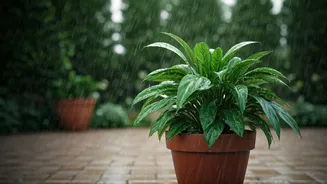
Before you rush your entire collection onto the patio, a little preparation is key to preventing a spa day from turning into a disaster. First, consider the temperature. A warm summer rain is ideal; a chilly, wind-whipped downpour can shock your plants. Ensure the rain is forecast to be a steady shower, not a violent thunderstorm with high winds or hail that could shred delicate leaves. Next, check your pots. Do they have drainage holes? This is non-negotiable. Without proper drainage, your plants will become waterlogged, leading to root rot—a far greater threat than a little thirst. If you use decorative cachepots without holes, remove the inner nursery pot before taking it outside. Finally, don't move a sun-sensitive plant from a dim corner directly into the bright light that often precedes or follows a storm. The sudden change can cause sunburn, even on an overcast day. Acclimate them gradually if possible.
Know Which Plants to Keep Inside
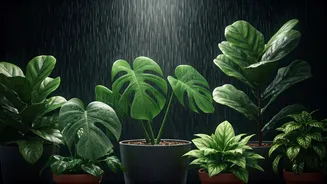
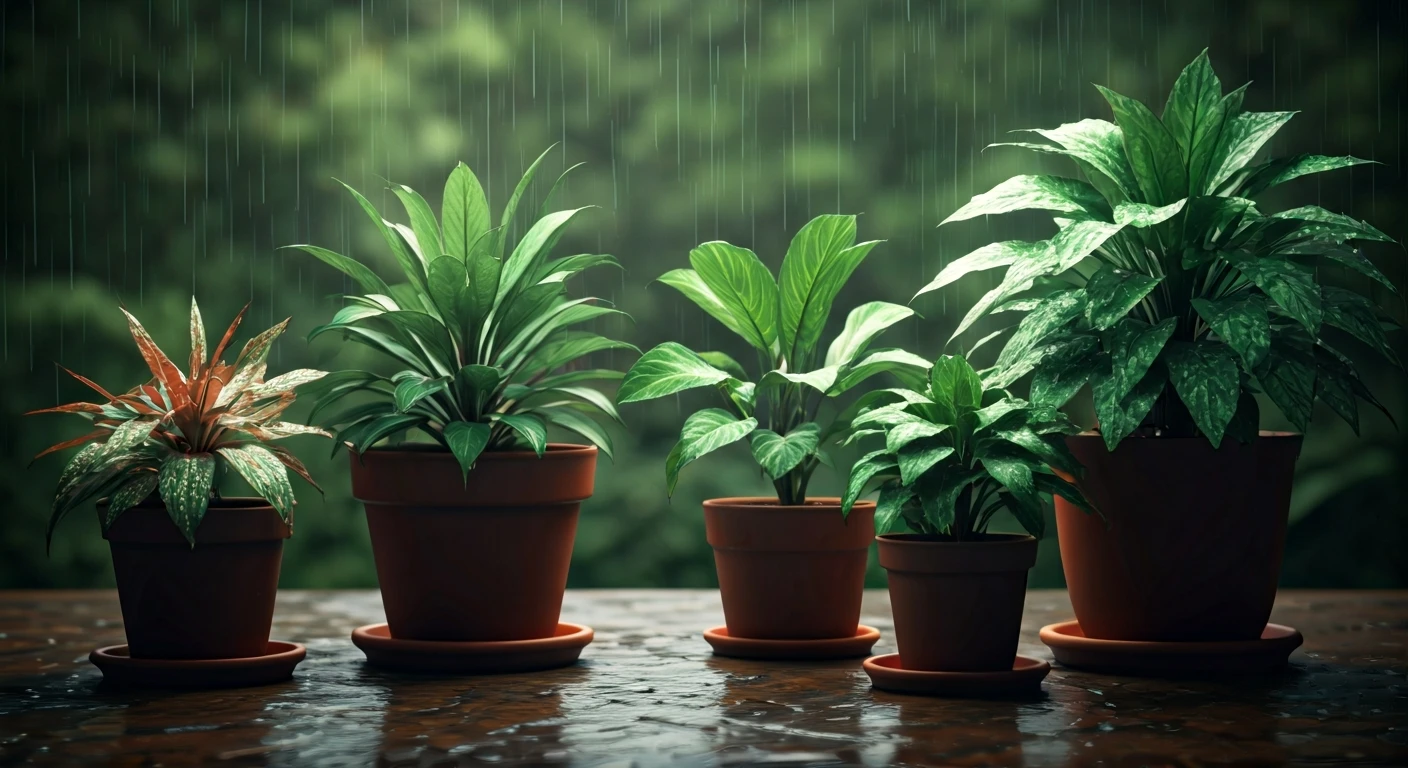
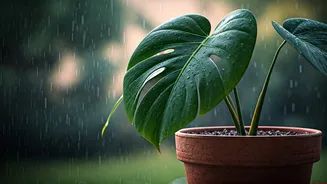
Not every houseplant is a candidate for a rain bath. Plants with fuzzy leaves, like African violets, can trap water on their foliage, leading to crown rot or fungal spots. It’s best to keep them dry. Likewise, most succulents and cacti, which are adapted to arid conditions, don’t need the extra drenching and are highly susceptible to rot if their soil stays wet for too long. A light sprinkle might be fine, but a prolonged soaking is a major risk. Also, consider any plants that are currently struggling or have just been repotted. A stressed plant is more vulnerable to shock. Give them time to recover indoors before introducing another variable. Tropicals like monsteras, philodendrons, ferns, and calatheas, on the other hand, absolutely adore the humidity and pure water of a summer storm and are excellent candidates.
The Post-Storm Checkup
Your job isn’t over when the rain stops. Once the storm has passed, do a quick inspection. Gently tip each pot to let any excess water drain away. Check for any slugs, snails, or other garden critters that may have hitched a ride. It's wise to let the plants air out for a bit before bringing them back inside, but don't leave them out in the blazing post-rain sun, which can be surprisingly intense. Once you bring them in, hold off on your regular watering schedule. Feel the soil over the next few days; you’ll likely be able to wait longer than usual for the next watering.