







For a Jolt of Community: November Project
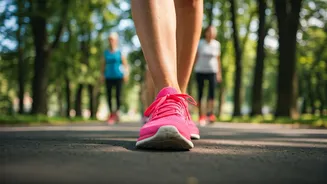
If you’ve ever seen a massive group of people doing burpees at sunrise in a public park, you’ve likely witnessed November Project. What started as a pact between two friends in Boston to stay active through the winter has exploded into a free fitness
movement in cities across the country. NP isn’t a “running club” in the traditional sense; it’s a high-energy, all-weather workout crew that welcomes everyone, regardless of athletic ability. The networking here is organic. You’re building bonds through shared struggle—sprinting up hills or holding a plank—and the positive, inclusive atmosphere fosters genuine friendships. Because it attracts a wide range of people, from students to CEOs, you never know who you’ll be doing push-ups next to. The value isn’t in exchanging business cards, but in becoming part of a fiercely loyal and supportive community.
For Mission-Driven Miles: Black Men Run
Sometimes, the strongest networks are built on a shared mission. Black Men Run was founded to encourage health and wellness among African American men, creating a space to counter the stereotype that running is not a “brother’s sport.” With chapters nationwide, BMR provides a supportive and encouraging environment where men can improve their fitness, form brotherhoods, and serve their communities. The networking that happens here is deeply rooted in mutual support and shared identity. It’s a space to find mentors, friends, and professional allies who understand your journey. The conversations on a 5-mile run can range from marathon training to career advice, all within a framework of promoting a healthy and positive lifestyle. Joining a group like BMR means your weekend miles are about more than cardio; they’re an investment in personal and collective well-being.
For the Post-Run Social Scene: Brewery Run Clubs
Perhaps the fastest-growing trend in social running is the brewery run club. Nearly every mid-to-large city has at least one local brewery that hosts a weekly fun run, typically a casual 3-to-5-mile route that starts and ends at the taproom. The appeal is obvious: you get in a good workout and then immediately reward yourself with a craft beer and conversation. This is networking at its most relaxed. The environment is inherently social and low-stakes, attracting a diverse crowd of young professionals, creatives, and tech workers. There’s no pressure to “talk shop.” Instead, connections form over a shared appreciation for a good IPA and an easy run. It’s the modern equivalent of meeting at the water cooler, only the water is a hazy pale ale and the office is the open road.
For Urban Professionals: City-Specific Social Clubs
In major metropolitan hubs like New York City, Chicago, and San Francisco, running clubs often double as premier social networks for newcomers and established residents alike. Groups like New York’s Dashing Whippets or San Francisco’s Golden Gate Running Club are known for their organized training programs, but their real draw is the community. These clubs often have hundreds, if not thousands, of members, creating a vast pool of potential connections. They organize weekend long runs that end with brunch, team dinners, and destination races. The members are typically driven professionals—lawyers, financiers, tech innovators, and artists—who are as serious about their careers as they are their split times. Joining one of these clubs is an excellent way to quickly build a social circle and professional network in a new city.
How to Find Your Local Crew
If none of these specific examples are in your area, don’t worry. Finding your perfect running group is easier than ever. Start by visiting your local specialty running store. The staff are typically well-connected to the local scene and can recommend groups that match your pace and personality. Apps and websites like Strava and Meetup are invaluable resources; you can search for clubs based on interest, location, and activity level. Finally, don’t underestimate the power of social media. A simple search on Instagram or Facebook for “[Your City] Running Club” will likely yield dozens of results, from informal meetups to highly structured teams. The key is to try a few out until you find the one where you feel you belong.