








The Familiar Frustration of ‘Visa Drama’
If you’re an Indian traveler, you know the drill. Planning a trip to Europe or the United States involves more than just booking flights and hotels; it involves compiling a dossier. Bank statements, tax returns, employment letters, and a detailed itinerary
are just the start. This is followed by a nervous wait, a costly appointment, and the very real possibility of a rejection stamp with little explanation. This ‘visa drama’ has become a frustrating rite of passage, turning the excitement of travel planning into a high-stakes administrative burden. Many globetrotters find themselves scaling back their ambitions, not for lack of funds or desire, but to avoid the gauntlet of a consular interview.
Cambodia’s Welcome Mat: The Visa on Arrival
Cambodia offers a refreshingly simple alternative. For Indian citizens, the country provides a straightforward Visa on Arrival (VoA) at its major international airports in Phnom Penh and Siem Reap. Instead of a mountain of documents, you typically need just your passport (with at least six months of validity), a passport-sized photograph, and the visa fee (usually around $30-$35 USD, payable in cash). The process is generally quick, often taking less time than you’ll spend waiting for your checked baggage. Alternatively, you can apply for an e-Visa online before your trip, receiving an approval email within a few business days. This simple, predictable, and welcoming policy stands in stark contrast to the uncertainty of applying for Western visas. It sends a clear message: we want you to come and explore.
Angkor Wat: The Crown Jewel of a Kingdom
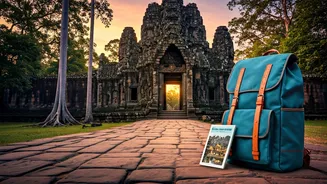
The ease of entry is just the gateway. The real reward is Cambodia itself, a country anchored by the staggering magnificence of Angkor Wat. This is not just another temple; it is the largest religious monument in the world, a sprawling 12th-century stone city that was once the heart of the Khmer Empire. Waking up before dawn to watch the sunrise silhouette its iconic lotus-like towers is a bucket-list experience that rivals seeing the Taj Mahal or the Pyramids of Giza. Beyond the main temple, the larger Angkor Archaeological Park is a treasure trove of wonders, from the enigmatic stone faces of Bayon Temple to the jungle-strangled ruins of Ta Prohm, famously featured in ‘Tomb Raider.’ It’s a place of profound history and spiritual weight that justifies a trip all on its own.
Beyond the Temples: A Nation of Resilience
While Angkor is the main draw, limiting Cambodia to its temples would be a mistake. The capital, Phnom Penh, is a bustling city of vibrant markets, a burgeoning food scene, and a beautiful riverside promenade. It is also home to poignant reminders of the country's tragic 20th-century history at the Tuol Sleng Genocide Museum and the Choeung Ek Killing Fields. To visit these sites is to understand the incredible resilience and warmth of the Cambodian people. For those seeking relaxation after days of temple-hopping, the southern coast offers idyllic, white-sand islands like Koh Rong and Koh Rong Samloem, providing a slice of tropical paradise that is still relatively undeveloped and affordable compared to its more famous Thai counterparts.
The Practical Payoff: An Easy Choice
Cambodia’s appeal is sealed by its practical advantages. It is an exceptionally affordable destination, where your travel budget can stretch significantly further. Accommodation, food, and transport are all reasonably priced. English is widely spoken in tourist areas, making navigation easy. The food is a delicious discovery, with fragrant curries (amok), savory noodle dishes, and fresh seafood. With improving flight connections from major Indian cities, getting there has never been easier. All these factors combine to make Cambodia a compelling package: a destination that is not only culturally rich and historically significant but also logistically simple and financially accessible.