





More Than Just a Chef's Hat
For decades, a career in food meant one of two things: you either worked in a restaurant or you didn't. The primary educational path was vocational, funneling aspiring cooks into culinary schools to master knife skills and the five mother sauces. But
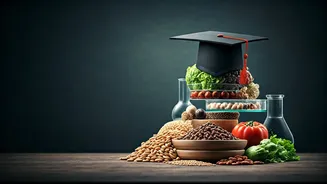
that narrow vision is rapidly becoming obsolete. Today, the world of food is being recognized as a complex ecosystem worthy of serious academic study, and universities are responding in a big way. This isn't just about adding a 'management' track to a cooking degree. We're seeing the rise of dedicated, interdisciplinary 'Food Studies' programs at major institutions like New York University and Boston University. These programs treat food not just as sustenance, but as a lens through which to understand culture, history, politics, and economics. Students aren't just learning recipes; they're studying food deserts, agricultural policy, the anthropology of taste, and the global supply chain. The goal is to produce graduates who can think critically about our food systems, not just work within them.
The Science of What We Eat
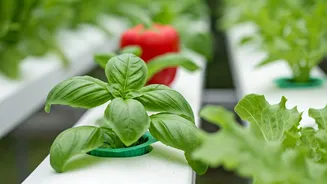
Parallel to the growth in the humanities is an explosion in the science of food. As consumers become more demanding about what’s in their food—and how it got there—the need for experts in food science, nutrition, and sustainable agriculture has skyrocketed. This is where the 'education moment' gets tangible, with universities like UC Davis, a global leader in agricultural and environmental sciences, seeing continued high demand for their programs. These are the people developing plant-based proteins that actually taste good, creating safer food packaging, figuring out how to reduce food waste on an industrial scale, or breeding crops that are more resilient to climate change. This isn't your grandmother's home economics class. It's a rigorous, science-heavy field that leads to well-paying jobs at major food corporations, innovative startups, and government regulatory agencies like the FDA. The career path is no longer just farm-to-table; it's lab-to-lable.
The Business of Being a Foodie
The cultural obsession with food, fueled by social media, food television, and celebrity chefs, has also created an entirely new professional class. Being a 'foodie' is no longer just a hobby; it’s a viable career path, and educational institutions are formalizing the training for it. Hospitality management programs, like the one at Cornell's famous School of Hotel Administration, now incorporate courses on food and beverage marketing, social media strategy, and experience design. Beyond that, the rise of the creator economy means that food media is a legitimate profession. While many influencers are self-taught, journalism and communications programs are increasingly offering specializations in food writing and criticism. Students learn not only how to write a compelling restaurant review but also how to shoot and edit a viral TikTok recipe, build a brand, and navigate the ethics of sponsored content. It's the professionalization of a passion, turning scrolling and snacking into a structured career.
Why Is This Happening Now?
This educational shift isn't happening in a vacuum. It’s a direct response to food’s elevated place in our culture and economy. Several factors have converged to create this perfect storm. First, there's the cultural cachet: chefs are now bona fide celebrities, and food documentaries draw massive audiences. This makes a food-related career seem more aspirational and less like a blue-collar trade. Second, there are growing societal concerns about health, sustainability, and food justice. We are more aware than ever of the connection between our diet and our health, and the impact of our food system on the planet. This creates a demand for problem-solvers—for policy analysts, scientists, and entrepreneurs who can help build a better food future. Finally, the economy has shifted. The artisan and local food movement has created thousands of small businesses, creating a need for skilled professionals beyond the traditional corporate ladder. Food has become a central part of how we understand ourselves, our health, and our world, and our education system is finally catching up.