




From Wilderness to Wellness Product
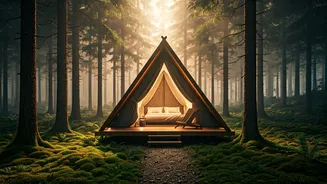
Forget packing a compass and a month's worth of supplies. Today’s nature trip is more likely to involve a pre-booked tiny cabin with a picture window, a minimalist aesthetic, and a strong Wi-Fi signal (just in case). This is the era of the 'quick reset'
or 'micro-escape,' a phenomenon where the great outdoors is packaged into a convenient, 48-hour dose of tranquility. Companies like Getaway, which offers minimalist cabins within a two-hour drive of major U.S. cities, have built entire business models on this concept. Their promise isn't adventure in the traditional sense; it's restoration. They provide the setting—the trees, the quiet, the campfire—and you provide the burnout. The goal isn't to conquer a mountain but to conquer your overflowing inbox by temporarily ignoring it. It’s nature, optimized for a long weekend, sold as a wellness product for the professionally exhausted.
An Antidote to the Always-On Life
This trend isn’t happening in a vacuum. It’s a direct response to an 'always-on' work culture that has blurred the lines between the office and the home, the weekday and the weekend. When true, extended vacations feel like a logistical and professional impossibility, a two-day jaunt into the woods becomes a vital pressure-release valve. The 'quick reset' serves as a tangible counterpoint to the intangible demands of modern knowledge work. It offers a finite, achievable goal: survive the week, drive two hours, stare at a tree, and feel human again before diving back in on Monday. The very structure of these trips—short, scheduled, and requiring minimal planning—is a reflection of the exhausted consumer they cater to. There’s no mental energy left for complex itineraries; the ideal escape is one you can book on your phone during a lunch break.
Curated for the Camera
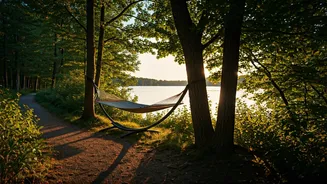
It’s impossible to ignore the role of social media in shaping this trend. The aesthetic of the 'quick reset' is practically designed for Instagram. The A-frame cabin, the artfully placed enamel mug, the view of a foggy lake from under a cozy blanket—these are not just moments of peace, they are content opportunities. This visual appeal has created a powerful feedback loop: people see these idyllic, accessible nature scenes online, feel a pang of longing (or FOMO), and seek to replicate them. The experience becomes as much about capturing the feeling of escape as it is about actually experiencing it. This isn't necessarily a cynical act; for many, documenting the trip is part of how they process and remember it. But it does shift the focus from an internal, personal connection with nature to an external, performative one. The wilderness becomes a backdrop for a story about ourselves.
Accessibility vs. Authenticity
There's an undeniable upside to nature becoming more like a convenient service. It lowers the barrier to entry. People who might be intimidated by backcountry camping or lack the gear for a multi-day hike can still access the mental and physical benefits of being outdoors. These curated experiences make nature more inclusive, offering a taste of the wild to a broader urban audience. Yet, there’s a quiet trade-off. By turning nature into a predictable, comfortable, and bookable product, we risk sanding down its edges—the very unpredictability and challenge that have historically defined our relationship with it. A 'quick reset' is restorative, but it’s a managed restoration. It's less about surrender to the unknown and more about a controlled retreat. The question becomes whether these scheduled doses are a sufficient replacement for a deeper, more immersive, and perhaps more transformative connection to the natural world.