





Why Humidity Wreaks Havoc on Skin
To understand the solution, we first have to understand the problem. When the air is saturated with moisture, your sweat doesn't evaporate as efficiently. This creates a film of sweat, oil, and daily grime that sits on your skin's surface. Think of it as creating
the perfect storm for clogged pores. Your skin’s natural oil (sebum) production can also go into overdrive in an attempt to regulate itself in the heat, adding more fuel to the fire. Pores become congested with this mixture of excess oil, sweat, and dead skin cells, creating an ideal environment for the bacteria that contribute to acne and inflammation. It's not just that you feel greasy; your skin is genuinely struggling to breathe and maintain its balance, leading to those frustrating pimples that seem to pop up overnight after a particularly muggy day.
The Counterintuitive Role of Moisturizer
When your face feels like an oil slick, the last thing you probably want to do is slather on more product. Many people make the mistake of skipping moisturizer entirely during humid months, hoping to dry out the excess oil. This is a critical error that often makes breakouts worse. When your skin is dehydrated—which can happen even when the air is humid—it can overcompensate by producing even more oil to protect itself. This cycle of stripping the skin of moisture, only to have it rebound with more sebum, perpetuates the breakout cycle. The goal isn't to eliminate moisture; it's to provide the *right kind* of hydration that balances the skin without suffocating it. A well-hydrated skin barrier is stronger, less irritated, and better equipped to defend itself against breakout-causing bacteria.
Enter the Water-Gel Moisturizer
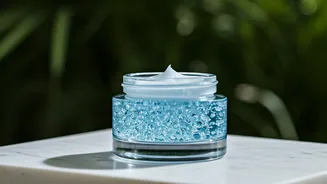
This is where the magic of formulation comes in. Unlike heavy, traditional creams that rely on rich oils and butters (occlusives) to lock in moisture, water-gel moisturizers are fundamentally different. As the name suggests, their primary ingredient is water. They have a bouncy, jelly-like texture that feels cooling on the skin and absorbs almost instantly. Instead of heavy oils, they are packed with humectants. These are ingredients like hyaluronic acid and glycerin that act like tiny sponges, pulling moisture from the air and the deeper layers of your skin to hydrate the surface. The result is a burst of pure hydration without the heavy, pore-clogging film. Your skin feels plump, refreshed, and hydrated, but not greasy or weighed down.
How It Helps Manage Breakouts
While no single product can be a universal "cure," a water-gel moisturizer is uniquely suited to help manage humidity-induced breakouts for several reasons. First, it delivers essential hydration without adding excess oil to already congested skin. By keeping the skin sufficiently hydrated, it can help signal to your sebaceous glands that they don't need to work overtime, helping to normalize oil production. Second, because these formulas are so lightweight and fast-absorbing, they are less likely to trap sweat and bacteria against the skin. They leave the skin feeling fresh and able to breathe. This combination of balancing oil production and avoiding pore-clogging ingredients makes water-gels an incredibly effective tool for keeping skin clear and comfortable when the weather is anything but.
What to Look for on the Label
When shopping for a moisturizer to combat summer breakouts, you want to be a savvy label-reader. Look for products specifically described as "water-gel," "gel-cream," or "cloud cream." Check the ingredient list for powerful humectants near the top, such as hyaluronic acid, sodium hyaluronate, or glycerin. Equally important is what's *not* on the label. Seek out formulas that are explicitly marked as "oil-free" and "non-comedogenic," which means they are specifically formulated not to clog pores. Many also contain beneficial additions like niacinamide, which can help regulate oil and reduce inflammation, or soothing botanical extracts like green tea. Avoid products with heavy oils like mineral oil, coconut oil, or thick butters if you are particularly prone to congestion in high humidity.