









The Invisible Interstate Above the Beltway
It’s called the Atlantic Flyway, and it’s one of the planet's great avian superhighways. Every spring and fall, millions of birds—from tiny, jewel-toned warblers to powerful hawks and eagles—travel this ancient path between their northern breeding grounds
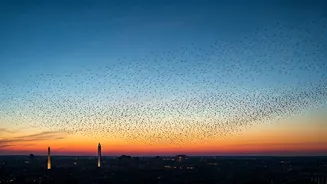
and southern wintering territories. And, as fate would have it, this bustling biological corridor passes directly over the D.C. metro area. Think of it as a seasonal, parallel version of I-95, but far more beautiful and operating on a schedule dictated by instinct, not traffic reports. For a few crucial weeks each year, the skies above the capital become one of the busiest and most biodiverse transit hubs in the country. This isn’t a minor event; on a peak night, radar can detect hundreds of thousands, sometimes millions, of birds passing overhead in a single hour. It’s a staggering natural phenomenon happening in plain sight, yet most of the city’s residents sleep right through it.
Rush Hour in the Sky
The real magic happens during two specific windows: mid-April through May, and again from September through mid-October. The spring migration is a frantic, colorful dash north, with birds in their brightest breeding plumage, singing to establish territory. The fall return is a more leisurely, protracted affair. The stars of the show are the Neotropical migrants, especially the warblers. These small, energetic birds, often weighing less than a stack of dimes, travel thousands of miles from Central and South America. Suddenly, trees in Rock Creek Park or on Theodore Roosevelt Island are dripping with Blackburnian Warblers (fiery orange throats), Black-throated Blue Warblers (sharp navy and white), and American Redstarts (flashing black and orange). It’s a treasure hunt for the eyes and ears. Joining them are thrushes, vireos, orioles, and tanagers, turning patches of urban green space into temporary, world-class aviaries. It’s the ultimate nerdy secret because appreciating it requires a little knowledge, but the payoff is a front-row seat to a spectacular global event.
An Accidental Urban Oasis
Why D.C.? Compared to the steel and glass canyons of New York or the sprawl of Los Angeles, Washington offers a surprisingly welcoming landscape for tired, traveling birds. The Potomac and Anacostia rivers act as clear navigational guides. More importantly, the city is rich with mature trees and extensive parklands—Rock Creek Park, the National Arboretum, and the C&O Canal towpath—that function as vital rest and refueling stations. These green corridors provide insects, berries, and cover from predators, allowing birds to pause their nocturnal journeys and recharge during the day. In a way, the city’s planned greenness, envisioned by figures like Frederick Law Olmsted Jr., has created an accidental sanctuary. It’s a perfect illustration of how urban environments and wild nature can, and do, coexist.
How to See the Secret Show
You don't need to be a seasoned ornithologist to tap into this secret. Start by visiting one of the local hotspots during peak season: Theodore Roosevelt Island is a warbler magnet, Kenilworth Park & Aquatic Gardens offers a great habitat for wetland birds, and the trails of Great Falls Park are excellent for a variety of species. Even a small neighborhood park with mature trees can be surprisingly productive. The best times are early morning, right after the birds have landed from their overnight flight. For the truly nerdy, websites like BirdCast provide real-time migration forecasts using weather radar, telling you when to expect a big “wave” of birds. But honestly, the only gear you truly need is a bit of patience and the willingness to look up. A simple pair of binoculars will open up a new world of color and detail. It’s a quiet, personal, and deeply rewarding way to connect with the pulse of the seasons in a city often defined by politics.