





1. They Prioritize Airflow
The number one enemy in a hot, humid climate is stagnant air. Coastal kitchens are designed to combat this with strategic ventilation. You’ll often see features that are as beautiful as they are practical. Transom windows above doorways, for example,
allow hot air, which naturally rises, to escape even when the doors are closed. Louvered cabinet doors or pantry doors encourage air to circulate, preventing mustiness in humid conditions. And it’s not uncommon to see Dutch doors, which let a breeze roll through the bottom half while keeping pets or small children safely inside. The goal is constant, gentle movement of air, which makes the entire space feel fresher and cooler without constantly blasting the AC.
2. They Choose Heat-Resistant Surfaces
When the sun is beating down, the last thing you want is a countertop that absorbs and holds heat. This is why natural stone is a hallmark of coastal design. Marble, quartzite, and even some granites feel cool to the touch, providing a welcome respite during food prep. They don’t trap heat the way some darker, man-made materials can. For flooring, you’ll often find light-colored tile, polished concrete, or pale hardwood. These surfaces are not only durable enough to handle sand and water tracked in from the beach, but they also help reflect light and maintain a lower ambient temperature, contributing to that signature cool-underfoot feeling.
3. The Color Palette Is a Climate Tool
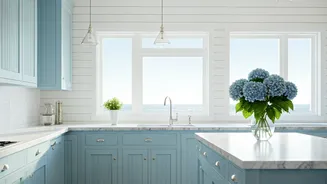
The iconic white-and-blue coastal color scheme isn't just about mimicking the sea and sky. It’s a highly effective tool for managing heat and light. White walls, cabinets, and backsplashes are masters of reflection. They bounce natural light around the room, making the space feel larger and brighter without absorbing the sun’s thermal energy. This creates a psychological sense of coolness and can physically keep the room from overheating. Accents of soft blue, seafoam green, and sandy beige complement this effect, evoking a serene, waterside environment that feels inherently refreshing. It’s a perfect example of form and function working in harmony.
4. They Embrace an Indoor-Outdoor Connection
Coastal living is often about blurring the lines between inside and out. Kitchens in these homes frequently feature large glass doors, pass-through windows, or entire walls that open up to a patio, deck, or porch. This isn't just for hosting great parties. On a practical level, it provides a massive outlet for heat and cooking fumes. When you’re searing fish or boiling a large pot of water for a lobster feast, you can simply open the doors to let the heat and steam dissipate immediately. This connection also extends the living space, encouraging guests to spill outside and preventing the kitchen from becoming a crowded, overheated hub during gatherings.
5. They Opt for Durable, Low-Fuss Finishes
Sun, salt, and humidity are relentlessly tough on materials. Coastal kitchens are built with this in mind. Cabinet hardware, faucets, and outdoor fixtures are often made from unlacquered brass, which develops a natural patina, or marine-grade stainless steel, which resists corrosion from salty air. Performance fabrics, typically used for outdoor furniture, often find their way onto barstools and banquettes because they resist fading from UV rays and are easy to clean. Even the paint is chosen carefully; a high-quality semi-gloss or satin finish on trim and cabinets is easier to wipe down, standing up to the grime and moisture that are part of life by the water. This focus on durability means the kitchen looks effortlessly chic, not worn down, by its environment.