






Why This Is the Perfect Moment
The timing isn't arbitrary. For many of our favorite houseplants—from leggy pothos to overgrown fiddle-leaf figs—late winter is the sweet spot for a good trim. Your plants have been in a state of semi-dormancy, conserving energy through the darker, shorter
days. But now, as the light returns, they are on the verge of a major growth spurt. Pruning right before this happens channels all that pent-up energy into producing lush, healthy new leaves and stronger branches. Think of it as a pre-game pep talk. By removing dead, damaged, or overgrown sections, you’re not just tidying up; you’re directing the plant’s resources exactly where you want them to go, encouraging a fuller, more robust shape for the growing season ahead.
Gather Your (Clean) Tools
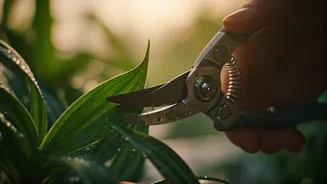
You wouldn’t want a surgeon operating with dirty instruments, and your plants deserve the same courtesy. Using dirty tools can introduce bacteria and fungi into the fresh cuts, leading to disease. Before you start, gather your equipment and give it a thorough cleaning with rubbing alcohol or a bleach solution (one part bleach to nine parts water). For most indoor jobs, you'll need one of two things: * **Bypass Pruners:** These work like scissors, with two curved blades that pass each other to make a clean cut. They are perfect for woody stems on plants like ficus trees or bird of paradise. * **Snips or Sharp Scissors:** For softer, herbaceous stems on plants like coleus, pothos, or philodendrons, a pair of sharp floral snips or even clean craft scissors will do the trick. The key is sharpness. A dull blade will crush the stem rather than slicing it, causing unnecessary damage and a slower healing process.
Who Needs a Trim?
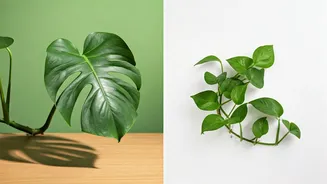
Not every plant needs a major overhaul, but many benefit from a little shaping. Here’s a quick guide: * **Vining Plants (Pothos, Philodendron, Hoya):** These are prime candidates for pruning. If your vines are getting long and sparse, trimming them will encourage branching and create a fuller look. Cut back stems to just above a leaf node (the little bump where a leaf grows). You can even propagate the cuttings to make new plants! * **Bushy Plants (Fiddle-Leaf Fig, Rubber Plant, Croton):** The goal here is shape and light penetration. Remove any dead or yellowing leaves at the base. To encourage branching and a less 'leggy' appearance on a Fiddle-Leaf Fig, you can make a strategic cut on the main stem. This is a big move, but it pays off with a bushier plant. * **Flowering Plants (Orchids, Peace Lily):** For these, focus on removing spent blooms and their stalks. Once a flower stalk on an orchid or peace lily is brown and withered, cut it all the way back to the base to encourage the plant to focus its energy on new growth and future flowers. * **Avoid Pruning:** Hold off on pruning plants that are about to bloom on old wood, like some varieties of jasmine. Also, give any newly acquired or recently repotted plant a few weeks to acclimate before introducing the stress of pruning.
The Art of the Cut
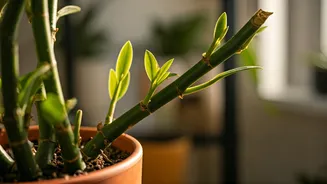
The single most important rule of pruning is to cut just above a node. A node is a point on a stem where leaves and buds emerge. By making your cut about a quarter-inch above an outward-facing node, you encourage the new growth to sprout outwards, preventing a crowded, inward-growing plant. Make your cuts clean and decisive. Don't be timid. It can feel brutal to chop off a piece of your plant baby, but it's a necessary act of tough love. It's also wise not to remove more than 25-30% of the plant's total mass at one time. A gentle shaping is usually more effective than a drastic buzzcut.