







Not Just Any Space Rocks
When we think of space rocks, we usually picture meteorites—fragments that have survived a fiery plunge through our atmosphere. While valuable, these celestial visitors are compromised. Their journey to the ground heats them, contaminates them with earthly
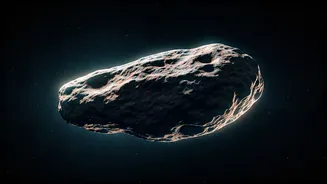
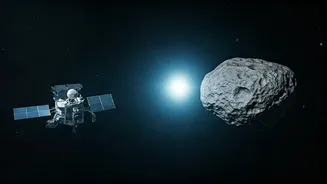
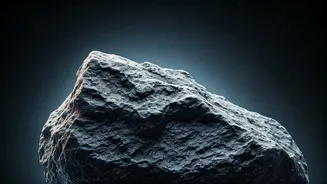
material, and often shatters them. They’re like a historical document that someone dropped in a puddle. But the rocks making headlines today are different. They are pristine samples, painstakingly collected directly from the surface of asteroids millions of miles from Earth. Missions like Japan’s Hayabusa2, which visited the asteroid Ryugu, and NASA’s OSIRIS-REx, which targeted the asteroid Bennu, performed a kind of cosmic surgery. They traveled for years, carefully approached these small, spinning worlds, and used robotic arms to grab a few ounces of untouched dust and pebbles. These samples were then sealed in a capsule and flown back to Earth, protected from the very contamination that taints meteorites. It's the difference between finding a random arrowhead in a field and excavating a sealed pharaoh’s tomb.
Cosmic Time Capsules from Day One
The reason scientists are going to such extraordinary lengths is that these specific asteroids—Ryugu and Bennu—are C-type, or carbonaceous, asteroids. They are essentially frozen relics from the dawn of our solar system, over 4.5 billion years ago. While planets like Earth underwent violent transformations—melting, reforming, and developing complex geology that erased their earliest history—these tiny asteroids just floated in the cold, dark vacuum of space. They never got hot enough to melt, meaning their chemical composition is a near-perfect snapshot of the primordial cloud of gas and dust that formed our sun and all its planets. Studying them is the closest we can get to traveling back in time. It’s like finding the original, hand-written recipe for a solar system. By analyzing the ingredients, we can figure out what materials were available when Earth was just a baby, providing crucial context for how our world, and others, came to be.
The Search for Water and Life's Ingredients
The two biggest questions these samples might help answer are: Where did Earth’s water come from? And where did life’s building blocks originate? For decades, scientists have theorized that asteroids and comets, bombarding a young, dry Earth, delivered the water that now fills our oceans. Early analysis of the Ryugu and Bennu samples is providing stunning confirmation. The rocks contain minerals that are hydrated, meaning they have water locked directly into their crystalline structure. The specific chemical signature of this water closely matches that of Earth’s oceans, making the case for an asteroidal water delivery service stronger than ever. Even more exciting is the discovery of organic molecules. We're not talking about alien microbes, but the complex carbon-based compounds—including amino acids and nucleobases—that are the fundamental building blocks of proteins and DNA. Finding them on these asteroids proves that these essential ingredients for life were present in the solar system from the very beginning. They didn't have to be forged in some complex process on Earth; they could have been delivered, ready-made, by celestial courier.
A Global Puzzle for Years to Come
Bringing these samples back was just the first step in a decades-long journey of discovery. The tiny amounts of material—just a few grams from Ryugu and a couple of ounces from Bennu—are being carefully curated in ultra-clean labs. Scientists from around the world are given minuscule portions to study with increasingly powerful instruments. It’s a slow, meticulous process, designed to extract every possible secret without wasting a single precious grain. NASA and JAXA, the Japanese space agency, have also set aside a significant portion of the samples to be stored, untouched, for future generations. They know that the analytical tools of tomorrow will be far more advanced than what we have today. A scientist in 2050 might be able to ask questions and find answers in the dust from Bennu that we can’t even conceive of yet. In this way, the missions are a gift not just to our time, but to the future of science.