




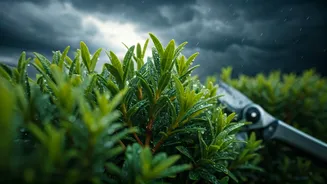


1. Lighten the Load to Prevent Breakage
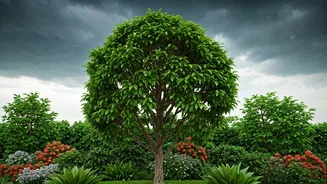
The most immediate danger from heavy rain isn't the water itself, but its weight. A single leaf can hold a surprising amount of water, and when you multiply that across a dense canopy of a tree or shrub, the accumulated weight can become immense. This
added load puts enormous strain on branches, especially those that are long, overgrown, or have weak attachment points.Pre-rainy season pruning focuses on thinning the canopy. This doesn't mean giving the plant a buzz cut. Instead, you selectively remove branches to reduce the overall density. By creating more space, you decrease the surface area that can catch and hold rainwater. This simple act of lightening the load can be the difference between a branch that flexes in a storm and one that snaps, potentially damaging the trunk or other healthy limbs on its way down.
2. Improve Air Circulation to Fight Fungus
Rainy seasons create the perfect incubator for fungal diseases. Pathogens like powdery mildew, black spot, and rust thrive in damp, stagnant conditions where leaves stay wet for long periods. When branches are crowded together, air can't move freely through the plant to dry the foliage after a storm passes. This lingering moisture gives fungal spores the opening they need to take hold and spread.Pruning to improve airflow is a critical preventative measure. By thinning out interior branches and removing any that cross over or rub against each other, you create channels for wind and sun to penetrate the plant's core. This natural ventilation system helps leaves dry out much faster, dramatically reducing the risk of a fungal outbreak that could weaken or even kill the plant over time. Think of it as giving your plants room to breathe.
3. Remove the Three D's: Dead, Damaged, and Diseased Wood
Before any storm, it's wise to perform a basic safety check on your plants. This means systematically removing any wood that is already compromised. These are the branches that are dead, damaged, or showing signs of disease—often called the "three D's" of pruning. Dead branches are brittle and have no flexibility, making them the first to break in high winds and heavy rain. They become unguided projectiles in a storm.Damaged or diseased branches are weak points. A cracked limb or one infected with canker is already structurally unsound. The added stress of a storm is often the final straw. By cutting these liabilities back to healthy, living tissue, you're not just tidying up; you're removing a hazard before it fails. This protects the rest of the plant and anything—or anyone—that might be underneath it.
4. Reshape for Strength and Better Structure
Good pruning isn't just about removal; it's about encouraging a strong, resilient structure for the future. You can guide a plant's growth to make it inherently more storm-proof. Look for branches with narrow, V-shaped attachment points to the trunk, as these are much weaker than wide, U-shaped ones. If the plant is young, you can remove one of the competing stems to encourage a stronger connection.Also, trim back overly long, spindly branches, known as "whips," that will thrash around in the wind and potentially snap or damage other parts of the plant. By making these strategic "heading cuts" to encourage bushier, more compact growth, you create a plant that's less gangly and better equipped to handle the physical forces of wind and rain. It's about building a sturdy scaffold that can withstand the elements.
5. Know Your Timing and When to Hold Back
While pre-rain pruning is beneficial, timing is everything. For most deciduous trees and shrubs, the ideal time for major structural pruning is during late fall or winter dormancy. However, a light thinning before the rainy season is almost always safe. The goal is to reduce weight, not to perform a major overhaul.Be cautious with spring-flowering shrubs like forsythia, lilac, or azaleas. If you prune them too heavily before the rainy season in late winter or early spring, you may cut off the buds that will produce next season's flowers. For these plants, it's best to wait until after they've finished blooming. Similarly, avoid major pruning on any plant during periods of extreme heat or drought, as this adds unnecessary stress. A light touch is key.