






The Earth's Exhale
Before we even get to the jasmine, the rain itself has its own unique perfume. That clean, earthy scent that rises from the ground after the first rain of a season is called “petrichor.” The term was coined by Australian scientists in the 1960s, and it describes
a cocktail of different compounds. The most prominent ingredient is a molecule called geosmin, produced by soil-dwelling bacteria. When the ground is dry, these compounds accumulate. The first raindrops that hit the dusty surface trap tiny air bubbles, which then shoot upwards and burst, releasing these fragrant molecules into the air as a fine aerosol. It’s the smell of a thirsty earth finally taking a drink. This scent alone is enough to feel restorative, signaling relief and renewal. It’s the opening act for the floral headliner waiting in the wings.
A Flower’s Grand Unveiling
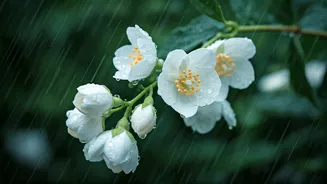
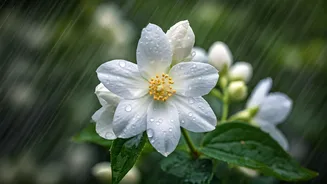
Jasmine doesn’t just sit idly by while the rain performs its atmospheric show. The flower actively participates in this sensory explosion. Jasmine, particularly night-blooming varieties, releases its most potent fragrance as humidity rises. The moisture in the air after a downpour helps the flower’s volatile organic compounds—the chemicals responsible for its scent, like benzyl acetate and indole—travel more effectively. The cooler, denser, post-rain air holds these heavy scent molecules closer to the ground, concentrating them where we’re most likely to notice. The physical impact of raindrops on the petals can also agitate the flower, encouraging a more generous release of its perfume. In essence, the rain acts as both a trigger and a carrier, amplifying the jasmine’s natural fragrance and delivering it directly to our senses in a way that a dry, hot day simply can’t.
An Unforgettable Connection
The magic isn’t just chemistry; it's also neurology. Our sense of smell is uniquely wired in the brain. Unlike our other senses, which are first routed through a processing station called the thalamus, scents take a direct superhighway to the brain’s core emotional and memory centers: the amygdala and the hippocampus. This is why a specific smell can instantly transport you back to your grandmother’s kitchen or a childhood vacation with startling clarity and emotional force. When you smell jasmine on the first rain, you’re not just registering a pleasant aroma. Your brain is forging a powerful link between the scent and the profound feeling of relief, nostalgia, and renewal that accompanies it. This neurological shortcut is what makes the experience feel less like a simple perception and more like a deeply embedded memory or a spiritual moment. It’s not just a smell; it’s a feeling.
More Than Just a Flower
This experience is deepened by jasmine's rich cultural tapestry. In many parts of the world, jasmine isn't just a pretty plant; it's a vessel of meaning. In India, it's woven into garlands for temple offerings and bridal hair, symbolizing purity and auspiciousness. In the Philippines, the Sampaguita—a type of jasmine—is the national flower, representing love and devotion. Across the Middle East and Southeast Asia, its scent perfumes homes, teas, and ceremonies. For many Americans, it’s the smell of a Southern summer evening, a fragrant vine climbing a porch trellis, a symbol of home and tranquility. When we breathe in that scent, we are subconsciously tapping into this deep well of shared human significance. The fragrance carries with it echoes of spirituality, love, and tradition, adding an invisible layer of weight and wonder to the moment.