








The Golden Fortress Awakens
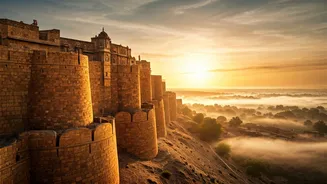
Long before the first rays of sun touch your skin, you see their effect on the fort. Jaisalmer Fort isn’t just a castle; it’s a living, breathing citadel rising from the desert floor like a colossal sandcastle sculpted by giants. Built in 1156 from honey-hued
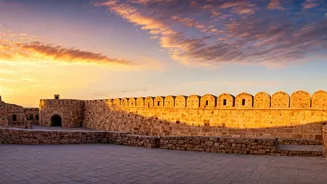
yellow sandstone, it’s one of the few “living forts” left in the world, with thousands of people residing within its ancient walls. As dawn approaches, the fortress, known as Sonar Quila or the Golden Fort, begins its daily transformation. In the faint pre-dawn light, it’s a monolithic silhouette, its 99 bastions standing as stoic guardians against the darkness. But this is just a prelude. The magic happens when the sun finally crests the horizon, and the sandstone begins to glow, seemingly from within. The stone soaks up the light, shifting from a soft honey to a brilliant, burnished gold, earning its name in a breathtaking, ten-minute performance.
A Symphony of Light and Shadow
Watching the sunrise here is less about seeing the sun itself and more about witnessing its effect on the architecture. It’s an intimate play of light and shadow across nearly a millennium of history. The first direct light catches the highest ramparts, setting them ablaze while the narrow alleys below remain cloaked in cool, blue shadows. Every intricate *jharokha* (carved balcony) and filigreed window screen comes into sharp relief, each detail a testament to the masterful craftsmanship of generations of artisans. The sun paints the walls in strokes of orange, pink, and gold, creating a dynamic masterpiece that no photograph can truly capture. It’s a slow, deliberate unveiling. You watch as the light spills over the walls, creeping down into the courtyards and illuminating temples and homes, as if gently waking the fortress from its slumber.
More Than Just a View
What separates this sunrise from any other scenic viewpoint is the symphony of sounds that accompanies it. This isn’t a silent, isolated mountaintop experience. As the light grows, the fort begins to stir. You hear the distant, melodic chime of temple bells, a gentle call to morning prayer echoing from a nearby minaret, and the first clatter of steel cups as a chai wallah sets up his stall. The sounds are soft at first, weaving into the quiet air without shattering the peace. It’s the sound of life, ancient and modern, intertwining. This sensory layer is the heart of the romance; you aren’t just an observer looking at a pretty scene. You are a temporary part of a city that has woken up this way for over 800 years. You’re feeling the same cool air and watching the same golden light that merchants, soldiers, and royalty once did.
Finding Your Perch for the Performance
Part of the charm of Jaisalmer is how accessible this experience is. You don’t need a special ticket or a grueling hike. The ideal vantage points are the countless guesthouses and rooftop cafes built directly into the fort’s ramparts. For the price of a masala chai, you can claim a cushioned seat on a balcony overlooking the eastern horizon and the sprawling city below. Waking up inside the fort itself and stepping onto your own small terrace as the sky changes color is an unparalleled experience. These perches offer an unobstructed view, placing you front and center for the daily show. It fosters a sense of personal ownership over the moment. This isn’t a crowded, jostling tourist trap; it’s a quiet, personal appointment with the sun, the stone, and the soul of the desert.