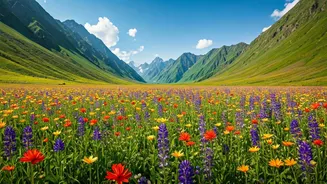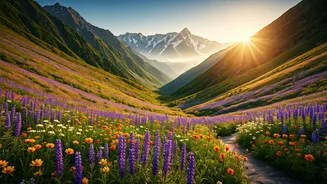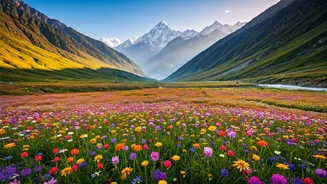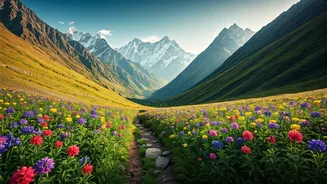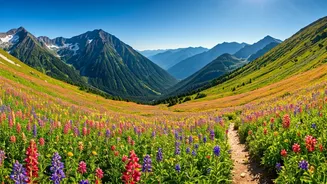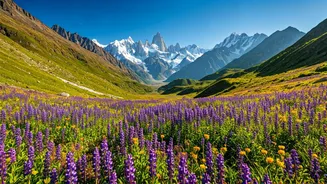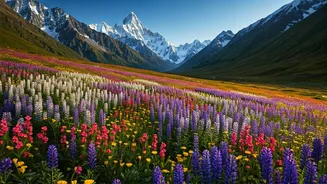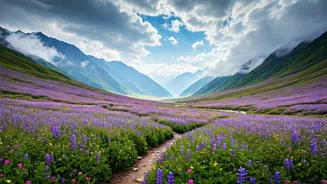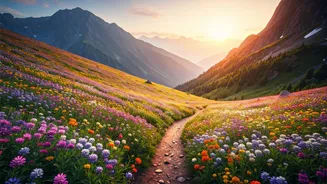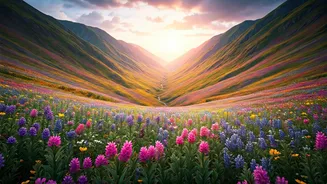

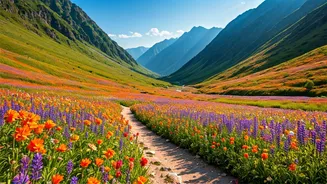
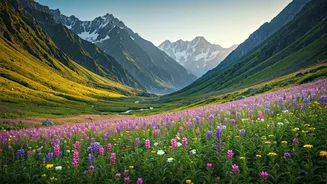


An Otherworldly Alpine Garden
Tucked in the Chamoli district of Uttarakhand, in the Indian Himalayas, lies a place that feels lifted from a fairy tale. The Valley of Flowers National Park, a UNESCO World Heritage Site, is famed for its meadows of endemic alpine flowers. For most of the year,
it lies dormant under snow. But as the summer monsoon arrives, it undergoes a spectacular transformation. This isn't a manicured garden; it's a raw, sprawling canvas of nature at its most vibrant, framed by jagged, snow-dusted peaks. The park is also spiritually significant, believed by locals to be a mythical place of healing.
The Magic of the Monsoon Rains
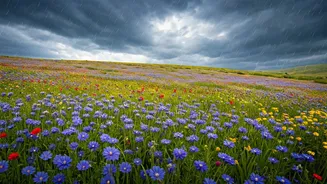
While travelers in South Asia are often taught to avoid the monsoon, the Valley of Flowers is the exception. The steady rains from late June to September are precisely what trigger this botanical explosion. The "monsoon greens" refer to the lush, almost electric-green landscape that serves as a backdrop for a riot of color. Over 300 species of wildflowers bloom, including vibrant blue poppies, elegant cobra lilies, and fields of pink balsam. The mist and low-hanging clouds that drift through the valley add to the ethereal atmosphere, creating a soft-focus, dreamlike quality that photographers and nature lovers find irresistible. Visiting at any other time means missing the spectacle.
The Journey Is Part of the Adventure
You can't just drive to the Valley of Flowers, which is a crucial part of its charm. The journey requires a multi-day trek, filtering out casual tourists and preserving its serene atmosphere. The adventure typically begins from the small town of Govindghat, from where a roughly 8-mile trek takes you to the base camp village of Ghangaria. After an overnight stay to acclimatize, you embark on the final, gentle 3-mile ascent into the valley itself. The path follows the Pushpawati River, with waterfalls and glaciers accompanying you. Because it requires effort, reaching the valley feels like a true accomplishment, making the floral views even sweeter.
How and When to Go
The window to see the valley in its full glory is narrow. The park opens in June and closes in October, but the peak blooming period is from mid-July to mid-August. To get there, most international travelers fly into New Delhi, then connect to a nearby city like Dehradun before a long road trip to Govindghat. You'll need a permit to enter the national park, available at the entrance gate near Ghangaria. It's wise to hire a local guide or go with a reputable trekking company to handle logistics and accommodation in Ghangaria, ensuring a smooth and safe journey on the trail.
Gearing Up for the Valley
While the trek isn't technically difficult, the altitude and weather demand preparation. Ghangaria sits at about 10,000 feet, so acclimatization is key. The trail can be muddy and slippery, so waterproof hiking boots with good grip are non-negotiable. A quality rain jacket, waterproof pants, and a waterproof backpack cover are essential. Pack in layers, as the weather changes quickly. While you don't need to be an elite mountaineer, a good level of fitness makes the experience far more enjoyable. Remember, the valley is a plastic-free zone, so be prepared to pack out what you pack in.