




A Town Designed to Be Frozen
To understand Landour's enduring charm, you first have to understand its origins. Perched just above the bustling hill station of Mussoorie in India’s Himalayan foothills, Landour was established in the 1820s as a 'cantonment'—a military town for British
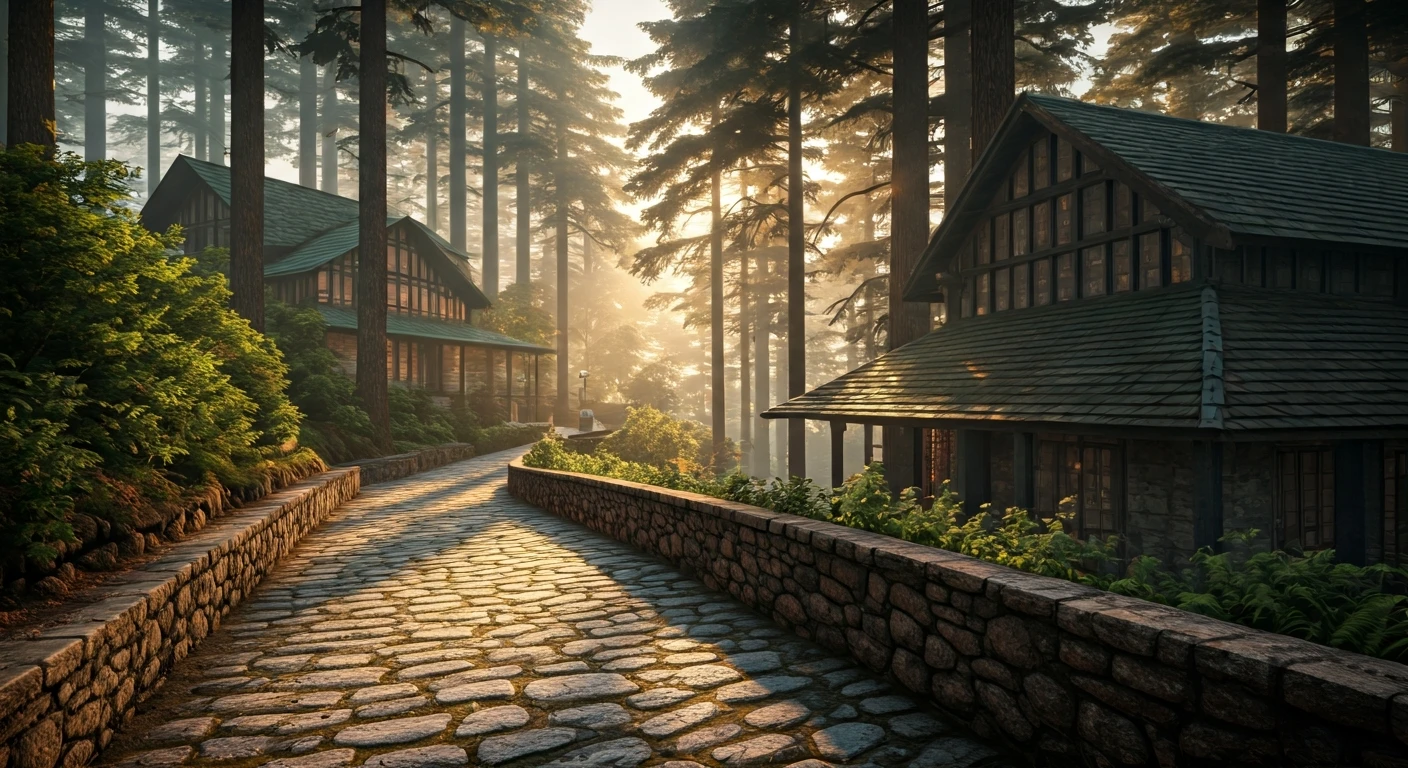
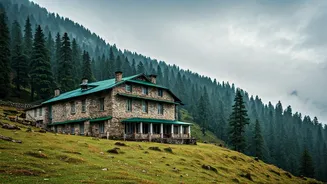
troops and their families. Unlike typical towns that grow organically, cantonments were meticulously planned and governed by strict regulations. In Landour, these 19th-century rules have proven to be a powerful preservative. The Cantonment Act has severely restricted new construction for over a century, effectively freezing the town’s architectural character. There are no sprawling modern hotels or garish commercial buildings here. Instead, the landscape is dotted with gabled-roof cottages, stone churches, and old-fashioned storefronts that look like they've been there forever, because most of them have.
Walking the Upper Chakkar
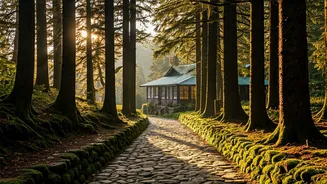
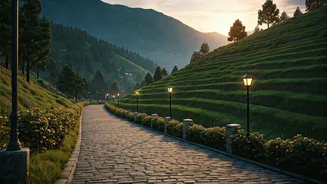
The quintessential Landour experience is a walk along the 'Chakkar,' a three-kilometer loop that circles the town's highest point. This isn't a rugged trek but a gentle, winding road that serves as an open-air museum. On one side, breathtaking views of the snow-capped Himalayas occasionally break through the clouds. On the other, you pass a parade of colonial-era bungalows with whimsical names like 'Gray's Folly,' 'The Parsonage,' and 'Wolfsburn.' Each is set back from the road, with neat gardens, chimneys trailing smoke, and verandas perfect for contemplating the view. Walking here feels less like exercise and more like turning the pages of a historical novel. The quiet is punctuated only by birdsong, the rustle of wind in the pines, and the distant clang of a church bell.
Echoes of the Raj in Stone
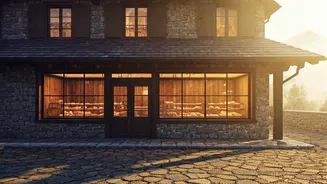
The town's timelessness is anchored by its landmarks. The most famous is St. Paul’s Church, a solemn Anglican church consecrated in 1840. Its Gothic spires rise from the mist, and its pews have seen generations of soldiers, administrators, and their families. It was here that the parents of author Rudyard Kipling were married. A short walk away is Kellogg Memorial Church, another stone edifice with beautiful stained-glass windows. These aren't just buildings; they are anchors to the past. Even the commercial hubs feel historic. At Char Dukan (literally 'Four Shops'), a tiny cluster of eateries that have been serving locals and visitors for decades, you can sip tea and eat pancakes while looking out at the same views that British officers enjoyed nearly two hundred years ago.
A Literary Landscape
Landour’s identity as a place outside of time has been cemented by its most famous resident, the celebrated author Ruskin Bond. For decades, he has lived and written here, weaving the town’s atmosphere into his stories. His presence has turned Landour into a pilgrimage site for literary lovers, who come hoping for a glimpse of the man who so perfectly captures the spirit of the Indian hills. Bond’s writings act as a guide to the town’s soul, pointing out the subtle magic in the everyday—the calls of specific birds, the personalities of local shopkeepers, the way the light falls on a particular bend in the road. In many ways, he has helped articulate what visitors feel instinctively: that Landour is not just a place on a map, but a state of mind.