
First, Let’s Talk About Barfi
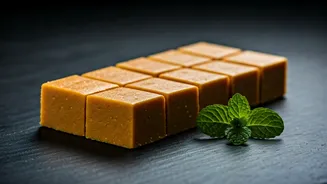
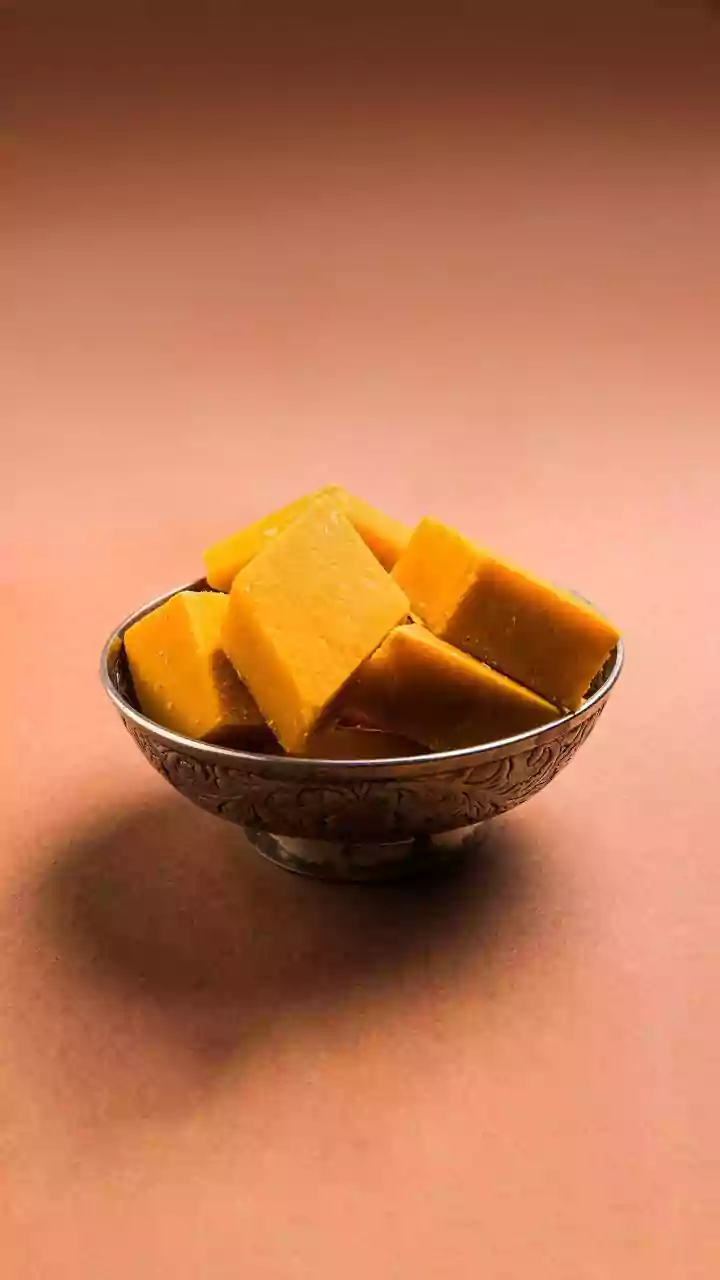
To understand the brilliance of Mango Barfi, you first have to meet its foundation: the classic barfi. If you’ve never had it, picture a denser, milkier cousin of fudge. At its heart, barfi is a confection made by slowly cooking down milk solids (khoya
or mawa), sugar, and often a touch of ghee until it forms a thick, smooth paste. This base is a blank canvas, ready to absorb a universe of flavors.
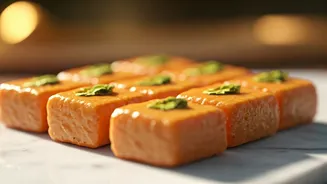
There’s pista barfi studded with green pistachios, almond badam barfi with its nutty richness, and the unadorned plain barfi, which celebrates the pure, caramelized flavor of cooked milk. It’s firm enough to be cut into clean diamond or square shapes, yet it melts almost instantly on the tongue. It’s a staple at Indian celebrations, from weddings to festivals like Diwali, passed around in ornate boxes as a gesture of sweetness and joy. But while other barfis are year-round staples, one variety patiently waits for its moment in the sun.
Enter the King of Fruits
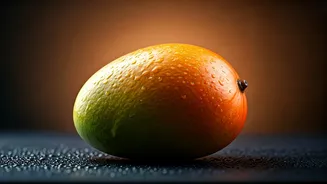
In the U.S., summer might mean watermelon slices and cherry pie. In South Asia, summer is synonymous with one thing above all else: mangoes. Not just any mangoes, but a dizzying array of varieties, each with its own cult following. The arrival of mango season is a cultural event, a frantic, joyous period of feasting before the monsoon rains wash it all away.
The most prized of these is often the Alphonso mango, a cultivar so fragrant and intensely flavored it’s less a fruit and more an experience. Its flesh is a deep, non-fibrous saffron yellow, with a flavor that balances honeyed sweetness with a complex, almost floral tartness. This isn't the mild, sometimes stringy mango you might find off-season at a supermarket; this is mango turned up to eleven. When this pulp—the very essence of summer—is introduced to the creamy, comforting world of barfi, something truly special happens.
A Perfect Marriage of Flavor and Texture
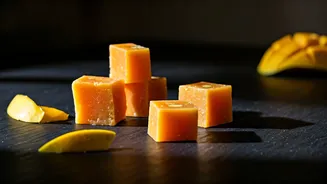
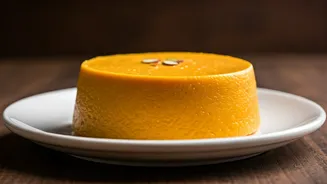
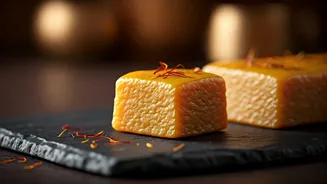
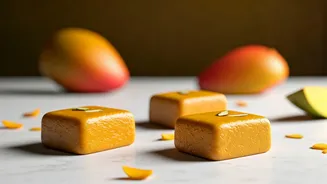
Making Mango Barfi is an act of alchemy. The vibrant, tangy mango pulp is swirled into the rich, cooking milk-and-sugar base. The mixture transforms, taking on a gorgeous, sunset-orange hue. The challenge for the confectioner, or *halwai*, is to balance the flavors perfectly. They must ensure the mango’s bright acidity cuts through the richness of the milk solids without overpowering it. The goal is harmony, not competition.
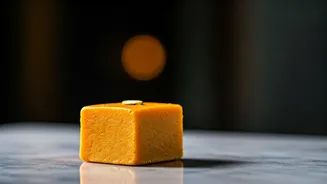
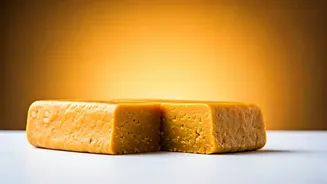
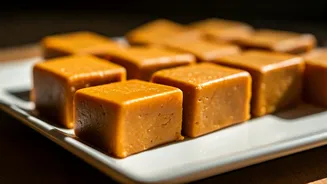
The final product is a sensory masterpiece. A piece of good Mango Barfi is firm to the touch but yields a soft, fudgy texture in your mouth. The first taste is the bold, unmistakable punch of pure mango, followed by a wave of creamy, milky sweetness that rounds out the edges. Often, it’s perfumed with a whisper of green cardamom and garnished with slivered pistachios or almonds, adding a pop of color and a subtle crunch. It’s rich but not heavy, sweet but not cloying. It’s the flavor of a sun-ripened mango, but with the comforting, luxurious texture of the finest dessert.
A Taste of Seasonal Celebration
In a world of year-round availability, Mango Barfi remains defiantly seasonal. You typically won’t find the good stuff in the dead of winter. Its appearance in Indian sweet shops is a delicious announcement that the best part of the year has arrived. It’s a treat that embodies the concept of 'terroir'—a taste of a specific place, a specific time.
Like a limited-edition sneaker drop for foodies, its fleeting presence makes it all the more precious. Families buy it by the boxful to share with neighbors, bring it as a gift when visiting relatives, and serve it as the grand finale to a summer meal. To eat Mango Barfi is to participate in a collective, seasonal ritual—a celebration of warmth, abundance, and the simple, profound joy of a fruit at the peak of its perfection.