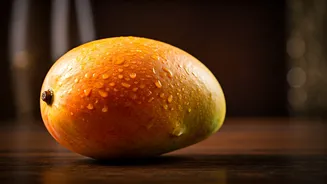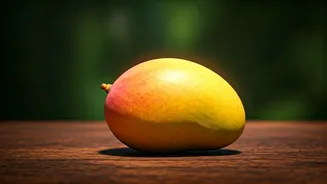



The Mango Capital of India
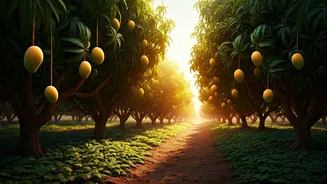
Long before it became a bustling metropolis, Lucknow was known for its royal gardens and exquisite fruit. Situated in the northern state of Uttar Pradesh, the region is often called the “Mango Belt” of India, and for good reason. It’s the heartland of some
of the country's most beloved mango varieties, including the fragrant, fiberless Dasheri, which was granted a Geographical Indication tag to protect its heritage. Here, the mango is not just a fruit; it's a cultural icon, a symbol of summer, and a point of intense regional pride. Every year, the season is met with anticipation that rivals the arrival of pumpkin spice in the U.S. But while tradition is revered, a few visionary farmers are focused on a radical future for the fruit.
Meet the 'Mango Man'
At the center of this innovation is Haji Kaleem Ullah Khan, an octogenarian horticulturist affectionately known as the “Mango Man.” A school dropout with an eighth-grade education, Khan has dedicated his life to the art of fruit breeding. His laboratory is a 120-year-old mango tree in his family's orchard in the town of Malihabad, near Lucknow. For his unparalleled work in mango cultivation, he was awarded the Padma Shri in 2008, one of India's highest civilian honors. Khan sees his work not as mere farming, but as a form of artistry and a conversation with nature. He speaks of his trees as his children and believes his unique grafting techniques are a gift he is meant to share with the world.
The Art of Meticulous Grafting
So how does one tree produce hundreds of different mangoes? The answer is a painstaking process of grafting, a technique where tissues from one plant are inserted into another so that they may join and continue their growth together. Khan has elevated this ancient practice to an art form. He meticulously selects a branch from a desired mango variety and carefully splices it onto his mother tree. He then wraps the junction tightly until the graft takes hold and the new branch begins to produce its own distinct fruit. This isn't a quick process; it requires immense patience, skill, and an intuitive understanding of botany. By repeating this process over decades, Khan has turned a single, sprawling tree into a living library of mango diversity.
A Living Library of Fruit
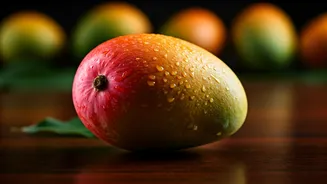
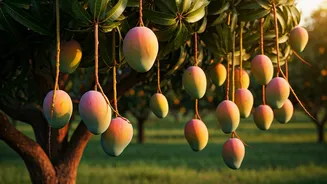
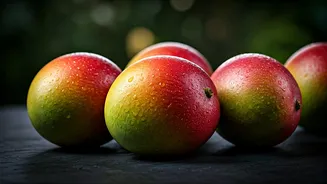
The result of Khan's life's work is staggering. His prized tree now bears more than 300 different varieties of mango. Walking through his orchard is a surreal experience. One branch might hold a deep crimson mango, another a fruit shaped like a slender finger, and a third a classic golden-yellow orb. Each has a unique flavor profile, from syrupy sweet to tangy with notes of citrus. To make his creations memorable, Khan names them after notable figures and personal inspirations. There's the 'Aishwarya' mango, named after the actress Aishwarya Rai Bachchan, reportedly as beautiful as its namesake. Another is the 'Sachin', a nod to the cricket legend Sachin Tendulkar. More recently, he developed the 'Modi Mango,' named for India’s Prime Minister Narendra Modi, which is a striking combination of saffron and red hues. These aren't just novelties; they are distinct, reproducible varieties born from a lifetime of passion.