








The Dawn of India's 'NewSpace'
For decades, space in India meant one thing: the Indian Space Research Organisation (ISRO). This government agency was the nation's sole gateway to the cosmos, responsible for every satellite launch and exploratory mission. It built a formidable reputation
for frugal engineering and landmark achievements. But the global space industry has been transformed by private players like SpaceX and Rocket Lab, and India was at risk of being left behind. That is, until now. A dramatic policy shift in 2020 opened the floodgates, creating a vibrant ecosystem dubbed 'NewSpace.' This isn't just about privatization; it's about a fundamental change in mindset, from government-led projects to a market-driven industry where startups can dream of building their own rockets and satellite constellations.
The Rocket Builders: Skyroot & Agnikul
At the forefront of this new wave are the launch vehicle startups, the companies building the actual rockets. Two names stand out: Skyroot Aerospace and Agnikul Cosmos. Hyderabad-based Skyroot became the first Indian private company to launch a rocket into space in late 2022 with its Vikram-S vehicle. Founded by former ISRO engineers, Skyroot is focused on building small-lift launch vehicles designed to place satellites into low Earth orbit—a booming market. Meanwhile, Chennai-based Agnikul Cosmos has made waves with its advanced technology. The company successfully test-fired the world’s first single-piece 3D-printed rocket engine, a design that dramatically reduces complexity and cost. Their goal is to provide 'on-demand' launches, allowing a customer to launch a satellite with minimal wait time, a service that is highly sought after in the fast-paced satellite industry.
Beyond Launch: The Satellite Innovators
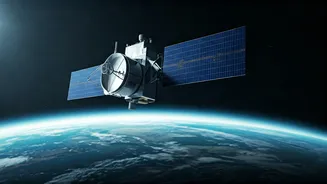
Getting to space is only half the battle; what you do up there is what creates value. This is where companies like Pixxel and Dhruva Space come in. Pixxel is building a constellation of hyperspectral imaging satellites. Unlike a normal camera, which sees light in red, green, and blue, Pixxel's satellites capture images in hundreds of specific light bands. This data-rich imagery can be used to detect things invisible to the naked eye, from identifying crop diseases and water pollution to spotting mineral deposits. The applications are vast, spanning agriculture, mining, and environmental monitoring. On the other hand, Dhruva Space offers a 'satellite-as-a-service' model. They build the satellite platforms, or 'buses,' and integrate customer payloads, simplifying the process for companies that need space-based infrastructure without the expertise to build it from scratch.
The Government's Green Light
None of this would be possible without a crucial assist from the Indian government. The 2020 creation of the Indian National Space Promotion and Authorisation Centre (IN-SPACe) was the game-changer. IN-SPACe acts as a single-window agency, serving as both a regulator and a promoter of private space activities. It helps startups get the necessary licenses, but more importantly, it facilitates access to ISRO's world-class facilities—its testing labs, launchpads, and decades of expertise. This symbiotic relationship is critical. Instead of competing, ISRO is now acting as a mentor and enabler, allowing startups to stand on the shoulders of a giant. This policy has unlocked a torrent of venture capital, with both domestic and international investors now betting big on India's private space future.
Finding a Place in a Crowded Sky
Indian space-tech startups aren't trying to be the next SpaceX, which targets heavy-lift launches for massive constellations like Starlink and government missions. Instead, they are carving out a niche in the small satellite market. Their primary competitive advantage is cost. By leveraging India's legacy of 'frugal engineering' and innovative manufacturing techniques like 3D printing, companies like Skyroot and Agnikul aim to offer some of the most affordable launch services in the world. For the thousands of companies and universities worldwide wanting to put a small satellite in orbit, an affordable, reliable launch from India is an incredibly attractive proposition. This focus on the small-payload segment allows India to compete globally without going head-to-head with the industry's behemoths.